Weekly Practice 1
Week 1 | Contemplation: A Long, Loving Look at God
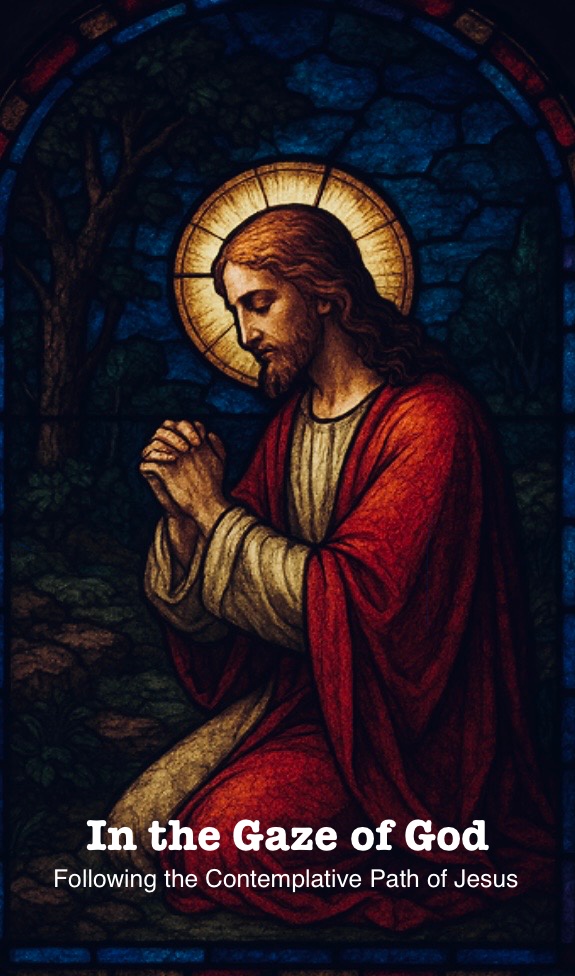
What we encounter in the context of contemplative prayer can be difficult. We may encounter unwanted thoughts and temptations. Old wounds may surface. Obsessive thoughts may come. The invitation of prayer in the inner room is to notice and release what may come, entrusting it all to the Lord’s care.
Just as Jesus encourages us to enter that “inner room” for quiet prayer, He teaches His disciples to be careful not to “heap up empty phrases as the Gentiles do, for they think that they will be heard for their many words” (Matthew 6:7). There is a temptation as we pray to think that prayer is about controlling an outcome or making something happen. Jesus goes on to say: “Do not be like them, for your Father knows what you need before you ask Him” (v 8). We can trust that the releasing and letting go of thoughts and emotions in prayer are indeed met with God’s care. He holds us – all of who we are (thoughts, emotions, memories, actions, habits), and we experience freedom as we release control and wait in His presence.
Next, Jesus says: “Pray then like this …” and He offers the sublime words that we know as “The Lord’s Prayer”:
Our Father in heaven,
hallowed be your name.
Your kingdom come,
your will be done,
on earth as it is in heaven.
Give us this day our daily bread,
and forgive us our debts,
as we also have forgiven our debtors.
And lead us not into temptation,
but deliver us from evil.
First, we turn our gaze to heaven and proclaim that God is holy. He is set apart. He is like no other. This sets our desire on Him. In the following phrases we see the three aspects of Christ’s contemplative way: surrender, sit, and see (see the introduction).
Next, we ask for His kingdom and His will to happen on the earth (in our lives) as in the perfection of heaven. His kingdom is His presence and activity. His will is His heart or desire. We surrender ourselves to His presence and His desires in trust.
Asking for daily bread acknowledges that He provides for us daily. This reminds us of the provision of daily bread (manna) in the wilderness journey of the people of God in the Old Testament. They had enough for each day and were instructed not to take more than was needed. The invitation here is to see how God provides – to notice God’s work all around.
The request to be forgiven as we forgive roots us in the grace of God. We let go of our sin and we let go of the sin done against us. As we keep coming back to this place, we sit in the love of God.
Finally, Jesus invites us to pray that each circumstance we encounter would lead to deliverance from evil. The words “deliverance” and “evil” may feel a bit archaic, but they are powerful. Deliverance could be translated “save” or “rescue,” and evil is simply “that which is wrong.” In this context, where the desire is to contemplate the Father, evil is anything that draws us away from Him. The prayer is that we would see the temptations to live independently and instead experience rescue (deliverance) by the hand of our Father.
Slowly pray the Lord’s Prayer each day before you enter your time of quiet prayer.

Posted on February 22, 2026, in blog, In the Gaze of God. Bookmark the permalink. Leave a comment.
 desert direction
Leave a comment
Comments 0