Day 29 | See – “Behold”
Week 6 | See: From Anxiety to Silence
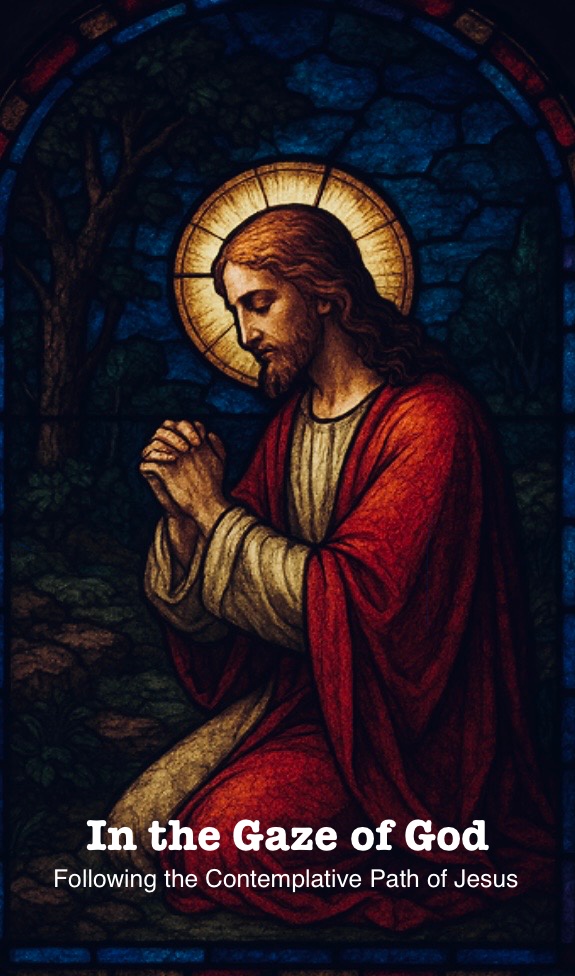
When Jesus walked through the wilderness temptations, the enemy began with fear. Jesus was hungry after fasting for forty days, and the enemy tempted Him to “command these stones to become loaves of bread” (Matthew 4:3). Using His resources independently of God the Father was at the heart of the temptation, and the enemy attempted to stir up anxiety to lead to Jesus to cave in.
Jesus’ response (“Man shall not live by bread alone, but by every word that comes from the mouth of God”) reflected the reality that there is more going on than what we can physically see. When we simply see a lack of food and there is no solid possibilities to receive food anytime soon, anxiety set in. However, if we can see what God sees, trust becomes our food.
Reflecting on this wilderness experience, Jesus taught, “… do not be anxious about your life, what you will eat or what you will drink, nor about your body, what you will put on. Is not life more than food, and the body more than clothing?” (Matthew 6:25). This rhetorical question echoes what Jesus learned in the wilderness: Life is more than we what we see or perceive. When we experience anxious thoughts, we tend to look for certainty.
Jesus used the word, anxious, which can be translated as “worry.” Worry is turning a thought over and over in our minds. In our modern world, anxiety is understood as more than worry. Anxiety is often a disorder that can be helped by medication, and neuroscience has also helped us understand that anxiety is a part of how we function and move in the world. On one level, anxiety can be a harsh companion that significantly hampers our functioning in daily life. On another level, anxiety can function in a way that helps us look both ways before we cross a street or alert us that bills need to be paid.
The anxiety Jesus spoke about is more like a worry that keeps us from seeing God’s provision and presence in our lives. It leads us to a preoccupation with our physical lives. It narrows our vision and attentiveness to God.
Many of us may think: I’m not really an anxious person. I don’t worry about things. Yet everyone has the capacity for anxiety and we need that capacity in order to function. The question is whether or not our anxiety has become worry. And perhaps, our anxiety lives under the surface.
Dr. Gary Nebeker wrote, “For some, anxiety shows up as worry or fear. For others—especially those trained to be decisive—it shows up as action-first confidence: moving quickly, confronting decisively, and sorting things out later. From the inside, this doesn’t feel anxious. It feels strong. It feels competent. It feels like leadership—whether in the workplace or in marriage. But when action consistently replaces reflection, and decisiveness crowds out discernment, anxiety doesn’t just disappear—it often reappears as scrambling.”
Anxiety (whether it’s an incessant worry or an under the surface, gnawing motivator to quick action) leaves us unaware of God’s presence and provision in our lives. We all have anxious thoughts, and what we do with them is significant. If we stew on them and spiral emotionally, we may find that that this affects our body as well. In an anxious, fearful place, we struggle to see God. If our response is to get to work and make things happen, we also have turned our attention to our own resources for managing life rather than to God.
Our created design is to experience anxiety because we were created with a need to feel secure. This alert system was designed by God to veer our attention toward Him – to see Him as the One who keeps us secure.
Jesus recognized that anxiety blinds us spiritually: however, He shared that what we choose to contemplate or behold can lead us out of obsessive worry. Because of this, Jesus encouraged us to meet anxiety with contemplation, or beholding. Instead of worry, Jesus invited:
Look at the birds of the air: they neither sow nor reap nor gather into barns, and yet your heavenly Father feeds them. Are you not of more value than they? And which of you by being anxious can add a single hour to his span of life? And why are you anxious about clothing? Consider the lilies of the field, how they grow: they neither toil nor spin, yet I tell you, even Solomon in all his glory was not arrayed like one of these. (Matthew 6:26–29)
Jesus invited us to look at the natural world as a way to reorient our vision and to slow us down. We can’t talk ourselves out of worry or anxious thoughts, but we can experience God’s care for the natural world. As we do, our “seeing” returns.
Pause for a moment before you move on to whatever is next. Slowly go to a place where you can observe a flower or a bird. If you must, find a video. Quietly let what you behold sink in. Observe until you notice your thoughts directed toward your Father who keeps you secure.
Prayer: Lord, I give you my anxious thoughts – my worry. Even more, help me to contemplate the birds and flowers today. Amen.

Posted on March 23, 2026, in blog, In the Gaze of God. Bookmark the permalink. Leave a comment.
 desert direction
Leave a comment
Comments 0