Day 35 | Discernment: Seeing God in All Things
Week 7 | Peace: From Distraction to Presence
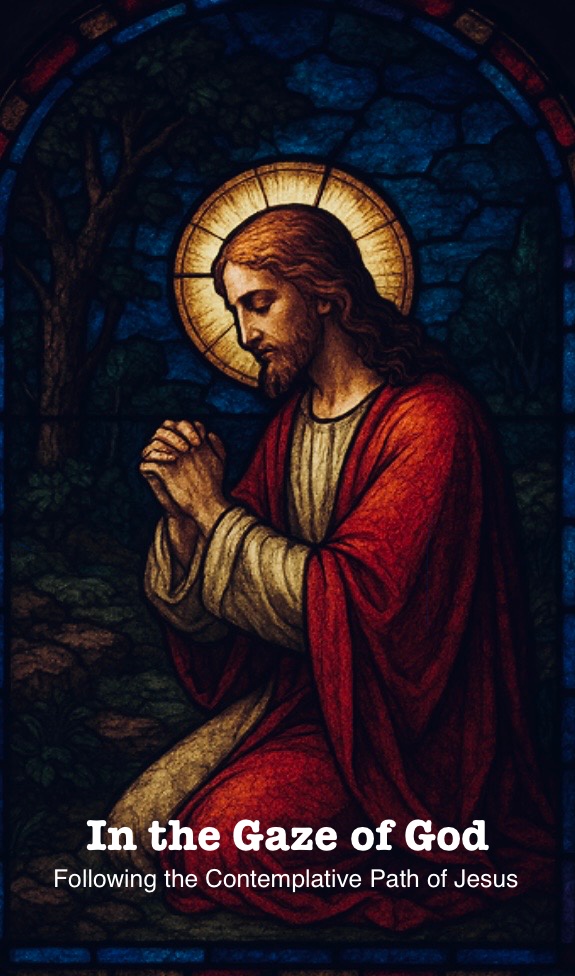
As we move into Matthew 7, which is the final section of the Sermon on the Mount, Jesus paints a picture of what it looks like when we are living in the gaze of God. The fruit of contemplation is non-judgmental (7:1-6), non-anxious (7:7-11), and non-reactive (7:12-23) presence. Another word for this kind of presence is love.
Defining our lives by what we do (a response to control/anger), what others think of us (shame), and what we have (anxiety) is the false-self. Our true-self in Christ is defining ourselves as children of God, beloved, and a delight. And even more, this true-self is nurtured as this moves into being an experienced reality.
As we live in God’s gaze, both receiving His gaze as well as gazing at Him, we begin to see God in all things. He is the lens through which we see. However, when we feel like we need to produce, prove, or protect, we see through those lenses. Without the need to produce, prove, or protect, we move into the world with His love. Discerning God’s presence and action, we then join Him in what He is doing. Psalm 119:32 explains: “I run in the path of your commands because you have set my heart free” (NIV). We experience our true-self in Christ as our hearts are set free from the false-self.
Contemplation is a long, loving look at God. As we engage in the contemplative rhythms of Jesus, we open ourselves up to contemplation, or seeing as God does. We don’t make contemplation happen, but we do make ourselves available. Contemplation is a gift we receive, rather than a state we achieve.
There is an old story about a disciple and his master in which the disciple asks, “What can I do to experience God?” The master replies, “About as much as you can do to make the sun rise.” The disciple asks, “Then, why pray?” The master replies, “So, you are awake when the sun rises.”
Pause with that for a moment. What do you notice? What stands out to you?
The heart of the story is awareness. We don’t make things happen, but we can be aware. It is also noteworthy that we do not control the process. We wait upon God and watch for Him. As we receive this gift of contemplation, it leads us into an “everyday”/ordinary discernment in which we see God in all things. We see Him in the leaves rustling in the wind, a beautiful sunset, the person checking us out at the pharmacy, the co-worker with whom we struggle to get along, and even the diagnosis that has us reeling.
As we follow the contemplative path of Jesus, we are opening ourselves to receive this kind of discernment. In the Scriptures, we are not given methods for prayer or entry points into contemplation because we might be tempted to think we control the process. The gaze of God and living in that gaze is a gift. We do not “master” contemplation. We allow it to master us.
In Philippians 2:5, we are encouraged to “have this mind among yourselves, which is yours in Christ Jesus …” To “have a mind” is to think a certain way – to set our mind on something. “Which is yours in Christ Jesus” indicates that this way of thinking and discerning belongs to us. It is who we are in Christ. What was this mindset? It is explained in the following verses:
… who, though he was in the form of God, did not count equality with God a thing to be grasped, but emptied himself, by taking the form of a servant, being born in the likeness of men. And being found in human form, he humbled himself by becoming obedient to the point of death, even death on a cross. Therefore, God has highly exalted him and bestowed on him the name that is above every name … (Philippians 2:6–9)
First, Jesus did not grasp. When our needs are met in the gaze of God, we do not have to cling to anything, and we come to Him with open hands. (Surrender)
Second, Jesus emptied Himself. This occurred as He took the form of a servant. When we come with empty, non-grasping hands, we then look to the eyes of the Master as His servant and listen for His voice. (Sit)
Third, Jesus humbled Himself. Humility is expressed as obedience, or responsiveness to what one sees in the eyes of the master. (See)
This is why Jesus invites us to release our anger (surrender), shame (sit), and anxiety (see). As these no longer have mastery over us, we are able to see God in all things, and then join Him.
Consider your journey over the last six weeks. How has God led you to release? How have you noticed yourself receiving His love? In what ways do you see God more clearly in the world around you? Pause and give thanks for whatever the Lord brings to mind.
Prayer: Father, thank You for pursuing me and leading me to Yourself. You are my desire and I want to follow Jesus’ contemplative path. Help me to keep walking with You. Amen.

Posted on March 30, 2026, in blog, In the Gaze of God. Bookmark the permalink. Leave a comment.
 desert direction
Leave a comment
Comments 0