Weekly Practice 7 – Contemplating Christ
Week 7 | Peace: From Distraction to Presence
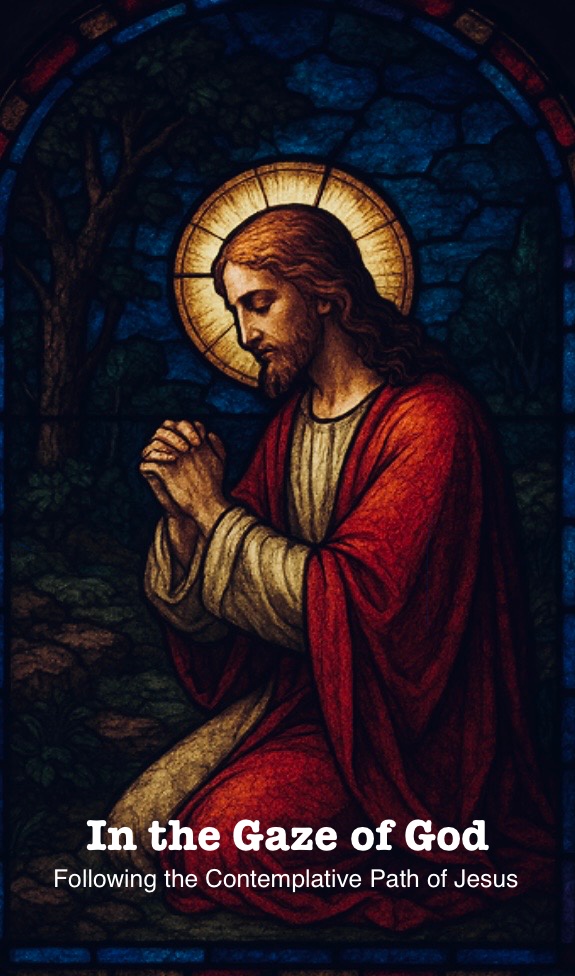
As we complete this 40-day journey, the invitation is to live the contemplative way of Christ. As we let go of anger, shame, and fear, we are increasingly free to love Christ and focus the eyes of our heart on Him. Sit for a moment with this prayer from Ephesians 1:16–23:
I do not cease to give thanks for you, remembering you in my prayers, that the God of our Lord Jesus Christ, the Father of glory, may give you the Spirit of wisdom and of revelation in the knowledge of him, having the eyes of your hearts enlightened, that you may know what is the hope to which he has called you, what are the riches of his glorious inheritance in the saints, and what is the immeasurable greatness of his power toward us who believe, according to the working of his great might that he worked in Christ when he raised him from the dead and seated him at his right hand in the heavenly places, far above all rule and authority and power and dominion, and above every name that is named, not only in this age but also in the one to come. And he put all things under his feet and gave him as head over all things to the church, which is his body, the fullness of him who fills all in all.
What do you notice? What stirs in you as you read this prayer? The heart of the prayer is “… having the eyes of your hearts enlightened.” Contemplating Christ in the Gospels is a way in which we participate in this prayer. Ignatius of Loyola designed a transformative way of reading the Gospels. Set aside some time today with a passage from the Gospels.
– Read the passage and place yourself in the scene. Imagine the setting – the sounds, the smells, the feel of the wind or sun – and see where you are in it.
– Engage personally with Jesus. Notice how He acts, the look on His face, the tone in His voice, etc. Let Him relate to you in that scene. Wait and linger here.
– Pay attention to what stirs in you. Notice emotions, what is drawing you, what seems to push you away, and what thoughts come to mind.
– Respond directly to Jesus about what you experienced. Share with Him whatever you have experienced (joy, gratefulness, resistance, confusion – anything). Open yourself to anything He desires to say to you.
– Take something with you. Let one word, image, or question stay with you throughout the rest of the day.
Amen.
Day 40 | Intentional Practices, Matthew 7:24-29
Week 7 | Peace: From Distraction to Presence
Jesus closes out the Sermon on the Mount with an encouragement to wisely consider our response to what He taught:
“Everyone then who hears these words of mine and does them will be like a wise man who built his house on the rock. And the rain fell, and the floods came, and the winds blew and beat on that house, but it did not fall, because it had been founded on the rock. And everyone who hears these words of mine and does not do them will be like a foolish man who built his house on the sand. And the rain fell, and the floods came, and the winds blew and beat against that house, and it fell, and great was the fall of it.” Matthew 7:24–27
Two houses (lives) can look the same, but the foundation can be very different, as different as sand from rock. Our responsiveness to Jesus’ words in the Sermon is a firm foundation. If we simply hear His words but do nothing with them, the storms of life will shake us and we will tumble. Two questions are worth our consideration: First, what are the words of Jesus that invite our obedience? Second, how do we build a responsiveness such that we are firmly rooted in Jesus?
A summary of Jesus’ contemplative way is found in the Lord’s Prayer. The beauty of this prayer is its simplicity, and it invites us to consider surrender, sit, and see, also recognizing the possibility of temptation or deliverance moment by moment.
“Our Father in heaven, hallowed be your name.
Orienting the heart toward God
Your kingdom come, your will be done, on earth as it is in heaven.
Surrender to His presence
Give us this day our daily bread,
See His provision
and forgive us our debts, as we also have forgiven our debtors.
Sit in His grace and love
And lead us not into temptation, but deliver us from evil.”
Noticing God’s deliverance
We build a house on the rock of Jesus’ words as we build a life of prayer in which we intentionally engage in habits that draw us back to God’s gaze again and again. Praying the Lord’s Prayer, slowly engaging each part of the prayer grounds us in Jesus’ contemplative way. In addition, review the various contemplative practices you’ve experienced in these last weeks. What has helped you? What has supported you well as you’ve sought to abide in His gaze?
Slowly read through the following from Romans 12:1-2 (The Message)
“So here’s what I want you to do, God helping you: Take your everyday, ordinary life—your sleeping, eating, going-to-work, and walking-around life—and place it before God as an offering. Embracing what God does for you is the best thing you can do for him. Don’t become so well-adjusted to your culture that you fit into it without even thinking. Instead, fix your attention on God. You’ll be changed from the inside out. Readily recognize what he wants from you, and quickly respond to it. Unlike the culture around you, always dragging you down to its level of immaturity, God brings the best out of you, develops well-formed maturity in you.”
Place your life before God, all of it. Offer it to Him. Linger for a few moments in God’s gaze, hearing those words He spoke over Jesus, “This is my Son, the beloved, in whom I delight.” Next, consider the phrases “Embracing what God does for you” and “ … fix your attention on God.” What might this embracing and fixing look like in your life? How will you build new patterns and habits that will keep you grounded in Jesus’ contemplative way?
In 1 Peter 2:8-12, Peter also links stumbling (think of the house built on the sand) with a failure to respond or obey. Notice his encouragement:
They stumble because they disobey the word, as they were destined to do. But you are a chosen race, a royal priesthood, a holy nation, a people for his own possession, that you may proclaim the excellencies of him who called you out of darkness into his marvelous light. Once you were not a people, but now you are God’s people; once you had not received mercy, but now you have received mercy. Beloved, I urge you as sojourners and exiles to abstain from the passions of the flesh, which wage war against your soul. Keep your conduct among the Gentiles honorable, so that when they speak against you as evildoers, they may see your good deeds and glorify God on the day of visitation.
Peter highlights our identity, our journey, and the struggle of the flesh which wars against the soul. Our identity as “son/daughter of God, the beloved, in whom He delights” mirrors the phrase “a people for His own possession.” We are on a journey. It takes time and requires alertness. Waiting and watching. In the context of the Sermon on the Mount, the flesh is anger, shame, and anxiety. If we are not intentional about our response to God’s gaze, our souls will suffer as we are carried away by the winds of the world around us.
Sit for a few more minutes with the questions asked above. In addition:
What has helped you? What has supported you well as you’ve sought to abide in His gaze? How will you build new patterns and habits that will keep you grounded in Jesus’ contemplative way?
Before you close in prayer, be specific with at least three things the Lord is inviting. Plan for how you will integrate these into your life.
Prayer: Lord, may I continue to build my life on the rock of what You are teaching. May I build and nurture my life in the words of Jesus. Amen.
Day 39 | Self-Forgetful Presence
Week 7 | Peace: From Distraction to Presence
The deepest fruit of contemplation is to forget oneself. This is to be so absorbed in the love of Christ that we do not have to think of ourselves. James Houston, beloved professor and founder of Regent College was asked about what it meant to have a significant life. His response: “Unintentional self-forgetfulness.”
As we live in this love, we become self-forgetful. It’s not intentional – it just happens as we give ourselves to the love and delight of a Father who sees us, knows us, and understands us. Nowhere is this more beautifully lived out than in the life of Jesus, especially as He washed the feet of His disciples. It was a job normally reserved for a household servant. Jesus bowed down, sat on the floor, took up a towel with a basin of water, and washed the dirty feet of His disciples.
Jesus, knowing that the Father had given all things into his hands, and that he had come from God and was going back to God, rose from supper. He laid aside his outer garments, and taking a towel, tied it around his waist. Then he poured water into a basin and began to wash the disciples’ feet and to wipe them with the towel that was wrapped around him. He came to Simon Peter, who said to him, “Lord, do you wash my feet?” Jesus answered him, “What I am doing you do not understand now, but afterward you will understand.” (John 13:3–7)
Jesus simply said to Peter, who protested, you’ll understand in time. Jesus did not have a need to be understood. He was not trying to teach a lesson. Jesus simply desired to love His disciples. Henri Nouwen wrote: “When we have come to know God’s unconditional love, we no longer need to prove ourselves. We can give freely, without fear, without self-concern.” Nouwen also shared: “The more you let go of your need to be seen, the more you can truly see others.”
We also see this in Jesus as He welcomed children who were seen as a distraction in the first century:
And they were bringing children to him that he might touch them, and the disciples rebuked them. But when Jesus saw it, he was indignant and said to them, “Let the children come to me; do not hinder them, for to such belongs the kingdom of God. Truly, I say to you, whoever does not receive the kingdom of God like a child shall not enter it.” And he took them in his arms and blessed them, laying his hands on them. (Mark 10:13–16)
Jesus loved without reference to Himself. He gave. He blessed. He received. The fruit of living in God’s gaze is not thinking of ourselves at all. We do not need to! Father, Son, and Holy Spirit, One God, holding our lives, we are free.
This does not come without struggle. Jesus agonized in the Garden of Gethsemane as He approached the cross. The ultimate act of self-forgetfulness did not come without trial. Jesus was aware of what was before Him. He experienced the temptation to self-protect. Rather than wallowing in it or trying to access “will-power,” He prayed:
“Father, if you are willing, remove this cup from me. Nevertheless, not my will, but yours, be done.” And there appeared to him an angel from heaven, strengthening him. And being in agony he prayed more earnestly; and his sweat became like great drops of blood falling down to the ground.” (Luke 22:42–44)
We live into self-forgetfulness as we seek God’s kingdom, His presence with us. In this wide-open space, we increasingly come to know that none of this is about us. What God does or doesn’t do is none of our business. After the resurrection, Jesus appeared to His disciples by the Sea of Tiberias. Jesus specifically challenged Peter with the words, “Follow Me” after sharing about how Peter would die. Peter looked at John and said, “What about him?” Jesus said to Peter, “If it is my will that he remain until I come, what is that to you? You follow me!” (John 21:22) Our journey in the gaze of God is unique to us. How God unfolds His grace, love, and delight in each of us is a mystery that gets revealed over time. If we are defining ourselves by what others do or don’t do, we have moved away from God’s gaze and into self-protection or self-absorption.
For the next few minutes, scan through all the details of your life and see them in God’s hands. See Him holding all of you. Consider the following from Brother Lawrence:
“What comforts me in this life is that I now see Him by faith; and I see Him in such a manner as might make me say sometimes, I believe no more, but I see.” We increasingly forget about ourselves as we dwell in God’s gaze and our believing becomes seeing.
Prayer: Lord, Creator of heaven and earth, God of all glory, may I dwell deeper and deeper into this place of unintentional self-forgetfulness. Amen.
Day 38 | Non-Reactive Presence, Matthew 7:12-23
Week 7 | Peace: From Distraction to Presence
Describing what loving presence is not with the use of non-______ phrases helps clarify that love is more about removing things (i.e., releasing anxiety or judgmentalism) than about performing or making something happen. When we offer loving presence, we offer space where something good can happen but we do not force it.
As we grow in our awareness of a God who holds our lives in love and delight, we can respond with loving presence rather than react from anger, shame, and anxiety to people, situations and even ourselves. As we look at Jesus words in Matthew 7:12-23, He invites us to live further into non-reactive presence, which is a part of the fruit of contemplation.
First, Jesus speaks of being rooted and grounded, not swayed or distracted by the actions of others:
“So whatever you wish that others would do to you, do also to them, for this is the Law and the Prophets. Enter by the narrow gate. For the gate is wide and the way is easy that leads to destruction, and those who enter by it are many. For the gate is narrow and the way is hard that leads to life, and those who find it are few.” (vv. 12-14)
As we interact with others for whom anger, shame, and anxiety is the water in which they swim, we are often tempted to react. Jesus invites us to respond from a place of awareness. Because we experience love in the gaze of God, we long for that love to be what defines all our human relationships as well. Awareness of this fuels our response to “do to others what you have them do to you.” Only when we are grounded in awareness can we respond in love rather than react. Jesus says this is the narrow way. It’s not easy but it leads to life. Reacting to reactions destroys.
Next, Jesus explores the need for discernment as we consider the nature of a non-reactive loving presence:
“Beware of false prophets, who come to you in sheep’s clothing but inwardly are ravenous wolves. You will recognize them by their fruits. Are grapes gathered from thornbushes, or figs from thistles? So, every healthy tree bears good fruit, but the diseased tree bears bad fruit. A healthy tree cannot bear bad fruit, nor can a diseased tree bear good fruit. Every tree that does not bear good fruit is cut down and thrown into the fire. Thus you will recognize them by their fruits.” (vv. 15-20)
What is the fruit that Jesus is referencing in these verses? It is the fruit of walking the contemplative path of surrender, sit, and see. It is loving presence. False prophets do not bear this fruit. We are challenged to discern to whom we are listening. Are we listening to those who come with great content but little character or those who look good on the outside but are mean, manipulative, and malicious? Kindness and loving presence are the fruit of following Jesus. Discerning the “fruit” of our own life keeps us from over-reacting and grounds us in humble, vulnerable presence with others.
Finally, Jesus invites us to consider that it is possible for our words and stated beliefs to be correct, but we have a heart that is far from Him:
“Not everyone who says to me, ‘Lord, Lord,’ will enter the kingdom of heaven, but the one who does the will of my Father who is in heaven. On that day many will say to me, ‘Lord, Lord, did we not prophesy in your name, and cast out demons in your name, and do many mighty works in your name?’ And then will I declare to them, ‘I never knew you; depart from me, you workers of lawlessness.’” (vv. 21-23)
Living in God’s gaze centers around knowing Him – not doing things for Him. In John 15:14, Jesus said, “You are my friends if you do what I command you.” The fruit of following Jesus’ commands (love God, love neighbor) grows from the soil of friendship with Jesus. We are wise to abide in “knowing Jesus” as we live in God’s gaze as the foundation of our lives. All else flows from this center.
As we are grounded, discerning, and centered on knowing, our lives bear the fruit of non-reactive presence. Spend a few moments right now prayerfully reviewing the last week. Are there times when you were distracted from God’s gaze and were led to reacting rather than responding? Observe and do not react. Simply notice and return to God’s gaze.
Prayer: Lord of all mercy, You are my friend. May I live as a friend who knows Your heart and seeks to do what I know brings us joy. Amen.
Day 37 | Non-Anxious Presence, Matthew 7:7-11
Week 7 | Peace: From Distraction to Presence
In the gaze of God, we experience and know His love. The fruit is a heart that is free and has a deepening capacity for love, both love for God and love for our neighbor. In Jesus, love is about being with. Jesus’ name, given by God to His father Joseph, was Immanuel which means “God with us.” So, what does it mean to love? It means to be present with someone. However, there are types of presence that we may offer that are not loving. Judgmental presence hinders love as does anxious presence.
So, as Jesus continued sharing about the fruit of contemplation, He shifted to talking about non-anxious presence:
“Ask, and it will be given to you; seek, and you will find; knock, and it will be opened to you. For everyone who asks receives, and the one who seeks finds, and to the one who knocks it will be opened. Or which one of you, if his son asks him for bread, will give him a stone? Or if he asks for a fish, will give him a serpent? If you then, who are evil, know how to give good gifts to your children, how much more will your Father who is in heaven give good things to those who ask him!” Matthew 7:7–11
When we see these verses in isolation, we may understand them as explaining prayers of request in a general way. However, when we see it in the context of anxiety (see the end of chapter 6), Jesus is explaining why we can let go of anxiety: The Father knows how to give good gifts to those who ask Him. God the Father gives us what we need. James 1:16-17 develops this further:
Do not be deceived, my beloved brothers. Every good gift and every perfect gift is from above, coming down from the Father of lights, with whom there is no variation or shadow due to change.
James’ words are about trials and giving in to sin. In times of hardship and suffering, fear and anxiety often rule the day – leading us into sin which is living independently of God. The counsel here is to ask for wisdom: “If any of you lacks wisdom, let him ask God, who gives generously to all without reproach, and it will be given him” (James 1:5). Wisdom enables us to abide with Christ during trials. To this, James says, Do not be deceived into thinking that you can take care of things in your own strength and wisdom. God gives good gifts.
Because God gives good gifts (e.g., wisdom/insight), we can release anxiety and live with non-anxious presence. Anxious presence undermines relationships because it narrows possibilities, demands people show up a certain way, and puts people on edge. Quite simply, anxious presence does not give space.
Non-anxious presence gives space for things to unfold, invites others to be where they are, and offers space where people experience freedom. Jesus offered non-anxious presence, over and over in the Gospels. One of the more familiar accounts is Jesus amid the storm on the boat:
On that day, when evening had come, he said to them, “Let us go across to the other side.” And leaving the crowd, they took him with them in the boat, just as he was. And other boats were with him. And a great windstorm arose, and the waves were breaking into the boat, so that the boat was already filling. But he was in the stern, asleep on the cushion. And they woke him and said to him, “Teacher, do you not care that we are perishing?” And he awoke and rebuked the wind and said to the sea, “Peace! Be still!” And the wind ceased, and there was a great calm. He said to them, “Why are you so afraid? Have you still no faith?” And they were filled with great fear and said to one another, “Who then is this, that even the wind and the sea obey him?” (Mark 4:35–41)
Asleep on the cushion in the storm, Jesus is not defined by the storm. In Into the Silent Land, Martin Laird referenced Psalm 125:1 (“Those who trust in the Lord are like Mount Zion”) in saying: “We are not the weather. We are the mountain.” Those with non-anxious loving presence can observe all the storms of life and not absorb them because the storms are not their identity. Firmly rooted in our identity as the beloved in whom God delights, we are able to hold the storms that bring fear to others without absorbing it for ourselves. Non-anxious presence may feel to others like we don’t care (“Teacher, do you not care that we are perishing?”), but not entering another’s drama is deeply loving. Jesus did not rush to fix things or make everything okay but simply listened to what was happening. Being able to stay grounded means that we can offer peace as we do not react or defend ourselves and as we speak into the chaos. This kind of presence does not force or demand others to have faith but offers space for others to step into faith when they are ready.
Pause for a few moments and reflect upon a “stormy” situation in your life. Observe it without commentary or trying to fix it. Imagine Jesus with you in it. How is He with you? What is He inviting?
Prayer: Lord, may I keep looking to You as my Prince of Peace – the One who holds my life. Amen.
Day 36 | Non-Judgmental Presence, Matthew 7:1-6
Week 7 | Peace: From Distraction to Presence
In Matthew 7, Jesus invites us to a way of being with others that is rooted in His contemplative rhythm of surrender, sit, and see. As we release anger, shame, and anxiety, we experience a freedom that allows us to offer contemplative presence and invites others to step into this freedom as well.
Jesus begins with:
“Judge not, that you be not judged. For with the judgment you pronounce you will be judged, and with the measure you use it will be measured to you. Why do you see the speck that is in your brother’s eye, but do not notice the log that is in your own eye? Or how can you say to your brother, ‘Let me take the speck out of your eye,’ when there is the log in your own eye? You hypocrite, first take the log out of your own eye, and then you will see clearly to take the speck out of your brother’s eye.” Matthew 7:1–6
In these verses, Jesus addresses judgmentalism which differs from discernment. When we are discerning, we assess another without the need to control, shame, or demand. When we are judgmental, we assess someone with a heart to control, put down, and push aside. As humans in a fallen world, we are complicated and messy, and our flesh frequently wants to simplify and fix things. This applies to both us and our relationships with others.
Can you see ways in which you judge yourself? Do you notice a judgmental heart toward others? Discernment invites us to return to the gaze of God when we notice judgmental thoughts or actions. In His gaze, we are refreshed with His seeing and grounded again in discernment.
When we know we are safe, seen, and secure in Christ, we release self-judgment as it comes. Romans 8:1 anticipates the struggle with self-judgment with the words, “There is therefore now no condemnation for those who are in Christ Jesus.” In the gaze of God, we experience this reality again and again as we discern that God does not relate to us based upon condemnation and judgment but in His deep love for us.
As we look at the life of Jesus, we learn what it looks like to interact with others from a place of non-judgment. In Mark 10:17-52, the rich young man comes to Jesus and Jesus lovingly challenges him to sell all he has and give to the poor. This invitation was preceded by, “And Jesus, looking at him, loved him, and said to him …” (verse 21). And when the young man walked away, Jesus did not chase him or chastise him. In fact, He acknowledged to the disciples how difficult it is for those who have great wealth. In the account of the woman caught in adultery (John 8:1-11), Jesus stood between the religious leaders who want to throw stones and this woman as He said. He who has no sin can cast the first stone. He was inviting the crowd to look at themselves with discernment.
In Jesus’ words about taking the log out of our own eye so we can take out the speck in the eye of a brother or sister, He is also inviting a posture of non-judgment. If we can look at ourselves with grace and discernment, it will lead us into non-judgmental love.
In addition, Jesus entered each person’s world, seeing the wealth of the young man and the abuse of the woman. Love leads us into others’ lives with non-judgment and a holy interest in their story. When we judge, we assume we know the story of another. Discernment humbly seeks to know by asking questions. Larry Bourchard recognized the need for humility as he wrote: “I cannot truly know you if I do not misunderstand you. The risks are high here, and it will be painful – but if I do not misunderstand you, I have simply projected myself onto you. I cannot know you, there can be no relationship with you, without misunderstanding you. We must misunderstand and then work from there.” A non-judgmental posture asks questions, does not assume, and listens, in order to move past misunderstanding to an understanding based on reality.
Spend a few moments and consider someone who you believe has a “speck” in their eye. Set that to the side and ask the Holy Spirit to show you a “log” in your own eye.” Don’t rush, but slowly be attentive to what the Spirit brings to your awareness. Confess your sin as sin and rest in God’s love and grace. Now, come back to the other person and pray for them. Ask the Father to help you see their story and see ways you may misunderstand them. Hold this person, with humility, before the Lord.
Prayer: Lord, may I follow Jesus into a non-judgmental way of loving others. Thank You for Your grace toward me. Help me to grow in extending that grace to others.
Day 35 | Discernment: Seeing God in All Things
Week 7 | Peace: From Distraction to Presence
As we move into Matthew 7, which is the final section of the Sermon on the Mount, Jesus paints a picture of what it looks like when we are living in the gaze of God. The fruit of contemplation is non-judgmental (7:1-6), non-anxious (7:7-11), and non-reactive (7:12-23) presence. Another word for this kind of presence is love.
Defining our lives by what we do (a response to control/anger), what others think of us (shame), and what we have (anxiety) is the false-self. Our true-self in Christ is defining ourselves as children of God, beloved, and a delight. And even more, this true-self is nurtured as this moves into being an experienced reality.
As we live in God’s gaze, both receiving His gaze as well as gazing at Him, we begin to see God in all things. He is the lens through which we see. However, when we feel like we need to produce, prove, or protect, we see through those lenses. Without the need to produce, prove, or protect, we move into the world with His love. Discerning God’s presence and action, we then join Him in what He is doing. Psalm 119:32 explains: “I run in the path of your commands because you have set my heart free” (NIV). We experience our true-self in Christ as our hearts are set free from the false-self.
Contemplation is a long, loving look at God. As we engage in the contemplative rhythms of Jesus, we open ourselves up to contemplation, or seeing as God does. We don’t make contemplation happen, but we do make ourselves available. Contemplation is a gift we receive, rather than a state we achieve.
There is an old story about a disciple and his master in which the disciple asks, “What can I do to experience God?” The master replies, “About as much as you can do to make the sun rise.” The disciple asks, “Then, why pray?” The master replies, “So, you are awake when the sun rises.”
Pause with that for a moment. What do you notice? What stands out to you?
The heart of the story is awareness. We don’t make things happen, but we can be aware. It is also noteworthy that we do not control the process. We wait upon God and watch for Him. As we receive this gift of contemplation, it leads us into an “everyday”/ordinary discernment in which we see God in all things. We see Him in the leaves rustling in the wind, a beautiful sunset, the person checking us out at the pharmacy, the co-worker with whom we struggle to get along, and even the diagnosis that has us reeling.
As we follow the contemplative path of Jesus, we are opening ourselves to receive this kind of discernment. In the Scriptures, we are not given methods for prayer or entry points into contemplation because we might be tempted to think we control the process. The gaze of God and living in that gaze is a gift. We do not “master” contemplation. We allow it to master us.
In Philippians 2:5, we are encouraged to “have this mind among yourselves, which is yours in Christ Jesus …” To “have a mind” is to think a certain way – to set our mind on something. “Which is yours in Christ Jesus” indicates that this way of thinking and discerning belongs to us. It is who we are in Christ. What was this mindset? It is explained in the following verses:
… who, though he was in the form of God, did not count equality with God a thing to be grasped, but emptied himself, by taking the form of a servant, being born in the likeness of men. And being found in human form, he humbled himself by becoming obedient to the point of death, even death on a cross. Therefore, God has highly exalted him and bestowed on him the name that is above every name … (Philippians 2:6–9)
First, Jesus did not grasp. When our needs are met in the gaze of God, we do not have to cling to anything, and we come to Him with open hands. (Surrender)
Second, Jesus emptied Himself. This occurred as He took the form of a servant. When we come with empty, non-grasping hands, we then look to the eyes of the Master as His servant and listen for His voice. (Sit)
Third, Jesus humbled Himself. Humility is expressed as obedience, or responsiveness to what one sees in the eyes of the master. (See)
This is why Jesus invites us to release our anger (surrender), shame (sit), and anxiety (see). As these no longer have mastery over us, we are able to see God in all things, and then join Him.
Consider your journey over the last six weeks. How has God led you to release? How have you noticed yourself receiving His love? In what ways do you see God more clearly in the world around you? Pause and give thanks for whatever the Lord brings to mind.
Prayer: Father, thank You for pursuing me and leading me to Yourself. You are my desire and I want to follow Jesus’ contemplative path. Help me to keep walking with You. Amen.
Weekly Practice 6 – Silent Prayer
Week 6 | See: From Anxiety to Silence
Consider the following psalms that speak of silence:
“For God alone my soul waits in silence; from him comes my salvation … For God alone, O my soul, wait in silence, for my hope is from him.” Psalm 62:1, 5“
But I have calmed and quieted my soul, like a weaned child with its mother; like a weaned child is my soul within me.” Psalm 131:2
“Be still before the LORD and wait patiently for him…” Psalms 37:7
Notice that the Scriptures do not tell us how to do this. We do not get methods or a manual, simply the invitation. In Fire Within, Father Thomas Dubay observed, “Scripture does not say a single word about methods for prayer or methods of contemplation.” He additionally suggested the reason is so that our minds do not become devoted to a practice but instead stay present to God.
Over the years, church mothers and fathers have shared things that have helped yet we are invited to find our own way into prayer and silence. Rather than trying to do anything specific, simply engage in silent prayer. With no words, letting go of thoughts and being present to God’s gaze, practice what is invited: “For God alone my soul waits in silence.” And wait. No need to make anything happen, no need to analyze or judge what is or isn’t happening. Simply be as you wait and watch.
Engage this for at least five minutes – 10 or 20 is wonderful as well. In fact, you may notice that as you become comfortable with five minutes, you are able to increase the amount of time.
May your prayerful silence continue to deepen as your heart, mind, body, and soul are drawn ever closer to our Lord who calls you beloved and delights in you.
Day 34 | Seeing God’s Gaze in Faith
Week 6 | See: From Anxiety to Silence
As Jesus concluded this part of the Sermon on the Mount that deals with anxiety, He spoke about faith. Specifically, He said to those who were worried about their lives, “O you of little faith” (Matthew 6:30). This might seem like a harsh rebuke. However, I wonder if Jesus was actually communicating gentle redirection. He was not saying they had no faith, but that it was small. In other words, their faith was not focused on the wider context of God’s delight and provision. Of course, anxiety narrows our vision and possibilities are limited. We move into scarcity thinking. Jesus is saying, See something bigger.
He went on in Matthew 6:31–33:
Therefore do not be anxious, saying, ‘What shall we eat?’ or ‘What shall we drink?’ or ‘What shall we wear?’ For the Gentiles seek after all these things, and your heavenly Father knows that you need them all. But seek first the kingdom of God and his righteousness, and all these things will be added to you.
Jesus invites us to look at God’s “knowing,” or what He sees. We do this as we seek the kingdom of God. God’s kingdom, put simply, is His presence and activity in the word. And His kingdom is always bigger than what is right in front of us. Our trust (faith) enlarges not because we have more faith but because the object of our faith is larger.
We move from being of “little faith” to great faith simply by seeing that God’s presence is right here and right now. In Luke 17:20–21, Jesus,
Being asked by the Pharisees when the kingdom of God would come, he answered them, “The kingdom of God is not coming in ways that can be observed, nor will they say, ‘Look, here it is!’ or ‘There!’ for behold, the kingdom of God is in the midst of you.”
Our temptation is to think that God’s presence and activity in our lives is coming in the future; that it will happen on the other side of whatever has us anxious right now. This is why Jesus redirects to the present moment: “Therefore do not be anxious about tomorrow, for tomorrow will be anxious for itself. Sufficient for the day is its own trouble” (Matthew 6:34). In God’s gaze, as we slow down and embrace silence, we see the kingdom of God and know that we are secure; that our lives and what is most important is not in jeopardy.
We see God’s gaze in faith as we move our own gaze to Him.
The apostle Paul summarizes this beautifully in 2 Corinthians 4:18: “… as we look not to the things that are seen but to the things that are unseen. For the things that are seen are transient, but the things that are unseen are eternal.” God and His kingdom are eternal.
Dallas Willard talked about intimacy, God’s kingdom and where it leads:
Intimacy is a matter of shared experience. To be intimate with God is to share His experiences and Jesus prayed for us who are His apprentices in kingdom living that we would know one another with the kind of intimacy that is present between Him and His Father. It is only as you come to know the complete safety that you have in the kingdom of God that you can begin to move toward other people in the kind of shared life that is found in the Trinity.
Love is the destination of seeing God’s gaze. When we know that we are safe, seen, and secure in His love, we become people who love as God does. When Jesus invites us to pray, “Give us this day our daily bread,” it invokes images of the manna in the wilderness (Exodus) as well as the temptation to make our own bread. This simple prayer leads us to depend upon our Father for what we need today – in the moment.
As you pause for a few moments, consider Psalm 23. Simply pray and meditate on the first line of the psalm. “The Lord is my shepherd; I shall not want.” Peterson translated this verse as “God, My Shepherd, I don’t need a thing.” As you see (perceive/discern) God as your shepherd, how does it shape your understanding of need?
Prayer: Lord, give us this day our daily bread. Amen.
Day 33 | Embracing Silence
Week 6 | See: From Anxiety to Silence
As we follow the contemplative path of Jesus, we seek to surrender, sit, and see in the gaze of God. For most of our lives, God is an object to be understood. We relate to Him through theology and quite often as One who is “out there” and needs to be summoned. We even use phrases like “God showed up” or “I need Him to show up.” Thomas Merton observed, “In silence God ceases to be an object and becomes an experience.” As we embrace silence, we internalize the reality of God with us. He is with. He is present. He is loving us. We begin to see it.
The truth is that we need to show up, and silence is a great mentor.
Frequently, our anger, shame, and anxiety lead us to see God as an object to be used, rather than One with whom we are connected. In silence, we experience oneness with Him. All of our hurts and traumas that led to anger, shame, and anxiety came from experiences, and it is through experience that we know healing. We need to feel and know in our bones that God cares for us. Silence strips away notions to the contrary and leaves us delightfully vulnerable to the One who holds our lives.
Thomas Keating echoed the statements of many mystical writers over the millennia in saying, “Silence is God’s first language; everything else is a poor translation. In order to hear that language, we must learn to be still and to rest in God.” Silence is the language of love. When there is intimacy, hardly a word needs to be spoken.
This isn’t easy. Silence – both externally and internally – are not what we learn from a young age. In both our families of origin and the broader culture, silence is something to be avoided. Silence means something is wrong. Or silence is used to avoid and keep people and situations at a distance.
However, in silence, we see the delight of God. In John 5:19, when Jesus said that “the Son of Man can do nothing of his own accord, but only does what He sees the Father doing,” Jesus spoke of the Father’s involvement and connection to His life. There was a story that God the Father was unfolding. Jesus got away to the deserted places repeatedly to hear His Father. Just a few verse later in John 5:30, Jesus reiterated “I can do nothing on my own. As I hear, I judge, and my judgment is just because I seek not my own will, but the will of him who sent me.” The word “judge” can be translated as “discern.” Our of hearing and listening, Jesus discerned and acted.
The metaphors of seeing and hearing speak to the same reality – spiritual awareness. And what is the awareness? Awareness of God’s will. His will is His heart or His delight. We see or discern as we become silent before Him. Psalm 27:4 speaks of meditating in God’s temple, dwelling in His presence:
One thing have I asked of the LORD,
that will I seek after:
that I may dwell in the house of the LORD
all the days of my life,
to gaze upon the beauty of the LORD
and to meditate in his temple.
It is when we embrace silence that we are able to meditate on the Lord’s delight and the ways that He is at work in the world around us.
Anthony deMello, in Contact with God wrote:
There are few things that help so much for conversing with Christ as silence. The silence I speak of is, obviously, the inner silence of the heart without which the voice of Christ will simply not be heard. This inner silence is very hard to achieve for most of us: close your eyes for a moment and observe what is going on within you. The chances are you will be submerged in a sea of thoughts that you are powerless to stop – talk, talk, talk (for that is what thinking generally is, me talking to myself) – noise, noise, noise: my own inner voice competing with the remembered voices and images of others, all clamoring for my attention. What chances does the subtle voice of God stand in all of this din and bustle? Your tolerance of silence is a fairly good indicator of your spiritual (and even intellectual and emotional) depth.
Simply pause for at least five minutes of silence before God. Do not try to make anything happen – just be. As you notice distractions, gently let them go, not trying to control them or judge them. Return to presence. Let your intention to know God’s delight guide you. You are in His gaze. He will meet you and delight in you whether you are fully aware or not.
Prayer: God of all goodness and glory, lead my heart and help me to embrace silence as a mentor and friend in this journey. I want to meditate upon You in Your presence. Amen.
 desert direction