Day 6 | Desire | Psalm 120
Read the Psalm
Desire is the dance partner of disorientation. The pilgrim praying Psalm 120 desires something different than what is being experienced. However, desire can feel a bit daunting. Many of us have learned to ignore or suppress desire as we find ourselves concerned about disappointment or skeptical about ever experiencing or even knowing what we truly desire.
In his book, Befriending Desire, Philip Sheldrake gives this helpful counsel:
“Desires haunt us. You could say that desire is God-given and, as such, is the key to human spirituality. Desire is what powers our spiritualities but, at the same time, spirituality is about how we focus our desire. At the heart of Christian spirituality is the sense that humanity is both cursed and blessed with restlessness and a longing that can only be satisfied in God. It is as though our desire is infinite in extent and that it cannot settle for anything less. It pushes us beyond the limitations of the present moment and of our present places towards a future that is beyond our ability to conceive.”
The pilgrim in Psalm 120 desires something different than what is currently being experienced. Those around them are deceitful and for war as they find themselves desiring peace. We often discover we are in similar spaces, seemingly far from home. This is truly the nature of life … the tension between pain and pleasure, knowledge of evil and knowledge of good, darkness and light.
God invites our desire. In fact, the most common question that Jesus asked in his interactions with people was: “what do you want?” (John 5:6; Matthew 20:21, 32; Mark 10:36, 51) When He met the man born blind, He said, “Do you want to be healed?” With the James and John, He said: “What do you want me to do for you?” It is quite curious that Jesus asked these things because, of course, He knew what they wanted, both because He was God the Son and because most often it was visually apparent. So, why did He ask? It wasn’t for His own information. It was about the heart of the person being asked. Jesus desired that each person would get in touch with their heart, their desire. Jesus desired deeply that we have a relational interaction of the heart rather than a transactional interaction to simply get a desired result.
Saint Augustine, commenting on the Psalms, made the observation, “the Fathers of the church say that prayer, properly understood, is nothing other than becoming a longing for God.” So, if we feel a sense of longing, we are praying. Our hearts and souls cry out to God in longing and desire – whether we are consciously directing that longing to God or not. We may not have ever thought about it this way, but to have desire is to acknowledge that there is a God and that He is good.
Our desires may be misplaced or misdirected, of course, but that does not negate the importance of desire in the first place. Its function is to serve as a homing device that awakens our heart to our creator as well as our created design. When things are not as they should be, desire alerts that there is something more.
We may often experience frustration, anger, confusion, or despair when disoriented, but notice that this prayer leads us differently. While not ignoring any feelings or initial responses, the heart of this psalm is desire, a desire for God. “In my distress, I called to the Lord.” In the midst of disorientation, there is clarity around what is going on … “I’m among peoples that do not speak truth … I am among people who are for war.”
Our response to disorientation and desire determines whether we walk home or seek to find home other places besides our life with God. through fight, flight, or freeze. Disorientation can move us into fighting what seems to bring the disorientation. It may lead us to flee in order to get as far away as possible. Or, we may freeze up and just try not to feel anything at all.
The invitation of desire is to cry out to God, to ask Him for help. As we do this, everything is put into perspective. Our vision is sharpened, and we begin to see how God is with us, even in disorientation.
In Backpacking with the Saints, Belden Lane offers a helpful description of desire: “A holy desire isn’t a warm feeling that sweeps you off your feet. It is a discipline, something you choose. The greatest desires are beyond fulfillment. They thrive on the wanting itself. The desolation of ‘not having’ simply enhances one’s patience in waiting.“
Reflection questions: What might it look like to choose desire? How do you see desire for God settling you and beginning to reorient you?
Prayer: Lord, I choose You. You are the One who is with me and satisfies me in a dry and weary land where there is no water. Help me to live in that awareness today. Amen.
Day 5 | Distress | Psalm 120
Read the Psalm
These pilgrim songs begin with a sense of being displaced and disoriented. Displaced? Disoriented? Isn’t that a strange place to start a pilgrimage? Wouldn’t it be better to start with joy and laughter in anticipation of what lies ahead? Perhaps, but as we will see, disorientation is a good thing. It is a really good thing.
When we see and acknowledge our own sense of disorientation, it leads us home. Our disorientation can actually orient us and point our hearts, minds, and bodies to our home which is God.
This prayer begins with acknowledging distress. The Hebrew word connotes being in a tight space. The idea is that the circumstances of life are pressing in, and the experience is one of anguish. The psalmist desires to be delivered or rescued from this tight spot.
Often, as we find ourselves in a spot like that, we may find ourselves moving into a fight, flight, freeze, or numb response. We just want to get rid of the anguish so we either try to muscle our way through it, run away from it, shut down our heart, or engage in behaviors that serve to numb the experience. Each of these responses lead us away from reality where God is waiting and listening for our prayer.
As the psalmist calls out to God from a place of distress, God responded. He was present. The lack of specific response by God in Psalm 120 is compelling. It wasn’t that there was specific deliverance out of the distress, but the psalmist trusted that God was present and listening as he prayed.
Certainly, the Lord does not promise deliverance in ways we might expect, but often deliverance happens through sustaining us in the time of distress.
In Psalm 120:5, we read the words “Woe to me that I sojourn in Meshech and that I dwell among the tents of Kedar!” The two place names are not incredibly important except to note that they are the two farthest points from home. In the case of the Old Testament believers, Jerusalem.
In the Old Testament scriptures, the presence of God is described as home … the place where everything makes sense, justice reigns, and peace flourishes. For the Old Testament believer, God’s presence was everywhere (e.g., Psalm 139) and yet there was a specific sense in which God’s presence was accessed in His house (the house of the Lord, the temple, the courts of God, etc.). Every part of His creation longs to be enveloped by His good presence (cf., Romans 8:19) and yet we find ourselves in spaces and places where His presence may seem far away.
The good news is that He is not far away (Acts 17:24-27) and He doesn’t actually live in a house made by human hands. In many ways, the descriptions of a physical place serve as a metaphor for people seeking God in all times in history. And … it is a journey (or, pilgrimage) of moving from disorientation to reorientation to orientation. However, we do not skip steps along the journey. Each part is significant to the forming and shaping which God is offering. Specifically, we have to experience disorientation before we realize we are not at home.
In what ways do you feel far from home? In what sense can you identify with the psalmist’s lament and cry of distress? It may feel threatening to confess any level of distress and we may have built a life around being positive about everything … pushing down or compartmentalizing the hard things of things.
Will you open yourself to the reality of disorientation and meet God there? As we acknowledge disorientation, we are connecting with God who is our home and we embark on a journey to experiencing the fullness of our life in Christ. What begins to emerge from distress is desire.
In Romans 8:18-23, we find these words: “For I consider that the sufferings of this present time are not worth comparing with the glory that is to be revealed to us. For the creation waits with eager longing for the revealing of the sons of God. For the creation was subjected to futility, not willingly, but because of him who subjected it, in hope that the creation itself will be set free from its bondage to corruption and obtain the freedom of the glory of the children of God. For we know that the whole creation has been groaning together in the pains of childbirth until now. And not only the creation, but we ourselves, who have the first-fruits of the Spirit, groan inwardly as we wait eagerly for adoption as sons, the redemption of our bodies.”
Paul goes on to encourage: “Likewise the Spirit helps us in our weakness. For we do not know what to pray for as we ought, but the Spirit himself intercedes for us with groanings too deep for words.” (Romans 8:26)
Take a few moments to pray and simply express your distress or disorientation to the Lord. Sit quietly and acknowledging you don’t know what to pray, trusting the Spirit is praying. Notice what the Father might be offering in response.
Reflection questions: In this life, there is always some measure of distress. Can you acknowledge the disorientation you may feel? Notice any desire that may be emerging for you as you give voice to disorientation.
Prayer: Lord, I do recognize that things are not fully as they should be and I depend upon You to lead me home and shape new things in me. May desire deepen and be more real than the disorientation. Amen.
Weekly Invitation | Community and Walking
“We’re all just walking each other home.” Rumi
Share with at least one other person what has been shaped in you as you begin this journey. Share your desires for the journey and what you are noticing about yourself in relation to God’s presence with you.
If meeting with a group, walk through some of the reflection questions and share together. What is your prayer/desire that you might hold before God after these first days of Walking Home? Share with the group and pray for one another.
Take a walk with God and use your imagination to envision the reality that God is with you. Reflect on your gratefulness for the previous week as well as your desires for the coming week. Express those reflections to God in prayer or simply walk in silence, knowing that He is present and aware of all your reflections.
Day 4 | Examen and Creative Exercise

Take some prayerful time today to review the week and savor the goodness and grace of God with you. Engage the following questions as an examen for the week. In addition, engage in a creative exercise: write a poem, paint a picture, plant a flower, stack some stones, etc.
The examen each week will center around discernment, desire, and dwelling.
- Do I have a sense of where I am? Or what is the state of my soul? (discernment) This question is important so that we are meeting God where we are and not where we’d like to be or think we should be.
- What do I want? (desire) We examine our desires because desire is the foundation for a life of seeking God’s heart. We may have desires we do not want or desires that are less than a desire for God, but we ask this question to notice how our desires are being shaped, reshaped, and deepened.
- How is God loving you? (dwelling) In the house of the Lord (which is prayer), we experience God’s love. Noticing the ways God is loving us deepens our awareness of and connection to dwelling (abiding) in God’s loving presence.
Take some time with each of these questions … perhaps journaling your responses. Slow down and notice.
Where am I? (the discipline of discernment)
What do I want? (the discipline of desire)
How is God loving you? (the discipline of dwelling)
Prayer: Lord, thank You for walking with me as I walk home. May I continue to develop discernment, deepen in my desire for You, and dwell with You as the lover of my soul. Amen.
Creative Exercise … engage in something that gives expression to your experience this week. Consider sharing this with someone, or keep it between you and the Lord.
Day 3 | Prayer
Read: Matthew 21:12-13
Jesus enters the temple again toward the end of His life and He drove out those who were selling and buying … overturning tables in protest of what was happening. But, what exactly was happening? Was it simply that things were being bought and sold? Jesus explains Himself by quoting two Old Testaments scriptures. First, “my house shall be called a house of prayer” from Isaiah 56. Second, “you make it a den of robbers” from Jeremiah 7.
The temple in Jerusalem was designed to be a place of encounter for all the people of the world. Isaiah 56:1-8 describes foreigners (i.e., non-Israelite) and eunuchs (i.e., non-traditional sexuality) as welcome on God’s “holy mountain” and in His “house of prayer.” Jesus surveyed the scene at the temple and noticed that the area reserved for these people (the court of the Gentiles) to come and pray was taken up by buying and selling. The result is that people were excluded and there was no space for them. In Isaiah 56:7, the Lord says emphatically that it is “a house of prayer for all peoples.”
The essence of God’s nature, seen from the Old Testament through the New, is love. 1 John 4 makes the bold statement that “God is love.” He delights in drawing people near. We may have been told we don’t belong, or we may feel like we are not acceptable but God invites us into the conscious experience of His presence.
The religious leaders in Jesus’ day were not only excluding people but making the temple a place where people would “hide out” from their sins. Proclaiming the temple to be “a den of robbers” is a reference to Jeremiah 7:1-15. As Jesus uttered those words, the people would have filled in the blanks leading up to that quote. It was common in Jesus’ day for a teacher or rabbi to simply give part of a verse, knowing that the listeners would hear it in context. The context is the Lord inviting Jeremiah to stand in the gate of the Lord’s house and say, on God’s behalf, “Amend your ways and your deeds, and you will live.” What were their ways? Oppressing the sojourner, the fatherless, and the widow; shedding innocent blood; going after other gods; stealing; committing murder; committing adultery; and lying. (read the list in Jeremiah!) Not only was there this list, but God said the people were trusting in deceptive words: “This is the temple of the Lord, the temple of the Lord, the temple of the Lord.”
The repetition of this phrase was likely used to say: “you can’t touch me, I’m safe here in the temple of the Lord.” It reflected a transactional view of relationship with God. In other words, “if I go to the temple, then God will be appeased.” The temple had become a “den” or hideout for thieves … people who were robbing others of their money, their dignity, and perhaps even their lives. Jesus says, “No, you are missing the point and actually doing the opposite.” The temple was a place of relationship … not a place to hide by performing religious ritual, thinking that certain actions would obligate God in some way.
God invites us to relate to Him, to pray.
Jesus expressed His passion for people having access to God, and this led to a rebuke of the way the religious leaders not only curtailed access to God but turned the temple away from a relational space for connection with God to a transactional space for people to hide from conversation with God. In what was happening at the temple, we see both distraction and resistance. People were distracted from engaging God in His house of prayer, and those who were resistant were given safe harbor. Distraction and resistance are real, but we are invited to notice them, release them, and press back into God.
The ancient Persian poet, Rumi, penned the words: “We’re all just walking each other home.” I can imagine Jesus resonated with the idea. His anger was connected to the abandonment of this sentiment. The point of life is to be at home with God. Together, we create space for one another.
In the New Testament scriptures, we learn that the temple of God (that special place of His indwelling presence) becomes the “believer” and the church. (1 Corinthians 3:16, “you are God’s temple”; 2 Corinthians 6:16, “we are the temple of the living God”) This is a mystical indwelling that is primarily spiritually discerned and experienced. This is where we find ourselves today: indwelled by God. We are the temple of the living God. In the days before Christ, the indwelling presence of God was in the temple/the house of the Lord. However, we are compelled to embark on a journey of experiencing this reality just as the Old Testament believer embarked on that physical journey.
The prayers and desires and perspectives shared in the Psalms of Ascent can become prayers that shape the way we approach the journey toward experiencing God’s presence ever and ever deeper. Indeed, the journey is one of love and intimacy with God fueled by desire and identity.
Reflection question: Do you see ways that you have been distracted and/or resistant to a life in the house of prayer? What might it look like for you to move with intentionality to ensure that you are prioritizing prayer and connection with God?
Prayer: Lord, may I not be distracted. May I not be resistant. Give me eyes to see when I am moving away from the house of prayer that I might surrender to your goodness and grace. Amen.
Day 2 | Necessary
Read: Luke 2:41-52
When Jesus was twelve years old, he “pilgrimaged” with his family from their home in Nazareth to Jerusalem for the Feast of the Passover. (Luke 2:41-52) The journey would have taken approximately 30-40 hours to cover the 91 miles. His family would have walked with other families, and with the average of walking 6-8 hours per day, it would have taken 4-5 days. Pilgrims sang and prayed the Psalms of Ascent from Psalms 120-134 as they walked. One can imagine that the prayers also led to pondering their meaning and how it connected with the desires of their hearts.
As Jesus’ family set out to go home after the Feast of the Passover, they noticed that Jesus was not with them. They found Him in the temple and asked, “Why have you treated us so? Behold, your father and I have been searching for you in great distress.” (Luke 2:48) Jesus responds with: “Did you not know that I must be in my Father’s house?” (v. 49) Certainly, Jesus’ understanding of His identity and His desire had been named in the Psalms sung along the way. One can also imagine that other Psalms were giving words to His experience as well: “One thing have I asked … that I may dwell in the house of the Lord all the days of my life” (Ps 27:4) or perhaps, “How lovely is your dwelling place, O Lord of Hosts! My soul long, yes, faints for the courts of the Lord” (Ps 84:1-2).
Jesus’ words are telling: “I must be in my Father’s house.” The words must be (Greek, δεῖ εἶναί) connote the idea of necessity. In other words, “where else word I be? I am compelled to be here.” Why? It is His Father’s place. Jesus’ desire (to be in God’s presence) was shaped deeply by understanding His identity in relationship to the Father. Identity led to the necessary conclusion of being with His Father. We see this later in His ministry as He goes out to a quiet, lonely place to pray (Mark 1:35-38). Even when not at the temple in Jerusalem, Jesus sought to find Himself in His Father’s house through prayer.
Just as Jesus’ parents did not fully understand Jesus staying back at the house of the Lord, the disciples also expressed irritation at Jesus’ necessary time of prayer early in the morning away from the action. As we pursue a life of living in God’s presence, we will be misunderstood as well. We see this in the account of Mary and Martha in Luke 10:38-42. Martha complained that Mary was leaving her to do all the work as Mary sat at the feet of Jesus. However, the Lord simply replied to Martha, “you are anxious and troubled about many things, but one thing is necessary.”
We can find ourselves anxious about many things … so many things. It is His presence that is necessary … needed, vital, indispensable. There is an old hymn that invites us to “turn (our) eyes upon Jesus, to look full in His wonderful face, and the things of earth will grow strangely dim in the light of his glory and grace.” As our gaze is on the one necessary thing, the non-essentials do not appear quite as necessary any longer. How often do we find ourselves focused on and even obsessing about the non-essentials as though they were more than that?
One thing is necessary. As our identity and desire is shaped by dwelling in His presence, we find joy and peace and hope. In the opening verse of Psalm 122, the Psalmist prays, “I was glad when they said to me, let us go to the house of the Lord.” Does the mere thought of the Lord’s presence evoke joy like that for you? Do you see His presence as the one necessary thing? Are there things you are being invited to release that are non-essential?
This invitation of the Psalms of Ascent is to dwell in the House of the Lord. We do this as we pilgrimage to the House of the Lord and find our home there. The House of the Lord is that place where we experience God’s presence which is the experience of His love. He is always loving us, and our response is to ask: Lord, how are you loving me right now?
Reflection questions: “Lord, how are you loving me right now?” What non-essential things have I allowed to distract me from simply being present to Your love for me? Imagine what it would change in your approach to yourself, God, and others for Him alone to be the one necessary thing.
Prayer: Lord, dwelling with You is the one necessary thing in my life. May I deepen in my awareness of this reality today. As I live in this awareness, may I respond with trust. Amen.
Day 1 | Home
Read: Acts 17:26-28
The idea of home resonates deep within all of us. Home is that place where we feel free and loved and at peace. At home, we have nothing to prove and nothing to protect because we know we are fully loved and lovable. It is at home that we experience being safe, seen, soothed, and secure.
We long for home and yet we are often unsure how to “be at home” or how to get home.
Chuck DeGroat uses the metaphor of home to describe a “place where you can relax, where you can be completely yourself, where the cares of the day seem to melt away.” (Healing What’s Within) In a word, it is the experience of being “found.” DeGroat contrasts this with fight, flight, or freeze that would suggest we are not finding ourselves at home.
Part of the challenge is that we have all experienced versions of home that are less than an experience of being safe, seen, soothed, and secure, so our hearts move into the world and life trying to find home out there somewhere or perhaps we seek to protect our hearts so we don’t feel the pain of not feeling at home.
The illusion we often inherit is that God (and experiencing Him as home) is “out there” somewhere as well. In Acts 17:26-28, the Apostle Paul made the observation that “God is not far away.”
And he made from one man every nation of mankind to live on all the face of the earth, having determined allotted periods and the boundaries of their dwelling place, that they should seek God, and perhaps feel their way toward him and find him. Yet he is actually not far from each one of us, for “‘In him we live and move and have our being’; as even some of your own poets have said, “‘For we are indeed his offspring.’
This is quite astounding. Our core invitation in life is to come home … to be at home with God. Thomas Keating described it this way: “What is home? It’s to live in God’s house all the days of our lives. And that house is this participation in the divine life … a communion, or a unity, that is incomparable, that is oneness, that’s inseparable. If we really trust God, we don’t have a care in the world.”
The house of the Lord is the thematic center of the Psalms of Ascent (122:1, 9; 132:5, 7, 13; 134:1), and His house is His presence. Our longing as well as the destination of the journey is living in God’s presence. While there is a deep conceptual simplicity in this reality, the journey is complex and traverses through terrain that strips us and forms us to dwell in the love, joy, and peace that is His presence.
German pastor and theologian Meister Eckhart wrote: “God is at home. It is we who have gone out for a walk.” So, perhaps we could say that our task on the spiritual journey is to walk home. To be at home with the Lord. This is what Jesus is inviting in John 15:4 in the words: “Abide in me, and I in you. As the branch cannot bear fruit by itself, unless it abides in the vine, neither can you, unless you abide in me.” Eugene Peterson translates Jesus’ words this way: “Live in me. Make your home in me just as I do in you.”
How does that work? How do we walk home? Certainly, there is mystery to how we progress on this journey but there are some things that can guide us. Another way to say it: there are not formulas but there is discernment.
Discernment begins with acknowledging where you as well as the ways that you have walked away from your home, which is God Himself. This brings us to the Scriptural concept of repentance which is a turning. Repentance is a gracious invitation from God to turn back. So …
- Acknowledge places where you have looked for home in other than God
- Turn your heart back toward God; tell Him you believe that He is home; trust it
- Pray and ask God for strength on this journey of walking home
Reflection questions: As we begin this journey, what stirs in you as you consider walking home? Where are you right now on that journey? What do you desire?
Prayer: Lord, I acknowledge that I have been out for a walk and that You are home. Give me eyes to see You as home and the strength to turn back again and again. Amen.
Walking Home: Introduction/Engaging Daily
How to Engage this Daily Devotional
As we move toward Ash Wednesday and the beginning of Lent, I’d like to share a few things that one may find helpful in engaging in this daily retreat. First, don’t hurry. Take your time each day to engage with God through the Psalms and through the reflections, questions, and prayers. Second, be curious about all you are noticing … with God. Let curiosity be a prayer. Third, be where you are and let God be the One who moves you forward. It can be a temptation to try to make things happen. Perhaps, not desiring to be in a season of disorientation, you may find yourself trying to race ahead to what it next. Be patient as God graciously leads you day by day. As you pray the Psalms of reorientation, you may be engaging in pure faith, not knowing how or when these things will unfold. The invitation is to stay with God in it.
Each week, find a time to read/listen through all fifteen of the Psalms of Ascent. You may imagine that you are walking with those earliest pilgrims to the house of the Lord. Each week, you are also being invited to walk as a spiritual practice. You may decide to listen as you walk. It takes about 15 minutes to read through these psalms if you take your time.
Listen to a curated playlist of the Psalms of Ascent or come up with your own playlist. See link for playlist on Apple Music: https://music.apple.com/us/playlist/psalms-of-ascent/pl.u-vxy6kjMCaW51Y Again, you might decide to pair this with a practice of walking.
Each week, you will receive a devotional reflection on the Psalms of Ascent on Monday through Friday.
On Saturdays, you will be encouraged to engage in a weekly examen – using three questions that arise from these psalms. In addition, you are encouraged to create something that expresses where you are on this pilgrimage of the heart. It may be a poem, a haiku, a drawing, a painting, gardening, or some other creative expression.
On Sundays, you are encouraged to connect with someone and share what you have been experiencing with God. And, take a walk with God. Why a walk? When we pair movement with prayer, it allows our desire for God to become embodied and more settled into all of our being.
Walking Home: Introduction/Pilgrim or Tourist?

In her book on pilgrimage, Christine Valters Painter suggests: “Pilgrimage is an archetypal experience, meaning that the metaphor of journey for the spiritual life is found across time and traditions. Is there a greater adventure than plunging into our own depths and uncovering what the mystics have told us for centuries: the heart of God beating within our own? Pilgrimage calls us to be attentive to the divine at work in our lives through deep listening, patience, opening ourselves to the gifts that arise in the midst of discomfort, and going out to our own inner wild edges to explore new frontiers.”
As we embark on this journey, we are being invited to engage as pilgrims and it can be helpful to distinguish the pilgrim from the tourist. Both can have the same itinerary, but the pilgrim is seeking the heart of God and the tourist is seeking an experience of some kind – in relationships, places, or things. The pilgrim relates to what is happening and the tourist observes what is happening. The pilgrim allows themselves to be affected and the tourist seeks to insulate themselves. The pilgrim is giving themselves to a sacred journey of the heart. The tourist is taking what seems interesting or novel. The pilgrim allows the journey to strip them, and the tourist accumulates along the way. The pilgrim keeps asking: God, how are you with me? What are you up to? The tourist asks: why is this food, experience, or person not what I expected? The pilgrim seeks to see God in the midst of all things. The tourist takes a selfie.
So, the question: will you be a pilgrim or a tourist?
Its easy to get off course, to momentarily lose our way on a journey like this. What will guard us on the journey ahead? What will keep us on the path that moves toward the house of the Lord? As we encounter whatever comes our way, this simple question can redirect our route: in this moment, am I being a pilgrim or a tourist?
This question can make all the difference. The tourist will want to quit when it gets hard or perhaps spiral into self-pity and self-focus. The pilgrim will look for what’s next, what is being invited by the Lord. The tourist expects things to be a certain way, and the pilgrim looks with curiosity at what God might be doing next.
Put simply: the tourist is looking for themselves, and the pilgrim is seeking God.
Prayer: Lord, give me a heart set on pilgrimage. May I live and approach all things not as a tourist but with a heart that is looking for You in all things. In Your mercy, may I dwell in the house of the Lord forever. Amen.
NOTE: we begin a 40 day reflection on Psalms of Ascent on March 5. If you would like to receive the daily email/reflection in your inbox and/or you would like to be a part of the Zoom gatherings (5 times) over the 40 days – click here to learn more.
Walking Home, Introduction/Psalms of Ascent
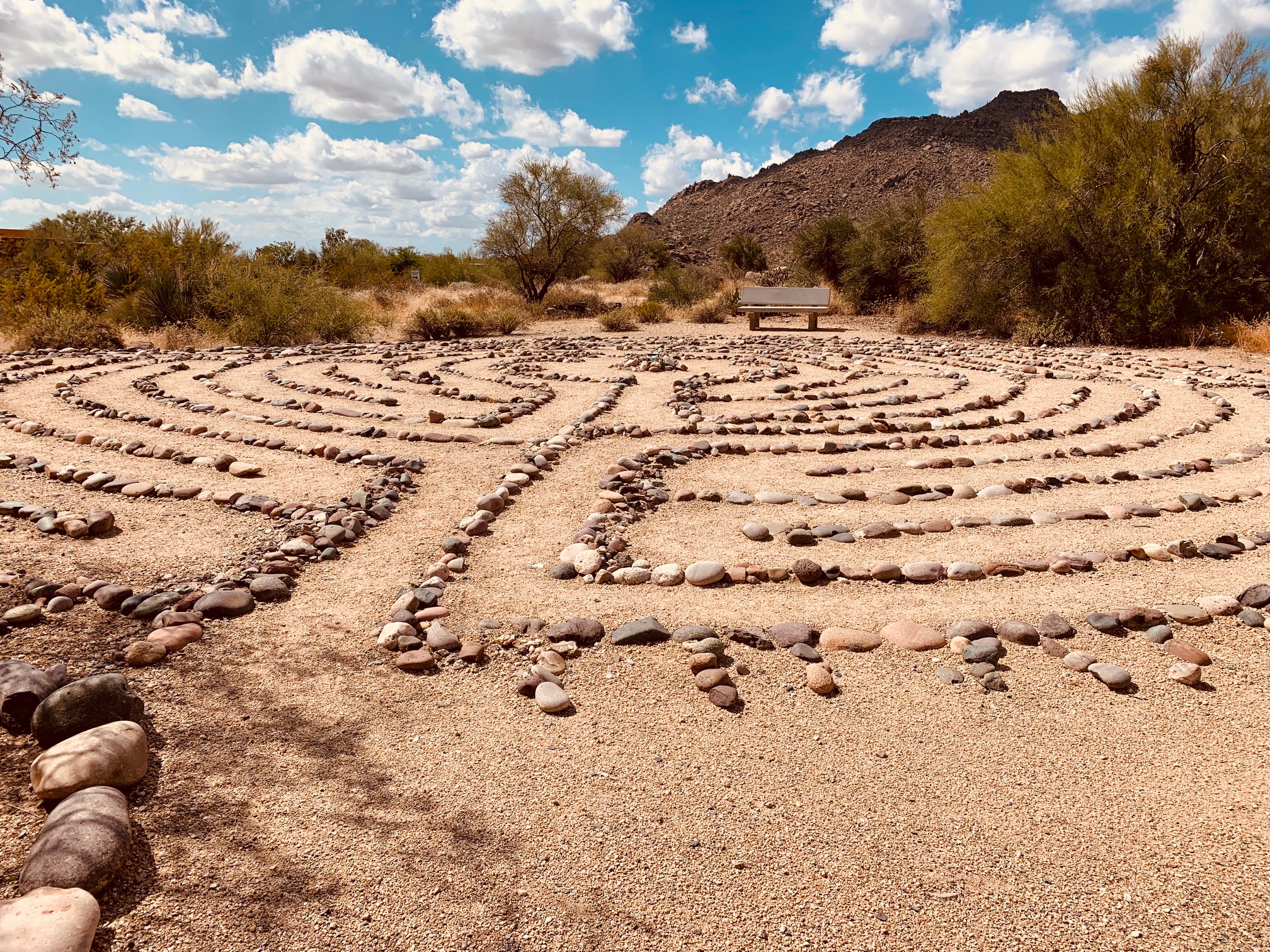
The Psalms of Ascent are songs/prayers which the people of God engaged as they journeyed to Jerusalem to celebrate feasts and holy days. Jerusalem (Mt Zion) was the literal place of worship for the people of God, and it also metaphorically represents God’s presence. So, these prayers were written to shape one’s preparation to ascend to the holy hill of Jerusalem and the temple.
A significant feature of these psalms is a focus on the house of God and Jerusalem/Mt. Zion. For these Old Testament believers, the house of the LORD was the place they wanted to be. While they would have understood God to be everywhere (“the earth is his footstool” Isaiah 66:1), there was a special sense of God’s presence (we might say an “indwelling presence”) in His house, the temple in Jerusalem. In Acts 17:24, the Apostle Paul shares that God “does not live in temples made by man” because He “made the world and everything in it, being the Lord of heaven and earth.” And, in the New Testament scriptures, we also learn that the temple of God (that special place of His indwelling presence) becomes the “believer” and the church. (1 Corinthians 3:16, “you are God’s temple”; 2 Corinthians 6:16, “we are the temple of the living God”) This is a mystical indwelling that is primarily spiritually discerned and experienced.
This is where we find ourselves today: indwelled by God. We are the temple of the living God. In the days before Christ, the indwelling presence of God was in the temple/the house of the Lord. However, we are compelled to embark on a journey of experiencing this reality just as the Old Testament believer embarked on that physical journey. The prayers and desires and perspectives shared in the Psalms of Ascent can become prayers that shape the way we approach the journey toward experiencing God’s presence ever and ever deeper. Indeed, the journey is one of love and intimacy with God fueled by desire and understaning our identity.
The journey experienced in these psalms moves from disorientation (Psalm 120, “Woe to me that I sojourn in Meshech, that I dwell in the tents of Kedar”) to reorientation (Psalm 125, “those who trust in the Lord are like Mount Zion, which cannot be moved, but abides forever”) to orientation (Psalm 134, “Come, bless the Lord, all you servants of the Lord, who stand by night in the house of the Lord”).
Disorientation is a place on the journey where we don’t feel at home. Things don’t seem to fit right. We may experience a low-level sense of loneliness, boredom, restlessness, anger, or anxiety. Afflictive emotions are especially prominent here. Our temptation is to get away or ignore or find a sense of home through our own efforts. Reorientation is a season where we have begun to understand the true desire and destination of our hearts. It is God who is our home and we are walking forward in such a way that our faces are pointed toward dwelling in His presence. Finally, orientation has a quality of peace and contentment to it. Distractions and resistances are minimal as responsiveness to the presence of God is the primary experience. Being “oriented” is experienced now and has its ultimate fulfillment in the eternal realm.
As these movements are observed in the Psalms of Ascent, the one who prays is invited to be with God wherever they are, and also to envision where the journey is going. Our lives are a journey through these movements of the Spirit. The journey into deepening intimacy progresses through one layer after another. After a season of orientation, we may begin to notice a desire for experiencing more of God’s presence and we may see the ways that we are not where we desire to be … feeling disoriented. And so the process begins again.
As we begin a journey through the Psalms of Ascent, you may spend a few moments in prayer – discerning where you are in this movement through disorientation, reorientation, and orientation. As you discern, be in that place with God … asking Him how He is with you and what He is inviting right now. One temptation can be to try to get out and move on but there are gifts in each season. There can also be a temptation to hold on to orientation when disorientation is emerging once again. Be where you are … with God … trusting that He is present and He is at work in you, shaping you and forming you in the image of Christ.
 desert direction