An Examen: Living as an Antiracist Person
For many of us, we are realizing that the statement “I’m not a racist” is not enough. Better is to say “I’m antiracist.” In other words: proactively standing against racism in our hearts and minds, in our interactions with others, and in the way we strive to see our cultural institutions operate. In that spirit, we offer this examen. An examen is a structured prayer in which we are led to prayerfully reflect on our lives by focusing on being present to God and asking God to search our hearts and guide our steps.
*set aside time daily to slowly pray through these questions
1. Remind yourself that you are in God’s presence. Give thanks for God’s grace in your life. Give thanks for God’s love for all who have been made in His image.
2. Pray for the grace to understand how God is at work in you as it relates to living as an antiracist person. Review, with God, the call to be active in bringing peace and justice to the world around you.
As you consider the injustice of racism, what does the Spirit seem to be stirring in your spirit? Do I extend the peace of Christ to people of color with my words, deeds, actions and influence? How have I allowed the evil of racism to affect me? Have I “wept with those who weep?”
3. Review your day … Ask God to search your heart and mind to see how embedded thought patterns of bias might have affected you today.
Have I done anything to diminish the image of God in my neighbor, friend, colleague or family members that are persons of color? Did I say hurtful words to someone or about someone because of their race? Have I been silent when I could have spoken peace and truth into a racially biased or explicitly racist situation?
4. Reflect on what you did, said, or thought in those instances. Were you drawing closer to God’s heart concerning racial injustice, or further away?
Are my private thoughts uplifting and loving towards all races? Do I recognize people of color as fearfully and wonderfully made? Where do I struggle with this the most? a specific person, people group or environment? Where can I let go of my ego and make more space for racial justice?
Are there ways in which I promoted peace and extended love to people of color?
Take a few moments to repent and ask for forgiveness where it is needed, and then celebrate with God where you see growth and transformation.
5. Look toward tomorrow — think of how you might collaborate more effectively with God’s heart to extend brotherly and sisterly love.
How can I speak up, show up and affirm people of color in my life? in society? What action can I take tomorrow to nourish the longing for racial justice?
Are there things that need to be undone? Is there someone to whom I need to apologize? Is there someone to whom I need to reach out?
How can I be antiracist in my community of influence as well as help in the work of larger societal change? What ongoing values and actions will I apply towards living a life as an antiracist person?
Examen Written Collaboratively by Vernée Wilkinson and Ted Wueste
————————————————————–
Note: I began working on this about two weeks ago with a friend who lives in Boston. This is an examen (prayer exercise) that is designed to do daily. When I asked Vernée about whether we should encourage it as a daily, weekly, or monthly exercise. She responded very quickly that people of color deal with the issues of racism on a daily basis. In solidarity, this is offered as a daily examen. And, if there is a desire to grow in this area, a daily rhythm makes sense spiritually as well. And, clearly, this is not an examen written for people of color but for white people. Thank you, Vernée for initiating this and inviting me to be a part of it. I am already seeing the Lord shift things in me as a result.
If you would like to download a PDF, click on the link below.

A Holy Saturday
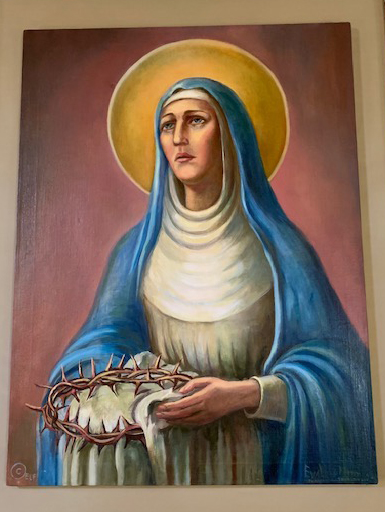
On what has been traditionally called Holy Saturday or Silent Saturday, there is a space between what was and what will be.
Before Friday, for the followers of Jesus, including his mother, life was filled with hope and promise and expectation. At the very least, there was a sense of normalcy. Normal routines and normal rhythms of life and faith served as a foundation for how life was experienced.
And then, Friday, a day when all hopes and dreams were dashed. The Messiah, the One would make life good and holy and right, was killed in the cruelest of ways, on a cross, beaten, tortured, naked for all the world to see. Our modern, sanitized depictions of the cross do not do justice to the shame that was poured out upon Jesus.
And now, on Saturday, we are left holding a crown of thorns and wondering what is going on. Conspiracy theories abound, both from those who killed Jesus (they were worried that the followers of Jesus would come and steal the body, cf. Matthew 27:62-65) and likely among His followers. “I knew the Romans would take from us what we hold most dear. They have been doing that for years.” So, the disciples sequestered, huddled together in confusion, doubt, and despair. We know from the two followers who went back home to Emmaus (Luke 24) that even though they had heard Jesus say he would be resurrected and there was testimony from an angel, they were done.
So, we sit, holding a crown of thorns. The thorns have blood on them, remnants of a life too soon gone. The thorns are prickly and if we don’t hold them just right, they draw out our blood as well. Everything is uncomfortable. Nothing is normal. The loss seems too much to bear.
And even in this, there is a nudging sense that if we wait, there has to be more to the story. It is so hard to let that possibility rise to the surface. In some ways, we don’t want to embrace it. We’d rather sit in our despair. It’s easier.
When seemingly everything to which we’ve held tight has died, how do we wait? How do we move into the next day? How do we not take the wine that Jesus refused on the cross and drink ourselves into numbness? Saturday is an opportunity to feel what we feel and also believe that just maybe there is more to the story. Both are important. Both are real.
In many ways, in our world today, we are between what was and what will be. For many, we’ve experienced pain and confusion and loss. All of the “normal” has been turned upside down, things as significant as gathering with others or the less significant but comforting beginning of a baseball season. We have wondered about conspiracy theories. We are inundated with voices giving us so much data. We’ve also tasted, perhaps, some beauty and that nudging sense that maybe there is something even more beautiful on the other side.
Consider these words,
“So we do not lose heart. Though our outer self is wasting away, our inner self is being renewed day by day. For this light momentary affliction is preparing for us an eternal weight of glory beyond all comparison, as we look not to the things that are seen but to the things that are unseen. For the things that are seen are transient, but the things that are unseen are eternal.” (2 Corinthians 4:16-18)
How might you look to the “unseen” things even as you grieve the losses? Are there “normal” things in life that you can let die so that you might find something more beautiful? That is the hope of resurrection and that is the only way we’ll make it through Saturday and be prepared to receive the gifts of Sunday.
Maybe, just maybe, we will find that all which is truly significant can never be lost, no matter the circumstance. We might be separated from so much but that which is the essence of life can never be lost. (Romans 8:37-39)
Look at the Birds
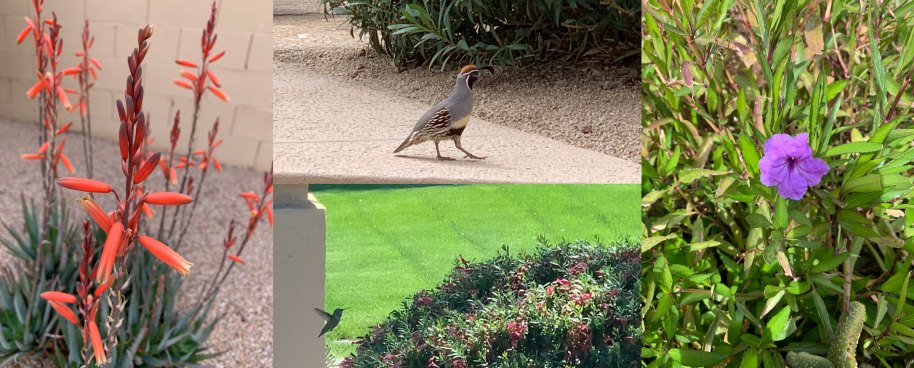
To people living with anxiety, Jesus said something incredibly simple and also amazingly profound. But before we get to that, I want to clarify a few things about anxiety and fear. Often, we misunderstand the nature of anxiety and fear as well as what God says about them.
First, if you are not feeling some sense of anxiety in the midst of this global pandemic, then you are likely not paying attention. Anxiety might not be ruling you but some level of anxiety and/or fear is the normal response to seeing people getting deathly sick and wondering if you will be the next to lose your job. If you aren’t seeing it directly or asking those questions directly, it should be unnerving as you consider those who are. In addition, the massive changes to regular routines and having to stay at home shifts things in our bodies and souls even if we are not aware of it.
Disorientation is what everyone is experiencing. To be oriented is to have regularity, rhythm, peace, and a sense of place. Even for those who normally experience significant emotional and spiritual health, these days are disorienting. Things are not normal. And, this affects us. For some it is debilitating and for others it is milder but we are all in the same boat. We are in a boat of unchartered waters and we aren’t sure where exactly the boat is going and we aren’t sure what’s in the murky water around us.
Second, fear is not a bad thing. I’ve heard so many saying, “Don’t be afraid.” Or, others quoting Bible verses that command “do not fear.” This is a simplistic understanding of both emotions and the biblical text.
Fear is a good thing. It is a gift from God! Fear is a bodily response to dangerous situations. Or, at the very least, it is a response to perceived danger. Fear is a warning light on the dashboard of our souls that tells us we need to stop and investigate what is going on.
If we couldn’t feel fear, then we wouldn’t get out of the way of a grizzly bear charging at us. Or, we might not take seriously the threat of getting sick if we are not wise about how we orient our lives during a pandemic. However, there are also times that we experience fear and it is something for which we don’t need to be afraid. For example, we might be afraid of a committed relationship because of past hurts or failures. Or, we might find ourselves in fear of God because we grew up in an environment that told us God will punish us if we engage in a certain behavior. And, another issue that might arise is the intensity of our fear. Some fear might be appropriate in a situation but not to the level that it leaves us unable to live in peace.
The challenge is discernment. As we experience fear, it is a place to meet God in prayerful presence, asking God, “what do I need to see about this situation?” and “how should I respond?” Ultimately, this kind of discernment leads to a place of trust and surrender to the will of God. When we simply say, “I’m not afraid,” it could very well be that we are ignoring reality or ignoring our own experience. In addition, we can’t rid of fear by willing it away. We can’t deal with fear by acting like it is not there. When we do this, we shut down a part of our soul and we miss out on the opportunity to grow deeper into the reality that we are the beloved of God, cared for and held by His grace.
Third, when the Bible says “do not fear,” there is often more going on than a simplistic, blanket statement that fear should never be a part of our experience. The challenge to not fear in the Scriptures is an acknowledgment that fear is a part of the human experience. And, these commands are not judgmental in nature. I would suggest that they are more invitational. When Jesus says, in Matthew 6, “do not be anxious,” it could also be translated with the tone: “you don’t have to be anxious.” In other words, this is not how you have to live. Finally, many of the Scriptures that talk about fear are encouragements to not fear the supernatural – for example: do not be afraid of God, do not be afraid of this angel, do not be afraid of God’s calling in your life, etc.
As we bring our lives into the prayerful awareness of a good, sovereign God, fears are put into context and we are able to live with a sense of peace. There is a difference between fear being our dominant reality and living with peace and confidence and hope in the middle of situations that scare us. I can “feel” certain things and also rest in the knowledge that my life is secure in the love of God. Most often, our responses to fear are described with the words: fight, flight, or freeze. “Fight” can look noble but it can end up damaging others and ourselves. Flight takes us away from things that truly matter. Freeze can numb us to the point where we don’t feel much of anything. Faith, on the other hand, is a settled, peaceful experience that doesn’t come through any of these three paths.
In Matthew 6, when Jesus says, “do not be anxious,” He invites us to a way of life in which anxiety and fear do not dominate us. He doesn’t simply say that we should stop being afraid but He offers a practice and way of perceiving life that can fundamentally shift our way of being.
He says, “look at the birds” and “consider the flowers.” Both verbs speak of looking intently at something or we might even say, contemplating. As we contemplate the birds and the flowers, two things happen and both of them are suggested in the text.
First, we shift our focus onto the love and care of God. Rather than wondering if we are going to have something to eat or wear, the birds and the flowers remind us of God’s provision and care. By scale, how much more does He love us? Jesus also says, “Is not life more than clothing and food?” When we stop and look at the birds and flowers, we are reminded: “yes, life is more than that! It is about resting in relationship” (seek first His kingdom). And, then, we are challenged to remember than anxiety is unproductive. In the hands of a loving, caring God, my life is secure because I can’t add anything with worry.
Author and psychologist James Finley says: “If we are absolutely grounded in the absolute love of God that protects us from nothing even as it sustains us in all things, then we can face all things with courage and tenderness and touch the hurting places in others and ourselves with love.” (shared by Pastor Jim Clark, Saint Barnabas on the Desert Episcopal Church) The birds and flowers ground us in the love of God.
Second, contemplating the birds and flowers roots us in the present moment. “Therefore, do not be anxious about tomorrow.” The simple act of stopping and looking at birds and flowers roots our bodies and souls in the now. We get into trouble with anxiety and fear as we fixate on the future. When we are continually living in the future with “what if” and “what about”, we are not present to reality. The ability to plan and think about the future is a gift from God but we are not meant to live in the future. Now is where God is. Now is where relationships are. Now is where Spirit produces love, joy, peace, patience, kindness, goodness, faithfulness, gentleness, and self-control.
So, I would argue that Jesus wasn’t simply using birds and flowers as teaching props but also as an invitation actually stop and contemplate. As we do, we can experience being grounded in the love of God and being rooted in the present moment. Then, fears and anxieties serve us rather than dominate us. Then, we are free to love and live with God and others.
Today, how will you stop and contemplate the birds and flowers? Perhaps, it is on a walk. Perhaps, it is through pictures or a video. Perhaps, it is through your imagination. However, you engage it – let it be a prayerful noticing that God is holding your life through all things!
Keep Yourself in the Love of God
We are immersed in an intense, abiding, miraculous, powerful love story. Let that sink in for a moment. In a world where there is heartbreak and disappointment around every corner, isn’t that all we want to know? That there is someone there, loving us, waiting with us, companioning us without needing anything in return. We don’t necessarily need someone to fix our brokenness or give us advice. We need someone to be with us, to assure us when everything is not ok, to (in a simple but often misunderstood word) love us.
One writer put it this way: “John of the Cross says that God is the first contemplative. God’s gaze on us makes us irresistibly attractive to him. So it is not we who first loved God, but God who first loved us. We wake up in the middle of a love story. We did not begin it.” (John Welch)
Yes! We are in the middle of a great love story, but like the air we breathe in which we are usually unaware of the gift of oxygen filling our lungs and fueling our next steps forward, we frequently live unaware of this love story.
The greatest, deepest, most true reality in this world is that we are passionately loved and pursued by God. It is a life altering truth when we are able to take it in and consciously live in the midst of that story. All the storms of life, without denying them, pale in comparison to the reality that we are loved, valued, pursued by one who can love like no other. The God of this universe is crazy about me and He doesn’t stop in His pursuit of me.
The challenge is one of awareness. How much of the time am I living with my heart fixed on this love story? How much of my day do I put the events of my life in the context of the plot of this story?
In the first century, one of the writers of Scripture, Jude, challenged the first followers of Jesus to “keep themselves in the love of God.” (Jude 21) He wrote those words in the midst of a world where “there will be scoffers, following their own ungodly passions. It is these who cause divisions, worldly people, devoid of the Spirit.” (Jude 18-19)
There will be those who tell very different stories than the good story in which you are actually immersed. These stories center around competition and comparison, division and deception, selfishness and self-protectiveness. All stories which keep us looking at the circumstances of our lives and wondering why we don’t have enough, but of a God of love reminds us that we have all that we need and there is nothing that can take that away.
Over the last two and half years of my life, I’ve walked through circumstances that could make anyone question what story is being told. After battling two kinds of cancer, several surgeries, 6 different rounds of chemotherapy, a bone marrow transplant, months of hospitalization which included a stay in ICU for heart failure, pneumonia from Legionnaire’s Disease, Graft vs. Host Disease from the transplant, and more (but you get the point), I realize that I had been seeing all these things in the context of a great love story.
By God’s mercy and grace, He gave me the sense that all of what I was experiencing was a part of this love story, the reality that He is drawing me closer to Himself. The great spiritual writer Henri Nouwen talks about putting our brokenness under the blessing. When we are living with the awareness that we are God’s beloved, it changes everything:
“For me, this ‘putting of our brokenness under the blessing’ is a precondition for befriending it. Our brokenness is often so frightening to face because we live it under the curse. Living our brokenness under the curse means that we experience our pain as a confirmation of our negative feelings about ourselves … there is always something searching for an explanation of what takes place in our lives and, if we have already yielding to the temptation to self-rejection, then every form of misfortune only deepens it.”
“The great spiritual call of the Beloved Children of God is to pull their brokenness away from the shadow of the curse and put it under the light of the blessing. This is not as easy as it sounds. The powers of darkness around us are strong, and our world finds it easier to manipulate self-rejecting people than self-accepting people. But when we keep listening attentively to the voice calling us Beloved, it becomes possible to live our brokenness, not as a confirmation of our fear that we are worthless, but as an opportunity to purify and deepen the blessing that rests upon us.”
“And so the great task becomes that of allowing the blessing to touch us in our brokenness. Then our brokenness will gradually come to be seen as an opening toward the full acceptance of ourselves as the Beloved. This explains why true joy can be experienced in the midst of great suffering. It is the joy of being disciplined, purified, and pruned. Just as athletes who experience great pain as they run the race, can at the same time, taste the joy of knowing that they are coming closer to their goal, so also can the Beloved experience suffering as a way to the deeper communion for which they yearn. Here joy and sorrow are no longer each other’s opposites, but have become two sides of the same desire to grow to the fullness of the Beloved.” (Henri Nouwen, Life of the Beloved)
So, in the words of Jude, “keep yourself in the love of God.” Reject all the other stories that tell you that your life is cursed or that things aren’t fair or that you aren’t enough. Keep yourself in the love of God as you choose daily to remind yourself that there is nothing that can separate you from the love of God. (Romans 8:37-39) In reality, every circumstance of life is place in which we can experience His love in ever deepening ways.
Are you looking for this great love story? Are you noticing the ways the plot is being developed in your life? Keep yourself in the love of God!
Advent in an Age of Anger
Advent is a time of waiting. Traditionally, the weeks before Christmas have been a time of “living into” the story of waiting for God, waiting for Him to appear in human flesh and being born as a baby. The discipline of waiting to celebrate is a significant spiritual practice because it mirrors real life. More often than not, in our lives, we experience loss and grief, and waiting is a part of the reality. We wait for healing. We wait for the right person to come along. We wait through the pain of a miscarriage. We wait. We wait. We wait. The Advent hymn, O Come, O Come Emmanuel, expresses beautifully the discipline of waiting as we pleadingly sing the word “come” over and over. And, the name Emmanuel (translated as “God with us”) perfectly describes the truest, deepest longing of our hearts … to experience God’s presence in our lives no matter the current situation.
When we don’t know how to wait, we are cut off from reaching down deep into our hearts to discover what it is we truly desire. The discipline of waiting in Advent has largely been preempted by starting to celebrate Christmas as soon as possible. Often, Christmas decorations are sold next to decorations for Halloween.
I’m not interested in criticizing the larger culture because we all have choices to make in terms of how we interact with the world around us. I am more interested in the inward look that asks what is going on in my own soul.
We want what we want when we want it. Right? We might try to over-spiritualize things and pretend that we don’t struggle with instant gratification and that we are content moment to moment, but do you ever get angry?
We live in an age of anger. Outrage is all the rage. We react and over-react as we encounter our world rather than stopping, noticing, and responding in love. Again, take an inward look and ask: do I ever get angry?
It might be something as simple as getting angry while driving or as frustrating as yelling at your daughter because she once again left dirty dishes on the counter for someone else to clean. Or, it could be that we are feeling anger as we look at the political climate in our country. Whether seemingly big or small, anger is a clear indicator that we want what we want when we want it!
The poet David Whyte penned these words about anger: “Anger is the deepest form of compassion. For another, for the world, for the self, and for all our ideals. All vulnerable and all possibly about to be hurt.”
Anger and compassion? What Whyte is getting at is that we get angry about what we love. One of the benefits of paying attention to our anger is that we can get insight into what we love, what is important to us.
So, as you feel anger, consider it an invitation to reflection: what is it that I am loving right now? And, is that love out of proportion to the circumstance? Is it out of proportion with other things that I love? For example, I may love a clean kitchen with dishes put away but do I love that more than my daughter?
And, as you experience anger, practice the discipline of waiting. Most often, our anger arises from unmet expectations and a longing for more than our present experience affords. Reflect on these questions: what I am expecting? Could there be more to the story? If I wait, might more be revealed than I am presently seeing?
The decision to wait and reflect when experiencing anger will only become a practice with intention. Let the waiting and reflecting be prayerful. Go to God. Express your anger to Him. He not only can handle it, He can transform it. As we express our anger in prayer, in the presence of the Almighty who is love, we begin to see with His eyes.
Psalm 13:3, “Consider me and answer me, O Lord my God; light up my eyes, lest I sleep the sleep of death.”
An early church father, Denys the Areopagite, suggested that it works like this: we “picture ourselves aboard a boat. There are ropes joining it to some rock. We take hold of the rope and pull on it as if we were trying to drag the rock to us when in fact we are hauling ourselves and our boat toward that rock.”
As we go to God in prayer with our anger, waiting and reflecting, our anger can be transformed. We are reminded that what our hearts long for is the one who is pure love. When our loves are impure or incomplete, we can become demanding and angry but when we love what He loves, we become patient and accepting. We are able to accept “what is” in love rather than demand “what isn’t” in anger.
God is and He never changes. When we throw our ropes around Him, we are drawn into a love that can never diminish or be taken away. (Romans 8:31-39)
The message of the Advent and then Christmas season is that God is with us. He companions us and never leaves us or forsakes us. Feeling anger? Are you loving and valuing and treasuring the God who is with you or demanding something more or different? He is enough, actually more than enough, to satisfy the deepest longings of our soul. To stop and wait and reflect and pray can be a huge act of faith in this age of anger.
*Blog post inspired by a sermon delivered by Rev. Jim Clark at Saint Barnabas Episcopal Church in Paradise Valley, Arizona.
Silence and the Sacred
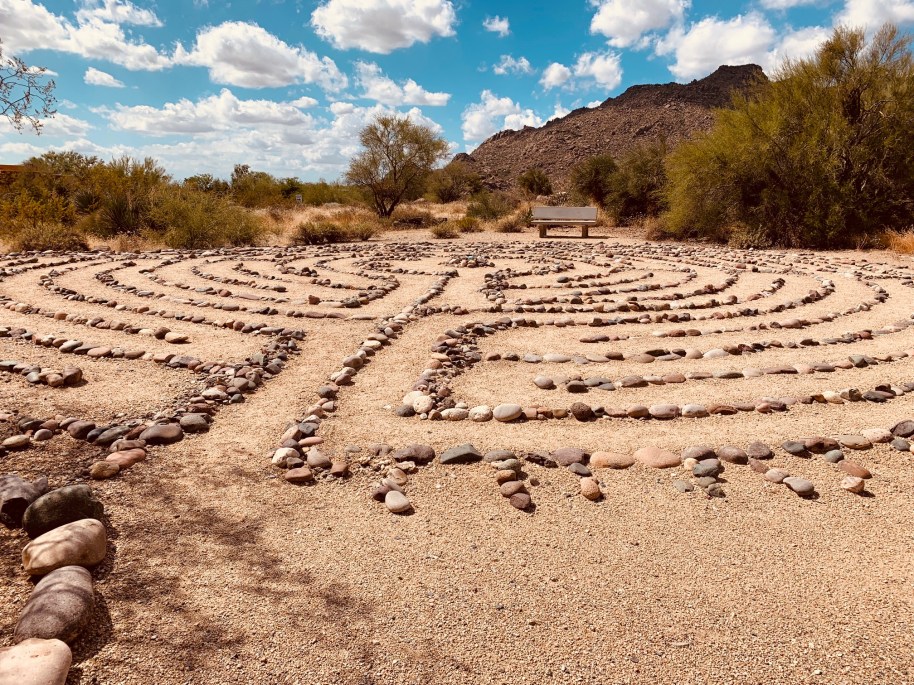
In the coming weeks of December, we will likely hear a song with the words: “silent night, holy night.” The pairing of these descriptors for a particular night is no coincidence. It seems that holiness and silence go together beautifully, and yet we often miss the significance. Even more, we can become fearful when we think of those two words.
For many of us, silence means that we are left alone with our thoughts or perhaps silence was used punitively when we were children. Noise and words can distract us from the hurts and unpleasant thoughts we often carry in our hearts. However, on the other hand, silence can actually move us into a place of receiving and experiencing the very presence of love. Noise and words can serve the purpose of “protecting” us but they can also block out the love which can heal and transform our woundedness.
We often want a big show that will show us that God is speaking to us and present in our lives. But, God usually doesn’t present Himself in that way. In the Hebrew Scriptures (1 Kings 19:11-13), we read:
And behold, the Lord passed by, and a great and strong wind tore the mountains and broke in pieces the rocks before the Lord, but the Lord was not in the wind. And after the wind an earthquake, but the Lord was not in the earthquake. And after the earthquake a fire, but the Lord was not in the fire. And after the fire the sound of a low whisper.And when Elijah heard it, he wrapped his face in his cloak and went out and stood at the entrance of the cave. And behold, there came a voice to him and said, “What are you doing here, Elijah?”
It was in the quiet sound of a “low whisper” or perhaps “silence” (the Hebrew word could mean either) that God spoke. We might think, “why doesn’t God make it more obvious?” God’s presence in our lives is most often in silence because He never wants to force Himself on us. He desires to be gentle and humble in His way. (Matthew 11:28-30) Simply being present with us is the love we crave and we come to perceive that love when we get quiet.
In the recent movie about Fred Rogers, there is a scene in which Mr. Rogers asks a reporter who is interviewing him to simply be quiet for minute. The film doesn’t just represent a minute of silence, there is actually a minute of movie silence and it is powerful. He asks the reporter to call to mind all the ways in which he had been loved. It was transformative experience for this man.
When we are quiet and devote ourselves to periods of reflective silence, we experience the holy or the sacred. Holiness can also be a word which scares us but it simply speaks of that which is transcendent and most real. Love itself is the most holy reality in the universe because God is love.
Brother Thomas, the Canadian monk and artist, wrote: “Once we become aware of the Holy, we part company with words.” Perhaps the inverse is true as well: when we part company with words, we become aware of the holy.
As we learn silence, we learn presence …being present to God’s love in real time. As we are silent and quiet with others, we are giving them presence, or love.
During these weeks of “much noise,” take just a minute each day (or if you are slightly more daring, more than a minute) and simply embrace silence. In the silence, reflect on the ways that God is loving you. Touch on past expressions of love and look ahead to His future for you, but stay as present as possible. How is He loving you right now? Listen for the low whisper.
The Beauty of Emptiness

We spend our lives, indeed most of waking hours, trying to get rid of the emptiness that is part of the human condition. We generally don’t like any sense of emptiness because it makes us feel vulnerable and weak, like we are not in control. We combat those feelings through strategies that we believe will fill … things like approval from others, accumulating material possessions, or achieving our identity in what we do and accomplish.
Most of the time, we are not even aware that we are engaging such strategies. It often just feels like normal life and whatever it takes to quell angst in our lives is embraced. And yet, we have those moments of clarity when the strategies aren’t working, when life gets messy. It is in those times when we become most aware of the emptiness and therefore, our vulnerability. Put simply, we become aware that we are powerless to “make life work.”
And, so, in what way is there a beauty in emptiness?
The beauty is in the fact that when we embrace emptiness and experience vulnerability and weakness, we are never closer to experiencing our divine design. This can feel very counterintuitive because we’ve been led to believe that being in control and strong is achievable. However, we have been created as vulnerable, dependent beings. As we welcome vulnerability, we have the opportunity to move toward deepening dependence upon God and His love for us. There is no other path.
Again, most often, our attempts to be in control operate under the surface of our lives and outside our immediate awareness. So, it is usually painful situations and suffering that bring us to a place of awareness and then we have choices to make.
For the last two years, I’ve been in a fight with cancer. I was diagnosed with Hodgkins Lymphoma which led to a year of chemotherapy, a brief remission, a recurrence of the cancer, and then an unsuccessful stem cell transplant. It was unsuccessful because I had developed Leukemia as a result of all the chemotherapy I’d received. This all led to more chemotherapy and ultimately a stem cell transplant with a donor.
For the first six months of the year, I was in the hospital for three of those months, and I was confronted quite violently with a sense of vulnerability. Because of being isolated in the hospital and separated from my ability to do much of anything, I experience a stripping of those strategies that I’ve often used to fill the emptiness. In particular, as a “doer,” I felt helpless. I couldn’t work. I couldn’t take care of my family. I couldn’t control my body as chemotherapy reduced my energy and took away my immune system. I couldn’t eat for long stretches of time. The list of “I couldn’t” statements could go on.
The emptiness and vulnerability were heavy.
And yet, God in His grace met me there in ways that I’d never experienced. It was in the vulnerability that I actually experienced His presence and love. It wasn’t an emotional experience that made me feel warm but I deep settled sense of peace. It was in the vulnerability that I saw Him provide for our family financially, emotionally, and relationally in ways that I always thought I could control.
Things that I would have said I believe deeply (He provides, He loves, He is present) became my experience. It was in the vulnerability that I found an experience of dependence that was outside my control. I can relate to the following from Pedro Arrupe:
“More than ever I find myself in the hands of God. This is what I have wanted all my life from my youth. But now there is a difference; the initiative is entirely with God. It is indeed a profound spiritual experience to know and feel myself so totally in God’s hands.”
In it all, I experienced a deep sense that all that was left was love … God’s love for me and my call to love others. As I underwent a stripping of my false self (trying to make life work on my own), I could see my identity in a very different way. Thomas Merton put it like this:
“To say that I am made in the image of God is to say that love is the reason for my existence, for God is love. Love is my true identity. Selflessness is my true self. Love is my true character. Love is my name.”
So, why can we say that there is a beauty in emptiness? Because it is in the vulnerability that we experience so clearly the choice to release self and know love. Jesus, of course, said it so well: “If you try to hang on to your life, you will lose it. But if you give up your life for my sake, you will save it.” (Matthew 16:25, NLT)
Giving up our lives is a way of saying that we let go of our strategies and embrace the emptiness. It is one thing to understand this all intellectually. Poet David Whyte wrote: “The only choice we have as we mature is how to inhabit our vulnerability…” So, how do we actually embrace or inhabit our vulnerability rather than fight against it?
In Philippians 2:5-7, the Apostle Paul writes:
“Have this mind among yourselves, which is yours in Christ Jesus, who, though he was in the form of God, did not count equality with God a thing to be grasped, but made himself nothing, taking the form of a servant …”
The most studied phrase of these verses is “made Himself nothing.” In the Greek language, the verb is kenao and means to empty oneself. The theological debate over the centuries centered around what He emptied and much consternation surfaced around the idea that Jesus might have emptied Himself of His attributes as God. However, if we understand this idea in context, a robust idea emerges. First, the phrase “did not count equality with God a thing to be grasped” is the idea that He did not use His attributes as God as something to be used for Himself (“grasped” is literally, “to be used to one’s advantage). And then, second, we understand the idea of emptying as “embracing emptiness” or vulnerability, which is exactly what the second person of the Trinity did in taking on human flesh. There is perhaps nothing more vulnerable than being a baby. He continued to embrace emptiness throughout His life as He experienced temptation, suffered, and went to the cross. So, in the same way we are challenged to embrace emptiness by not using our “power” and strengths to strategize ways to make life work. Jesus modeled this for us.
How do we move into vulnerability? In Colossians 4:2, we are encouraged to “Continue steadfastly in prayer, being watchful in it with thanksgiving.”
First, we simply engage in prayer. We bring ourselves before God. Second, we watch. In prayer, we watch for the ways that we are tempted to push away vulnerability. We notice when we are trying to fill the emptiness. We ask God to show us the emptiness and to give us the strength to abide with Him. Finally, we give thanks. Gratitude is what keeps us grounded. As we see our emptiness and vulnerability, we thank God for the gifts that are a part of abiding in vulnerability.
What we begin to experience in this kind of prayerful life is that we see everything as a gift … everything is connected to His goodness in our lives. While I wouldn’t wish the difficulties I’ve been experiencing over these last years on my worst enemy (not sure who that would be anyway), I wouldn’t trade them for the world.
The beauty of emptiness … a life of gratitude as we see His gifts in all things and abide with Him in them!
An Invitation to Dance
 The concept of God existing in an eternal dance has been present in Christian thought since the early centuries. It gives a poetic picture of what is happening in the Trinity. It also gives us an invitation. We are drawn to dance. We want joy … it’s as though we were made for it. In the following selection, C. S. Lewis writes about this beautifully:
“And now, what does it all matter? It matters more than anything else in the world. The whole dance, or drama, or pattern of this three-Personal life is to be played out in each one of us: or (putting it the other way round) each one of us has got to enter that pattern, take his place in that dance. There is no other way to the happiness for which we were made. Good things as well as bad, you know, are caught by a kind of infection, if you want to get warm you must stand near the fire: if you want to be wet you must get into the water. If you want joy, power, peace, eternal life, you must get close to, or even into, the thing that has them. They are not a sort of prize which God could, if He chose, just hand out to anyone. They are a great fountain of energy and beauty spurting up at the very centre of reality. If you are close to it, the spray will wet you: if you are not, you will remain dry. Once a man is united to God, how could he not live forever?” (C. S. Lewis, from Mere Christianity)
How can you sit close to the spray today? How will you choose to be infected with joy, power, peace, and eternal life?
Just a couple of quick suggestions … sit quietly and be still, ask God to help you see Him in whatever situation you find yourself, and then sit quietly some more as you contemplate deeply the pattern of His grace you see around you.
As We Wait: Wishing or Hoping?

As we enter into the season of Advent, I am again reminded that so much of our lives is about waiting. Waiting is not for the faint of heart, but waiting is also not an accident. Waiting is a spiritual exercise that can connect us more deeply with life as God designed it for us. In the perfection of the Garden of Eden, Adam and Eve waited for knowledge and wisdom from God. The one tree from which they were not to eat was the Tree of the Knowledge of Good and Evil. It was pure goodness to wait … to trust that God alone was sufficient for both defining and supplying their need.
As we wait, we have the opportunity to be shaped into people who can receive the true gifts of life and not simply the gifts we’ve been told we should want. The pain of waiting can give way to joy of receiving what we most long for in the depths of our souls. Waiting can feel lonely and disorienting when we are not able to cling to the lesser gifts that have given us comfort over the years. Like a young child “losing” its pacifier, that pain and disorientation is indeed for something better.
What is “the better”? Understanding the distinction between wishing and hoping can give us insight. Henri Nouwen beautifully expresses the difference:
“Waiting is open-ended. Open-ended waiting is hard for us because we tend to wait for something very concrete, for something that we wish to have. Much of our waiting is filled with wishes: ‘I wish that I would have a better job. I wish that the weather would be better. I wish that the pain would go.’ We are full of wishes, and our waiting easily gets entangled in those wishes. For this reason, a lot of our waiting is not open-ended. Instead, our waiting is a way of controlling the future. We want the future to go in a very specific direction, and if this does not happen we are disappointed and can even slip into despair … hope is something very different Hope is trusting that something will be fulfilled, but fulfilled according to the promises and not just according to our wishes. Therefore, hope is always open-ended.”
What has God promised? As we scan what God has communicated to humanity throughout history, one thing seems consistent. He promises Himself. He promises His presence. “I will never leave you or forsake you” is the comfort given in Hebrews 13:5 in the face of temptations regarding money and sex. Earlier in the letter to the Hebrews we find this connection between promise and hope stated beautifully:
“We have this as a sure and steadfast anchor of the soul, a hope that enters into the inner place behind the curtain, where Jesus has gone as a forerunner on our behalf, having become a high priest forever after the order of Melchizedek.” (6:19-20)
The imagery of these verses is poetic and profound. First, “hope” is an anchor to the soul. Our souls long for hope. Whether in the midst of difficult times or more smooth seasons, our souls instinctively look for hope. We need something to anchor us and keep us in from wandering. We may indeed become distracted by “wishes” as the world around us tells us that “concrete” things like food or sex or comfort will anchor our souls but the hope described here is substantially different.
This leads to the second insight: our hope is to enter the inner place behind the curtain. The “inner place” is an illusion to the Old Testament “holy of holies” where the presence of God dwelled. Because of Jesus, we are able to be in the holy place and dwell there with God.
Our hope, which anchors our souls, is that we are able to dwell in the very presence of God. Our hope in the midst of whatever storm we are facing is that we can be with God, experiencing Him in our hearts. The place that God dwells is the heart of one who knows Jesus as high priest. We might wish that our circumstances were different (but this will leave us unanchored and floating around) but we can live with hope as He is with us, drawing ourselves to Him, anchoring our hearts to His in a way that circumstances can’t touch.
As our hope is in the deepening experience of His presence, we are able to receive what is rather than wish for what isn’t. Every moment of our lives, whether calm or stormy, offers us the gift of His presence and when we put our hope in this promise, we are anchored and filled with a peace that passes all understanding.
One writer put it this way:
“Must we be whiplashed incessantly between joy and sorrow, expectation and disappointment? Is it not possible to live from a place of greater equilibrium, to find a deeper and steadier current? The good news is that this deeper current does exist and you actually can find it . . . For me the journey to the source of hope is ultimately a theological journey: up and over the mountain to the sources of hope in the headwaters of the Christian Mystery. This journey to the wellsprings of hope is not something that will change your life in the short range, in the externals. Rather, it is something that will change your innermost way of seeing. From there, inevitably, the externals will rearrange. The journey to the wellsprings of hope is really a journey toward the center, toward the innermost ground of our being where we meet and are met by God.” (Cynthia Bourgeault)
So, how do we do this? How do we begin to reorient our way of seeing what is rather than wishing for what isn’t? Psalm 27:4 gives us an intensely practical, prayerful way of understanding the “how.”
“One thing I have asked of the Lord, that I will seek after: that I may dwell in the house of the Lord all the days of my life, to gaze upon the beauty of the Lord and to inquire in his temple.”
It begins with desire. The prayer of David in this Psalm is singular in focus: to dwell in the Lord’s presence. In the previous verses, David expressed the circumstantial challenges he was facing but his desire to experience the nearness of God was His desire. Want to be anchored in hope? Make Him your focused desire. In prayer, come back, over and over, to this being your desire. The reality is that this is your deepest desire whether you feel it or not. Honestly, when in the midst of trying circumstances, we may not “feel” it at all. This is when we pray this desire as an act of faith – knowing that this is our only hope.
Next, David, shares what it looks like to dwell. He describes being aware and attentive to God’s presence as “gazing” and “meditating.” The word “inquire” could also be translated as “meditate” (as noted in the footnotes of most English versions of the text). In Hebrew poetry, two concepts are often placed back to back in synonymous parallelism. In other words, the concepts of gazing and meditating are two ways of describing the same thing. We dwell with Him when we gaze upon His beauty, the nature of who He is. How do we do that? Through meditation.
When we “fall” in love with someone, we often find ourselves mentally gazing upon them and mulling over in our minds all the attributes of what make that person so incredible. This is a form of meditation. To meditate is to intensely focus our heart upon something.
If we want to have our souls anchored in true hope, we have to learn to focus our hearts upon the beauty of God throughout our day. Then, we are able to see and receive the gifts of His presence. We will begin to see that the world is filled with the fingerprints of His love if only we are trained to see them. Meditating on God’s beauty in the quiet, routinedspaces of our lives can translate into seeing His beauty in the more noisy, random spaces of life.
As you find yourself waiting, try these daily spiritual disciplines:
- Pay and express to God your desire to experience His presence. Journal your prayer. Write a poem about your desire. Simply tell Him what you want. Be creative each day!
- Meditate daily on the beauty of God. One way to meditate is to sit in a quiet space and focus the attention of your heart on an aspect of God’s beauty. First, try to sit for 5-10 minutes and let all thoughts gently fade except for your focus on God’s beauty. As other thoughts come, gently return to focusing on Him. For example, you might choose to meditate on His love. Simply take the phrase like “I am His beloved” or “The Lord is My Shepherd” and let that phrase come back to your awareness over and over. If other thoughts enter, gently let them go and return to your phrase.
One final thought: experiencing our hope as we learn to gaze upon Him can only happen as we learn to slow down. If we live hectic lives, the old program of fixating on “wishes” will just keep running undetected in the background of our lives. As we slow down, our waiting can be infused with hope because we will begin to see His presence in all of life. Then, we will be able to experience the grace that is always present and available.
Participation: Suffering as an Invitation, part 4
 Over these last few blog posts, we’ve been looking at suffering as an invitation. It may sound strange to link suffering and invitation together but it is something that the Biblical text does over and over again. Because of the pain that comes along with suffering, we generally would say “I’m just fine, thank you” with no need for invitations in sufferings and would rather just get back to “normal” life as soon as possible.
Indeed, this is an overall temptation in all suffering: to just grit our teeth and get through it. Of course, we don’t want to experience pain, loss, and grief so the natural response is to think through how we can muster the strength to just get through it. However, when we just try to get through it, we run the risk of missing the gifts that come in suffering. It is a radical concept but Jesus makes it clear that “unless a grain of wheat falls into the earth and dies, it remains alone; but if it dies, it bears much fruit.” (John 12:24) He goes on to say: “whoever loves his life loses it, and whoever hates his life in this world will keep it for eternal life.”
The concept of “loving” one’s life is to try to preserve it. And, if we try to preserve our life, we ironically will lose it. In other words, we will stay committed to those life-preserving strategies that we believe can keep us from pain. But in trying to protect ourselves from pain, we miss the gift that pain brings. So if we choose to “hate” (or let go of our life) these life-preserving strategies, we will find that our lives become connected to eternal life. And, by “eternal life,” Jesus means that quality and dynamic of life that we experience in God. So, again, the gift of suffering is that we are stripped of that self-protective instinct and ushered into a way of life in which we are stripped down to nothing but love – the love that is God Himself.
Of course, God does not cause suffering but He does use in it our lives to do things that can’t happen any other way. Suffering can be received as an invitation to learn and grow because suffering is a teacher like no other. Suffering will strip us of all illusions of security and power and control, if we let it. And then … we are ready to see. Further, we are ready to receive the love of God in purity and in ways that fill our empty souls. Suffering empties us and when emptied of all else, we are ready to receive the fullness of His love.
Simone Weil makes this observation: “Grace fills empty spaces, but it can only enter where there is a void to receive it.”
Part of the task of the spiritual journey is to allow these empty spaces to arise and simply exist. From the time we are children, we fill the empty spaces with experiences and things and people we believe will fill them. In addition, we develop self-protective strategies to keep control of what comes in and out of our hearts. Suffering empties us in the most gracious way.
As we continue to look at Jesus in Matthew 4, we see the struggle between receiving the invitations of suffering and the temptation to self-protection. In the first temptation, Jesus rejects the temptation to provide for Himself in a time of suffering and decides rather to listen to God as His sustenance. In the second temptation, Jesus rejects the temptation to prove that He is loved and decides rather to rest in God’s love. And finally, in the third temptation, Jesus rejects the temptation to try to control life and decides rather to participate in God’s life.
When we are suffering, everything feels out of control. In a sneaky way, this is one of the gifts of suffering. We are given a glimpse into the reality that we are not in control of anything. Control is indeed an illusion. However, this is not a vision we usually welcome. We cling tight to the idea that we can control and defend and protect our lives. Even when tragedy strikes, we want answers and control and strategies.
In this third temptation, we read:
Again, the devil took him to a very high mountain and showed him all the kingdoms of the world and their glory.And he said to him, “All these I will give you, if you will fall down and worship me.” (Matthew 4:8-9)
How is this a temptation? It is a temptation for the same reason that we buy a lottery ticket. We believe, “if I just had more money, then I can control life.” The idea is that if we had all the kingdoms of the world, we could protect ourselves once and for all from anyone or anything that might hurt us. Clearly, we might not be tempted with all the kingdoms of the world, but it might be the promise of more money or accomplishments or power that seduces us. If we fall down and worship ourselves as we seek to control, the temptation has taken hold.
However, Jesus shows us the invitation as He responds:
Then Jesus said to him, “Be gone, Satan! For it is written, “‘You shall worship the Lord your God and him only shall you serve.’”
Jesus knew that no matter how difficult the trial and season of suffering, His life was about participating in the life of God. We often reduce the concept of worship to singing songs or perhaps the way we live our lives. However, worship is about an orientation of our lives. What we worship is that around which we orient our lives. To orient our lives around God means that we become a participant in His life. More often than not, we think about the ways that God is involved in our lives but what if we began to ask how we are involved in His?
2 Peter 1:3-4 beautifully paints a participation of worship …
“His divine power has granted to us all things that pertain to life and godliness, through the knowledge of him who called us to his own glory and excellence, by which he has granted to us his precious and very great promises, so that through them you may become partakers of the divine nature, having escaped from the corruption that is in the world because of sinful desire.”
Notice the word “partake.” The idea is that we participate in the divine nature. And what is “divine nature?” It is the Trinity: Father, Son, and Spirit. We are invited to participate in their life. When all the facades are stripped away and we have no ability to control, this invitation becomes so clear and so attractive. As we come to the end of ourselves, we begin to walk into the life of God.
As we notice the choice between trying to maintain control and the invitation to participation, we might also notice elements of anger and desperation. We experience anger because our efforts to achieve and accomplish and produce are falling short. We may feel desperation because those last shreds of self-protective fibers are still trying to hold on and we know we are no longer able. At that moment, the choice is to delve further into anger or to surrender.
The joy of surrender is that we are led into freedom. There is a deep, intense freedom that comes when we choose to immerse ourselves in the life of God. And, what does that look like? It looks like asking God, moment by moment … “what are you up to? What do you see? What are you saying to me right now?” And then we wait …
Henri Nouwen shares:
“To wait open-endedly is an enormously radical attitude toward life. It is trusting that something will happen to us that is far beyond our own imaginings. It is giving up control over our future and letting God define our life. It is living with the conviction that God molds us according to God’s love and not according to our fear. The spiritual life is a life in which we wait, actively present to the moment, expecting that new things will happen to us, new things that are far beyond our own imagination or prediction. That, indeed, is a very radical stance toward life in a world preoccupied with control.”
How can you practice participation in the Divine Nature today?
 desert direction