A Secret Log in Our Eyes

Over the summer, a well-known co-pastor of a huge church proclaimed in a church service: “When we obey God, we’re not doing it for God … we’re doing it for ourself. Because God takes pleasure when we are happy. Do good ‘cause God wants you to be happy. When you come to church, when you worship Him, you’re not doing it for God, really. You’re doing it for yourself because that is what makes God happy.”
The short video in which these words were preached became infamously viral and sparked lots of criticism. And, rightfully so. These words reveal a self-referenced, self-absorbed view of God and the world. Intuitively, not to mention Biblically, we know that love is “not about me.”
While the critique of these statements is valid, they merely reveal the “secret” that lies in our hearts: we all have a tendency toward being self-referencing, self-absorbed people in our approach to God and the world. This person simply said it out loud, normalized it, and encouraged people to live from that place.
I would humbly suggest that we need to make sure that we are looking at the log in our own eyes. (cf. Matthew 7:1-5) I humbly suggest this because I see this in my life and desire deeply to move progressively closer to genuine selflessness. I desire deeply to move away from simply looking at God as someone who can do something for me … such as fulfilling my dreams, healing my hurts, and making my life better. Certainly, love is about relating to someone for their benefit, not mine. In addition, as I once heard Larry Crabb say, “If God was committed to my comfort, He’s not doing a very good job. Maybe He’s committed to something else.”
What is that something else? What is it that God might be up to? Put simply, He is in “the business” of graciously liberating me from a prison of self-focus into a life of others-centered passion.
I admit that quite often my motive for doing what I do is about me, including my “worship” of God. I can be just like those who “honor me with their lips, but their heart is far from me.” (Mark 7:6) Why would someone “honor God with their lips” (i.e., worship Him/obey Him) if their heart is somewhere else? Because “the honoring” fulfills another purpose … a self-referenced purpose. It is easy to engage in “good things” because we like the feeling it gives us. To be honest, it feels good to have a good reputation and to do things for other people. So, we can easily fall into a trap of “honoring God” through our lifestyle and “acts” of obedience, but it’s not really about Him. Throughout the Gospels, the religious leaders of the day criticized Jesus for not keeping the Sabbath when He healed on that day.
So, what might it look like to have lips that honor but a heart that is far? I know what it looks like in my own life. It can look like refusing to even consider giving the person begging on the side of the road money without even having a conversation with God about it. It can look like singing a worship song but inwardly criticizing the way it’s being led.
We can criticize others but it might just be a way for us to not look at own hearts. We can look at a list of things and self-righteously proclaim that we don’t do any of those things without honestly coming up with our own list.
None of us are immune from seeing God as a means to our own ends. In Matthew 16, the Apostle Peter argued with Jesus when Jesus shared that He was going to be crucified. Jesus being killed would have been the end of the plans that Peter had for Jesus. We are similarly challenged to follow Jesus in living a crucified life … learning to die to our own agendas and plans.
Part of the challenge is that the American church, in particular, has believed that morality is more important than spirituality. The French philosopher and theologian, Jacques Ellul, wrote: “Christianity is not moral, it is spiritual.” When we pursue morality, we are pursuing the fruit of relationship with God (spirituality) instead of the root of the matter. When morality (actions) are the focus, the heart can go on with unchecked motives and desires. This can easily lead to a “lips honor but heart being far away” reality.
C. S. Lewis, in his classic Mere Christianity, said: “Christianity leads you on, out of morality, into something beyond. One has a glimpse of a country where they do not talk of those things, except perhaps as a joke. Every one there is filled full with what we shall call goodness as a mirror is filled with light. But they do not call it goodness. They do not call it anything. They are not thinking of it. They are too busy looking at the source from which it comes.”
The joy and the vision for life with Christ is a life where we become “unintentionally self-forgetful.” (James Houston, quoted by Tom Ashbrook in Mansions of the Heart) How amazing to stop thinking of myself as a result of being so enraptured by the glory of who God is!
So, how do we cultivate this kind of life? Where do we start? Let me share a couple of ideas …
1. Remind yourself daily of your propensity toward self-referential living and your opportunity to live in the joy of a self-forgetful life.
2. Become aware of your inner dialogue. Pay attention to your heart. What are you telling yourself throughout the day? Does it push you toward self or toward God?
3. Surrender, moment by moment, to God of the universe and His goodness … letting go of your agendas and choosing His. Seek dialogue with Him over the internal monologue that often prevails.
God Isn’t Mad! I Promise …
 There’s a secret that many people carry with them: the feeling that “God is mad at me.” It might not be said in those words and it might not even be perceived as such, but it is there … lurking in the heart and shaping one’s approach to life and God Himself.
The secret might look like the perception that God gets upset when we sin and that we have to get Him back on our “good side” by doing something good. It might look like having to do good things (i.e., be obedient) for God to “bless us.” (the assumption here is that God withholds His blessing for those who have it together) A secret belief that God is mad at us could even be found in thinking that God loves me more, somehow, when I am doing good things. Finally, the secret might show up when we are going through tough circumstances and we wonder: “what did I do to deserve this?”
We live in a world where love is conditional. We get tastes of unconditional love here and there, and what a great taste when we get it! However, we carry with us, often buried deep past the level of awareness, the idea that love is something which we must earn. So, even though we hear phrases like unconditional love and understand the concept, our hearts frequently tell a different story and influence our perception of how to relate to others. No matter how wonderful our families of origin were, there was a certain level of dysfunction … it’s just the reality of living with imperfect people.
In addition, we were all born with an instinct (something called the “flesh” in the New Testament epistle of Galatians) to take control of life through our own efforts. So, our hearts often believe that relationships, and therefore love, are something that we earn through our good works.
So, our environment and our relationships set us up for the belief that love isn’t really unconditional … it has to be earned and then protected through our effort. The consequence, then, is that this shows up in our relationship with God as well. In Ephesians 3:14-15, we read: “For this reason I bow my knees before the Father, from whom every family in heaven and on earth is named.” The idea is that the very concept of relationship and love and family comes from God. Relationships are made in His image. So, as we experience human relationships, we naturally project them onto God, but the reality is that we should allow God to define His way of relating to us.
When we read the Scriptures and learn that God has “commands”, it can be tempting to think that His commands are those ways that we keep Him happy. However, this would be simply reading our own experiences into God’s communication to us. God’s commands reveal His desires for us as His creation. His commands reveal our created design. He doesn’t demand, He desires. He desires for us to live in relationship with Him … to know Him and love Him and trust Him. We were created to be led by Him moment to moment in our lives. And the beauty is that these are our deepest desires as well.
God is not mad. He longs for us to know Him and trust Him and love Him in deep, moment by moment ways. Longing and anger are not the same thing. Because Jesus died on the cross for us, we are secure in God’s love and it has nothing to do with our own effort. Because the Spirit of God is made available to us because of Christ, we can walk through life in His power. That is freedom and rest and peace.
Take a few minutes today and ask God to show you places in your heart where you are doing life by your own effort and you will see an area of life where you are in bondage to the old story of conditional love. Surrender that area to His love and power. Ask God for the continued awareness of His presence and love and life as you walk through your day …
Stop Talking. Start Listening.
 So, I am going to abandon the very advice the title of this post suggests for a few minutes to simply share a perspective. Then, I shall shut my trap and get back to listening.
When tragedy strikes, people want desperately to make sense of things. Whether it is a global concern with lots of people being hurt and killed or the sudden death of a beloved public figure, we turn to words to get a handle on things when words are woefully inadequate to address tragedy.
In general, we use words to control things, to define things, and to give ourselves hope and meaning. The problem is that words struggle to do those things at all in complex, deep tragic situations. It is frequently a false sense of control, shallow definitions, and false hope that emerges. All the while, we begin to feel “better” as we put things into nice neat boxes: here’s “why” this happened, here’s “what” we should do, etc. However, should feeling better and having resolution ever be our goal in the midst of tragedy and pain and suffering?
If you’ve ever been with someone right after they lost a loved one to a suicide or a murder or an accident, words are not helpful. Presence is what is needed. Listening is the currency of love in those situations. In talking with people who experienced tragedy, “friends” are often in short supply as people either give platitudes (i.e., words) or they just don’t show up because they don’t know what to say.
The reality is that we haven’t been trained or mentored in our modern world to just be quiet and listen. We live in a “telling” culture, not a “listening” culture, and our technology puts “telling” on hyper-drive. We get to tell and express “our words” to our heart’s content on social media, saying things that we might not say if we were sitting across the table from someone. It’s hard to live well in the midst of tragedy in this modern world, but it’s not impossible.
First, we have to come to grips with the fact that when we feel like our lives are out of control and a mess, we go to words. James 1:19 says, “let every person be quick to hear, slow to speak, and slow to anger.” Why does James give this counsel? For the first part of James 1, the discussion is about trials and sufferings. What is our temptation in the midst of sufferings? To talk. To get angry. However, we are counseled to listen … to hear. Why? Because the anger of man does not “produce the righteousness of God.” So, in verse 21, we are challenged to “receive with meekness the implanted word.” In other words, in tragedy, we stop talking and start listening to God with humility. We open ourselves to the reality that, especially in suffering and trials, we don’t know and we can’t control. We open ourselves to God. We stay quiet so that He can speak and lead and guide. The words of God that we find in the Bible do not explain the problem of evil but tell us how to love each other and trust Him in the midst of it.
Second, we have learn to wait. In Lamentations 3, the prophet Jeremiah is watching the destruction of his beloved home of Jerusalem. It was not only a physical home but a spiritual home as well. As he watched the tragedy, he penned these words:
Remember my affliction and my wanderings,
the wormwood and the gall!
My soul continually remembers it
and is bowed down within me.
But this I call to mind,
and therefore I have hope:
The steadfast love of the Lord never ceases;
his mercies never come to an end;
they are new every morning;
great is your faithfulness.
“The Lord is my portion,” says my soul,
“therefore I will hope in him.”
The Lord is good to those who wait for him, to the soul who seeks him. (3:19-25)
His point (not that he was necessarily trying to make one)?
- Feel the pain and let it bring you to a place of humility
- Bring the confusion and hurt and disappointment to mind and look to God
- Remember that He is good and He is your portion (what you need) not control or definitions or meaning
- Wait for Him
There doesn’t seem to be a suggestion that actions and responses in the midst of tragedy aren’t called for but there is a spirit in which we act and speak. It is with a listening, waiting heart … a humble, dependent heart that doesn’t know all things and can’t control.
I wonder if this is why someone once said, “Preach the gospel at all times, use words if necessary.” Remember, there should not be an “either/or” approach to words and actions. We are clearly called to both but only that listening, waiting heart can give power and substance and weight to our words and actions.
Let’s be careful out there and be quick to hear, slow to speak, and slow to anger.
Three Friends
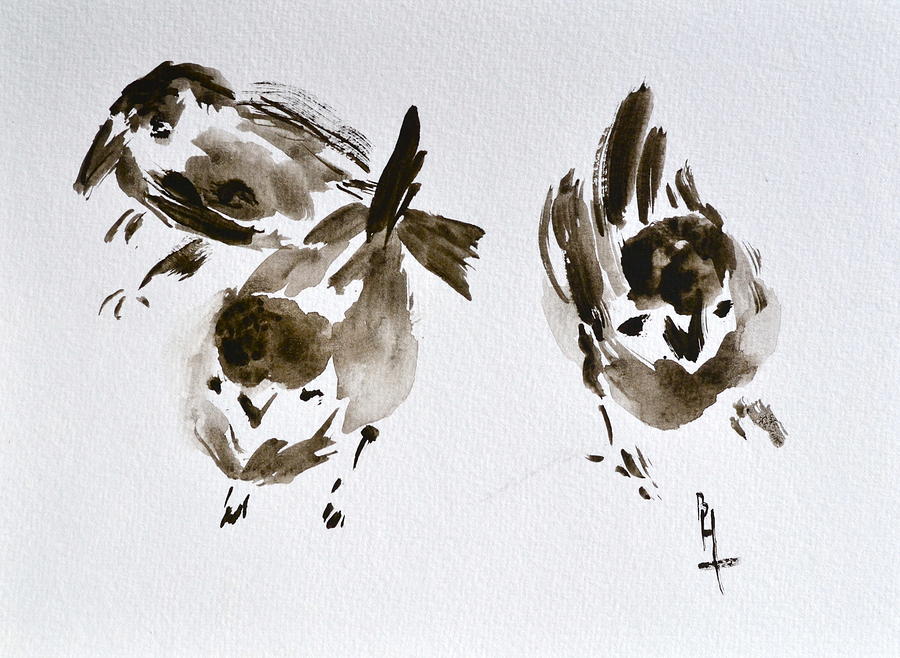
They claim to be our friends
Offering what we think we need
But they lie – it’s an illusion
It all comes with a price quite steep
“I can give you control,” says Doing
“And I can give you security,” says Having
“I will give you affection,” says Pleasing
But even when they deliver, it’s not enough
Left instead with stress and exhaustion and doubt …
There is another group of three
Their promises quiet but sure
As I shed these other unholy friends
And learn to sit and be
I find all they promised and more
In the quiet and surrender of union …
… with the Three.
“As long as we continue to live as if we are what we do, what we have, and what other people think about us, we will remain filled with judgments, opinions, evaluations, and condemnations. We will remain addicted to putting people and things in their ‘right place.'” Henri Nouwen
“We mostly spend [life] conjugating three verbs: to Want, to Have, and to Do. Craving, clutching and fussing, on the material, political, social, emotional, intellectual, even on the religious plane, we are kept in perpetual unrest: forgetting that none of these verbs have any ultimate significance, except so far as they are transcended by and included in, the fundamental verb, to Be: and that Being, not wanting, having and doing, is the essence of the spiritual life.” Evelyn Underhill, The Spiritual Life
Glimpses
 There is a longing inside every human soul to touch the divine. The ancient sage, known as “the preacher”, said “He has made everything beautiful in its time. Also, he has put eternity into man’s heart, yet so that he cannot find out what God has done from the beginning to the end.” (Ecc 3:11) We have a longing but God seems to only partially fulfill the longing. He doesn’t show us everything … instead, He gives us glimpses …
The glimpses are all around us. “The heavens declare the glory of God, and the sky above proclaims his handiwork.” (Psa 19:1) God is always speaking. He is always reaching out but never in a way that overpowers. He is gentle and even the strong displays of His glory leave us with the choice to trust and surrender to His goodness.
But, why doesn’t He just make everything obvious about who He is? Why doesn’t He do more than show us glimpses? He did give us more than a glimpse in the person of Jesus. And even then, Jesus used “glimpses” to share the reality of His divinity and Messiahship. For those who had ears to hear and eyes to see, it was clear but He never forced Himself on people.
There is a cry of our hearts that says, “God, show me! Show me Your glory.” We often want Him to do the work for us … but He gives glimpses because making everything so clear would destroy the essence of relationship which is choice and love and trust.
Consider …
Moses said, “Please show me your glory.” And he said, “I will make all my goodness pass before you and will proclaim before you my name ‘The LORD.’ And I will be gracious to whom I will be gracious, and will show mercy on whom I will show mercy. But,” he said, “you cannot see my face, for man shall not see me and live.” And the LORD said, “Behold, there is a place by me where you shall stand on the rock, and while my glory passes by I will put you in a cleft of the rock, and I will cover you with my hand until I have passed by. Then I will take away my hand, and you shall see my back, but my face shall not be seen.” (Ex 33:18-23)
The truth is that all of life is dripping with His glory. In the sunset, we see His creativity. In a cloudless sky, we see His smile. In the starry night, we see His vastness. In the clouds and rain, we see His tears lined with the possibility of a new day. On a warm day, we feel His embrace. With the cool of evening, we experience His refreshment. In the laughter of a child, we see His playfulness and joy. In the rugged face of an old man, we see His wisdom. In the tears of a friend, we see His ache. In a loaf of bread, we see His provision for another day. In our hearts, we see that He exists.
The list could go on and it does. He is everywhere and seemingly unavoidable and yet, we frequently miss the glimpses.
A daily prayer …
Father, may I see You today in all that I experience so that my life would be an expression of You.
A moment by moment prayer …
Father, give me eyes to see You in this situation and in this person.
Be Ordinary!
 We live in a world that celebrates the extraordinary to the point that the ordinary can seem like a lesser world to inhabit. The ordinary feels like pure drudgery. To live in the “ordinary” is an insult to our intelligence and capabilities. However, life is made up of one ordinary day after another.
The wisdom of Ecclesiastes proclaims that there is “nothing new under the sun.” (1:9) Even so, there is something in us that longs for the extraordinary … something bigger than “day to day” life. Again, the wisdom of Ecclesiastes: “he has put eternity into man’s heart, yet so that he cannot find out what God has done from the beginning to the end.” (3:11)
We were built for the extraordinary but we don’t find it in the circumstances of life. In fact, the wisdom of Ecclesiastes suggests that we can’t find out what God has done from beginning to end. In other words, the pursuit of time-bound, circumstantial extraordinariness is futile because we are the mercy of God and His movement in our lives. He supplies the extraordinary. His very life and the glimpses we catch of Him are the extraordinary. Besides, much of what Western culture celebrates and promotes is an illusion at best.
Seeking the extraordinary is not only futile, it can border on idolatrous. It is He alone who is our “extraordinary.” When He becomes that, the stuff of life is easy to inhabit because changing a diaper or taking the trash out is not what defines us. In fact, His love extended to us and through us, no matter the task, is our reality. Simple things become an altar of worship. And when we practice inhabiting the ordinary with our full selves, not longing for some other existence, we’ve begun to experience Him. Remember, it is not in the “extraordinary” that we experience Him (a wind or an earthquake or a fire) but in the sound of silence. (1 Kings 19:11-12)
When we do experience an extraordinary event, it is nothing more than a window into His divine mercy that fuels our existence in the ordinary. But, even this, we do not seek but we entrust ourselves to the One who provides all that is necessary.
Oswald Chambers commented: “We have all experienced times of exaltation on the mountain, when we have seen things from God’s perspective and have wanted to stay there. But God will never allow us to stay there. The true test of our spiritual life is in exhibiting the power to descend from the mountain. If we only have the power to go up, something is wrong. It is a wonderful thing to be on the mountain with God, but a person only gets there so that he may later go down and lift up the demon-possessed people in the valley (see Mark 9:14-18) We are not made for the mountains, for sunrises, or for the other beautiful attractions in life— those are simply intended to be moments of inspiration. We are made for the valley and the ordinary things of life, and that is where we have to prove our stamina and strength. Yet our spiritual selfishness always wants repeated moments on the mountain. We feel that we could talk and live like perfect angels, if we could only stay on the mountaintop. Those times of exaltation are exceptional and they have their meaning in our life with God, but we must beware to prevent our spiritual selfishness from wanting to make them the only time.”
Consider this … seek Him in the ordinary and life will have an extraordinary nature. However, seek Him in the extraordinary and life will seem very ordinary.
Make a commitment to give up seeking the extraordinary and live each ordinary moment in His love and provision. What might that look like for you? How will you receive His love and provision in the ordinary?
From Always to Okay | A Reflection on “The Fault in Our Stars” and Relationship with Jesus
 What do “The Fault in Our Stars” and a relationship with Jesus have in common? Maybe nothing. Maybe a lot. However, I was moved to think through several things as I watched the movie and then reflected in the following days. First, let me share a disclaimer: I am a firm believer that the fingerprints of God are everywhere in His creation, including the people He has created. The stories we tell are never, ever, ever divorced from the reality of who He is. We may realize it or we may not, but our ability to recognize truth is in no way consequential to whether something is truth or not. However, when we realize and see that everything in life is dripping with the glory of God, we are able to interact with life in redemptive and loving and life giving ways.
So, “The Fault in Our Stars” is a great story and an honest one, but what gripped me most was the juxtaposition of two kinds of love. There was the sappy, immature relationship between Isaac and Monica punctuated with the sharing of the word “always” back and forth between the lovers. It was their mantra to mean that things would always be “this way” and they would “always” be there for each other. Of course, in a touch of dramatic irony, we could see that this word would come back to haunt them. The relationship didn’t last. Because tragedy was about to strike Isaac, Monica preemptively breaks things off. “Always” as a way of thinking about love was no more! As an immature love often goes, no room was made for suffering.
On the other hand, Augustus and Hazel have a relationship built on a brutal commitment to truth and honesty forged by the shared reality of cancer. Neither have a desire for a shallow, typical relationship, but one resting in truth. The word which becomes their mantra? “Okay.” The word represented a shared acceptance that reality is enough. They didn’t desire to lie or pretend or make something more of life than what they had been given. And, it was in this very acceptance that life took on a depth and richness that circumstance could not steal.
It was indeed interesting that Jesus made a bit of a cameo appearance in the film. The young man who led the cancer support group sang “sappy” songs about Jesus always being there. He wove a carpet depicting Jesus and invited people to come to the “literal” heart of Jesus. The immaturity and misunderstanding of relationship evident in this leader seemed to mirror the immature love of Isaac and Monica.
However, as the film seemed to challenge us to move on from immature love (and, perhaps, by inference, Jesus), I saw the development of “okay” as a similar invitation that Jesus extends to us again and again.
As I sat in a worship service recently, I was struck (having just seen “The Fault in Our Stars”) with the usage of the word “always” in a worship song. Jesus will always come through. He will always be there. Certainly, there is a beautiful truth in the “always-ness” of God, but there are also times when it doesn’t feel like He is there … when cancer strikes, when a child dies, when we are suffering. In addition, there are times when Jesus doesn’t relate to us in the ways He used to. He often seems absent and it has nothing to do with circumstances.
There is a need to mature to a place of being able to say “okay.” Certainly, there is a deep appropriateness to singing songs about the “always-ness” of God and for young love (even love with God), there is a need for emotions that might not stand the test of time. However, there is more to a relationship with Jesus than suggested by the support group leader in “The Fault of Our Stars.”
Richard Rohr, in his book “Everything Belongs”, comments that “Everything belongs and everything can be received. We don’t have to deny, dismiss, defy, or ignore. Whatever is, is okay. What is, is the great teacher. I have always seen this as the deep significance of Jesus’ refusal of the drugged wine on the cross.”
Please note that I am in no way critiquing the fact that a “Christian” leader was portrayed as a bit of a dork and clueless. It helped tell the story and was honest. Many Christians stay in the place of immaturity. By God’s grace, He loves us and meets us where we are. However, He always desires for us to move into maturity and the ability to say “okay.”
Indeed, whatever is, is okay because He is present and He is at work. How does He desire to move you from “always” to “okay”?
The Freedom of Captivity
 It is ironic, to our modern minds, to think we could be free while in captivity … but please hear me out.
We are all captives, or slaves, to something. The great theologian Jonathan Edwards commented that “we are free to choose but we are always a slave to our greatest desire.” In our modern world, we like to believe that we are totally free creatures but freedom is an illusion, of sorts. Certainly, we do have freedom but it is freedom within a defined space. And, that space is defined by the nature of our humanity. We have limits. For example, we are not free to exist without oxygen. That is a limit, or a boundary to our freedom. We have other limits and boundaries as well.
A fish is truly free when it is swimming in water. If a fish self-reflectively decided that being confined to water was a slavery that he no longer desired, he would not be truly free if he “freely” decided to leave the water. He would become enslaved to his inability to live outside the water. Indeed, his greatest freedom comes from choosing the right captivity.
As humans, we are most free and therefore “alive” when we choose the captivity the best corresponds with our design as humans. Many would suggest that being self-determined is what makes us most human. In fact, for those living in a “free” democratic society, this idea gets ingrained into our collective self-consciousness. As a result, we are often completely unaware that we even think this way. And so, even as we think about concepts like God, we often conceive of God in terms of our own making and liking.
However, clearly, we have limits as created beings. But, it can be so difficult to perceive this reality. If living within the confines of a relationship with God is our true nature (and that is my thesis!), then why it is often so difficult to live there?
C. S. Lewis once commented that it was perhaps easier for someone who lived under a dictatorship to understand the rule and reign of God in their lives than someone who lives in a democracy. Gary Moon and David Benner write that “Christian spiritual formation involves awaking from the dream that we are God and remembering our true identity, our ‘beloved-of-God-in-Christ’ identity, and then saying yes to the pain associated with the mortification of our false self.” So, is it our cultural bias that deceives us? Is it the pain the derails us? Certainly, these play a role in aiding and abetting the more fundamental issue: a bent toward self-determination that is hidden in each human heart. Romans 1:18-23 calls it futile thinking and foolish heartedness. However, also, plain to our heart is the reality that there is a God (Romans 1:20), an eternal realm (Ecclesiastes 3:11), and for the follower of Jesus, the indwelling of God in our hearts (Ephesians 3:17).
So, which captivity do we desire? Being captive to self-determination? Or, being captive to the indwelling Christ? It begins with desire and meditating upon the glory of living under His rule and reign. It progresses with identifying and releasing those old thought patterns and strategies based in self (self-protection, self-promotion, etc).
At a very basic level, I can ask myself the question: am I the owner of my life or is God? As I answer that question (each day throughout the day), I choose my captivity.
The Beauty of Darkness
 Several months ago, I went for an early morning run. It was an hour and a half before the sun was going to rise (yes, I am a morning person!) and there was no moon to light the night sky. It was dark … really dark. The neighborhood through which I ran had no street lights and almost none of the houses had exterior lights on. The bits of light my eyes could glean were used to keep me in the middle of the street. I could just trace the center line and I discerned that my best bet was to stay in the middle of the street, away from the curb where I might stumble and fall. Then, as a car would approach, I used that light to guide me to the edge and then back to the center after car had passed. I also found myself listening intently to gauge my surroundings.
It was running through that darkness that I began to grasp the beauty of darkness. I felt so alive as I just ran in that darkness. I didn’t have all the normal things to keep me feeling secure and safe and it stripped me down to nothing. It was beautiful and invigorating because it was just me … no distractions, just simplicity and quiet and purity.
Ancient spiritual writers such as John of the Cross wrote extensively about the fact that God often uses darkness in our lives to draw us to Him. He spoke of a dark night of the soul. Brother Lawrence said, “He sometimes seem to hide Himself from us.” The idea is that He takes away those things that we often rely on for a sense of security and value and control. Even those experiences of Him are often removed. It is in the dark that He frequently does His best work.
But, we usually don’t want to believe it. Often, we think of darkness as the worst of all possible scenarios. As kids (and still sometimes as adults), we are afraid of the dark. The darkness is where we might trip and fall or be blindsided by something we never saw coming.
We experience darkness all the time … the darkness of waiting for the results of a medical test, the darkness of a strained relationship, the darkness of a potential layoff, or the darkness of doubts about the nature of God. The darkness can also be one of not feeling particularly close to God … through no fault of our own. In these situations, we want to get light and get it quickly, but God leaves us in the darkness. It can feel like He’s abandoned us but the truth is that He is at work … deep work of the soul.
In John 9:39-41, Jesus talked about the advantage of being blind, or in other words, being in the darkness. Jesus said:
“For judgment I came into this world, that those who do not see may see, and those who see may become blind.” Some of the Pharisees near him heard these things, and said to him, “Are we also blind?” Jesus said to them, “If you were blind, you would have no guilt; but now that you say, ‘We see,’ your guilt remains.”
Jesus used blindness as a metaphor to talk about how we perceive reality and the arrogance that can come when we think we see. It is common to look at our experiences and use them as the judge of what is really going on. Experiences and feelings and circumstances become the evidence for our understanding of life. None of these things are bad but they aren’t always reliable indicators of truth. The advantage of blindness or being in the dark is that a humility emerges that requires a dependence on something more, something deeper than what we can perceive with our eyes. The blind have to rely upon what they can hear, what that feel, what they smell. What the mind can perceive through these other sense gives a much fuller picture of reality than the eyes alone can give.
Spiritually, what we can see (perceive through whatever senses) is not the full picture. Ultimately, in light of the vast spiritual realities around us, we are blind. Learning to truly see means learning to acknowledge this. It is absolutely true that God is nearer to us than our very breath and yet we often are unable to perceive this. We rely upon things like positive circumstances and the lack of trauma in our lives to tell us that God is near but do we really see if we believe that the evidence of His presence or favor is in those things.
Do you see the beauty of darkness? Do you see its potential? Brother Lawrence writes:
If we but knew how much He loves us, we would always be ready to receive both the bitter and the sweet from His hand. It would make no difference. All that came from Him would be pleasing. The worst afflictions only appear intolerable if we see them in the wrong light. When we see them as coming from the hand of God and know that it is out loving Father who humbles and distresses us, our sufferings lose their bitterness and can even become a source of consolation.
Do you see the beauty of darkness? Take a few moments and think about a current situation of darkness in your life. As you bring that to your mind, ask God to shed the light of His love on it. Sit with Him and tell Him that you trust Him. Sit quietly and keep bringing that darkness back to Him … trusting His love and goodness in your life.
Ears to Hear: Reflections on Holy Week, Easter

Luke 24:6-7; Ephesians 1:19-20
He has risen. Death is defeated, sin is atoned for, and new life assured. The central claims of Christianity are historically verifiable and tangible. He died, He was buried, and He rose from the dead. He appeared to many starting on that first Easter and for several weeks thereafter before ascending into the heavens.
Easter is a singular event, encapsulated in history and yet it transcends history to provide new life for any would come and drink from the fountain of life in Christ. Easter is celebrated on a particular day each year, but its reality is available every day throughout the year. What a shame it would be to celebrate on one day and then leave behind that transcendent reality, essentially forgetting it for 364 days.
I plead with you … emerge from this Easter with a renewed focus on experiencing Easter every day. Ah, but the question becomes: how? How do we live a resurrection kind of life that is filled with the power that defeated death and ushered in eternal life?
Two challenges …
First: trust with all your heart that you have resurrection power residing in your bones. Ephesians 1:19-20 is part of a prayer in which the Apostle Paul implores his readers to know (i.e., experience) “the greatness of his power toward us who believe, according to the working of his great might that he worked in Christ when he raised him from the dead and seated him at his right hand in the heavenly places.” The same power that raised Jesus from the dead is available to the follower of Jesus.
Take time each day and remind yourself of this truth. There is an old “you” that was buried in the tomb with Jesus and often we walk around in the grave clothes, but resurrection is available. Sin has been forgiven but new life is waiting to emerge. No matter how frustrated you are with the old, remember that the new is more powerful. No matter how fearful you are to let go, remember that new life is real life. No matter how helpless you feel, remember that His power is stronger than your past, your habits, your fears, and your “whatever”. Daily time in meditation, rehearsing the truths of who you are allows your soul to inhabit new responses to old scenarios.
Second: decide each day to let go and wait for new life to emerge. What of the old life is still held in your hands? Daily, ask God to search your heart (Psalm 139:23-24) and show you where the “old” is in play. To experience the new life, something has to die. Certainly, our position before God is that we have died and our lives are hidden with Christ. (cf. Colossians 3:3), but this truth still has to work itself out in our lives.
In John 12:24, Jesus said something incredibly simply and yet very profound: “Truly, truly, I say to you, unless a grain of wheat falls into the earth and dies, it remains alone; but if it dies, it bears much fruit.” To experience new life, something has to die. What, in you, needs to die? Will you daily let things die? Old responses? Old ways of finding significance? Old ways of finding satisfaction? Old ways of finding strength? And, then, are you willing to wait like a gardener waits for a buried seed to sprout with new life?
To experience new life, something has to die … will you let parts of you die this year, remembering that resurrection power dwells in your bones?
 desert direction