Ears to Hear: Reflections on Holy Week, Saturday
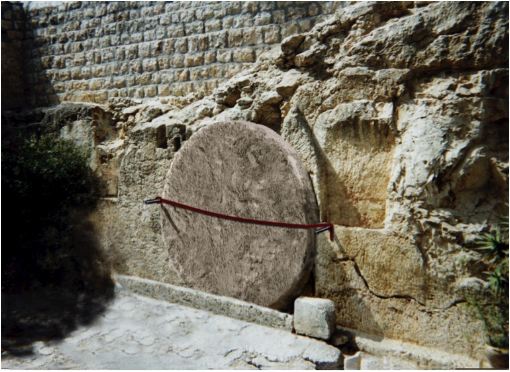
Matthew 27:62-66
Everything is quiet. It would have felt like a pit of despair for the disciples. After what seemed like a great run with their rabbi … huge crowds, incredible teaching, miracles, touches from divinity … it all came crashing down in one day. “It’s over.” Saturday was the Sabbath, a day of quiet but the quiet must have been deafening and excruciating for Jesus’ followers.
The only “movement” of Saturday was the Jewish and Roman leaders conspiring to make sure that the tomb would not be defiled. This would have added to the despair. “It really is all over.” Seemingly, all that was left was to clean up and the authorities were in charge of that. Guards were posted and the tomb sealed with a Roman seal. It is fascinating that the religious leaders couldn’t even honor the Sabbath … a day where rest and release of the burdens of life was offered by God as a gift. A day to let go all responsibilities and trust that God would take care of all things. They didn’t trust God but ended up being used by Him. How wonderful to know that the posting of the guards and the sealing of the tomb prevented the potential propaganda that the disciples simply stole the body … but that insight comes through looking back through the lens of Sunday.
We know from John 20:9 that until Sunday the disciples still didn’t get it. The words that Jesus shared about rising from the dead after three days hadn’t sunk in. Saturday’s quiet would have ushered in all kinds of thoughts and doubts and misgivings and fears and suspicions. “What we were thinking?” “We wanted to believe our rabbi was special.” “Why did He have to die?” “Why didn’t we do something?” Prayers of lament were certainly offered.
Indeed, modern day followers of Christ have the luxury of being able to see the events of Friday and Saturday through the lens of Sunday. However, I want to challenge you to let go of Sunday for a period of time today and let that time be a reminder throughout the day.
Take 10-15 minutes of quiet and put yourself in Jerusalem on that Saturday. Imagine yourself sitting in a dark room with just a few slivers of sunlight poking through some cracks in the walls. You’re not hungry. Your thoughts are bouncing around but more than anything you feel despair. Imagine that your rabbi had been brutally murdered and you can only ask “why?”
Now, put yourself in your life today and consider what your life would be like if Jesus had not been raised from the dead. How would life be different? How would your life be different? Where would you put your hope? How would you experience peace? Sit with those questions but don’t go to Sunday … yet.
Stay in this place today as a preparation for Sunday …
Ears to Hear: Reflections on Holy Week, Friday
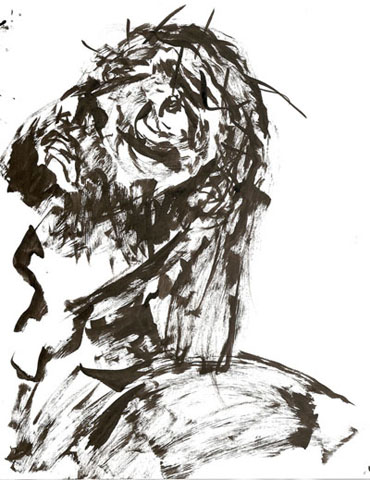
John 19:30
As Jesus hung on that cross, beaten … bloodied … humiliated … naked, He uttered a simple statement just before He committed His spirit to the Father and breathed His last. He said, “It is finished.”
“It” was finished. The journey. The sacrifice for our sins. The ushering in of a new way to live life. “It” was finished.
The fact that He was finished means that we can be finished. Finished with the old us; a person who tries to make life work in their own power, with their own resources, and with their own goals and agendas. The atonement for our sins means that we are finished with being separated from God, in this life and for all eternity. And then, we can progressively be finished from all the remnants of the old us. Day by day, we can be finished because he said “it is finished.”
The great songwriter, Paul Hewson, wrote these words: “Every day I die again and again am reborn. Every day I have to find the courage to walk down into the street. With arms out, gotta love you can’t defeat. Neither down or out, there’s nothing you have that I need. I can breathe.”
Every day, we can die (be finished) and be reborn with the new us taking more territory in our hearts. When we put our trust in what Jesus did on the cross, He has reclaimed as our hearts as His own. However, it is daily that He possesses our hearts more and more as we die … as we make the choice to be finished. The cross means that sin no longer has to have power over us and we can choose to be finished.
Take a few quiet moments and meditate on the words “it is finished.” Sit quietly, in a prayerful stance, and let the words reverberate in your soul. Gently and silently repeat the words within your heart.
Next, prayerfully read the following statements and then prayerfully add your own … Finished with doing life in my in strength/Finished with worrying what others think about me/Finished with be independent of God/Finished with defending myself/Finished with making my life about what I have/Finished with medicating my loneliness/Finished with focusing on what I do rather than who I am/Finished with trying to prove myself/Finished with worrying about my appearance and image/Finished with focusing on myself rather than others.
Thank you, Jesus, that I can be finished with self because You were willing to pour out Yourself for me. May I live today with an awareness of being finished and the courage to live in dependence on Your love and provision.
“See from His head, His hands, His feet, sorrow and love flow mingled down. Did ere such love and sorrow meet or thorns compose so rich a crown? Oh the wonderful cross … bids me come and die so that I may live.” When I Survey the Wondrous Cross
Ears to Hear: Reflections on Holy Week, Thursday
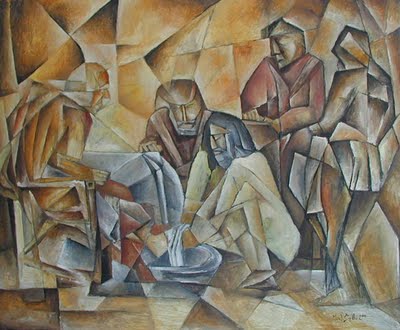
John 13:1-16
On Thursday afternoon of Holy Week, preparations for the Passover meal would have been in full swing. From 3:00-5:00, lambs all over the city were being slaughtered for the meal of remembrance that was to take place. It was a meal that ultimately pointed at Christ and it would be partaken just hours before Jesus was going to be the fulfillment of that meal. In John 13:1, we are given a window into the heart, mind, and soul of Jesus in the moments that were leading up to dinner: “Now before the Feast of the Passover, when Jesus knew that his hour had come to depart out of this world to the Father, having loved his own who were in the world, he loved them to the end.”
He loved them to the end! What an amazing, beautiful, haunting statement. With that the He knew and was certainly experiencing internally, He stooped down and washed the feet of the disciples. If you have ever had someone wash your feet, you know what a vulnerable and intimate act it is. About 10 years ago, a mentor washed my feet and I was drawn to a place of feeling so out of place. I felt like Peter … no! I should be washing your feet. What I realized in the moment was that I am very comfortable loving and serving others (as imperfectly as I do that) but I don’t do well at letting others love me. Sure, I don’t mind being served and given gifts or encouraged, but having someone love me in my vulnerability, in intimacy is difficult. And, in the first century world, added to the feelings of vulnerability were the cultural expectations that only a slave or perhaps a child would wash someone’s feet.
Jesus took on the form of a servant (in His most vulnerable moment on earth up to that point) and He did it joyfully. He loved the disciples by serving them, by letting go of His vulnerability to reach them in theirs. And, He does that even today. He desires to reach into the vulnerable places of our lives and love us by gently cleaning us up.
Do you let Jesus love you in the vulnerable, intimate (maybe hidden) places of your life? Take a few moments and put yourself in the scene of John 13. Read through the verses and see yourself there. Think about a vulnerable, hidden place of you and let it reside in your feet. Imagine Him scrubbing and cleaning your feet. See the sweat on His brow and the firmness and gentleness of His touch. Sit with this image for several minutes.
What do you feel? What is it like to be served by the God of the Universe?
Jesus says, “What I am doing you do not understand now, but afterward you will understand.” (13:7) He was referring to the fact that this act of washing the feet was done as a loving gesture by itself (to be emulated as we serve others in various ways) but also as a picture of the spiritual cleansing that comes when we confess our sin to Him. We receive a “bath” through the forgiveness that comes as we put our faith in Christ based on His sacrifice on the cross. Because of that bath, we are in a secure relationship with Him, but we still sin and are in need to spot cleaning in the day to day.
As we come to Him with our sin, He bends down to wash those sins away. What vulnerability do you need to share with Him? What sin do you need to confess? Confess in 1 John 1:9 means “to say the same thing as.” Take the time to talk to Him so that you can say about your sin what He does. This process, however, slow is part of allowing Him to wash your feet. Make sure that you hear Him talk about the sin from His perspective and that you heart Him speaks words of love and forgiveness and acceptance and that there is no condemnation.
Ears to Hear: Reflections on Holy Week, Wednesday
Luke 22:1-2
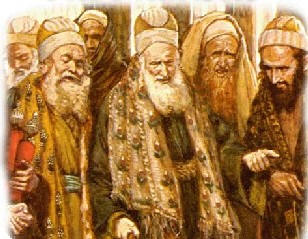
We don’t know a lot about what Jesus did on Wednesday. Perhaps he rested in Bethany after several very busy, emotional days of teaching and interacting with the crowds. What we do know is that plans were beginning to be set in motion for his crucifixion. The motive for the religious leaders’ plot to kill Jesus is revealed in Luke 22:2: “for they feared the people.” But, what did the leaders fear? Certainly, they were afraid to lose their power and control. If Jesus was allowed to continue to stir the people’s hearts and passion for God, the people would be free and therefore not controllable.
What stands out significantly is that Jesus knew that this was going on and He continued, undeterred. He didn’t defend Himself. He didn’t initiate a preemptive strike. He lived in the freedom of His relationship with the Father and the Spirit. Whereas the religious leaders lived in fear (the fear of losing their power, their significance, their positions), Jesus did not. While He might have had some fear or trepidation related the cross (consider Luke 22:42), it was the freedom of the divine relationship in which He moved.
Jesus is always leading us to freedom … the freedom of relationship with the Triune God where we are most truly us. We live in a world that wants to keep us in the chains of being dominated by values that are not truly us … being defined by what others think (our image), what we do (our jobs), and what we have (our possessions). Theologian Walter Brueggemann discusses this conflict as he comments: “Passion as the capacity and readiness to care, to suffer, to die, and to feel is the enemy of imperial reality. Imperial economics is designed to keep people satiated so that they do not notice. Its politics is intended to block out the cries of the denied ones. Its religion is to be an opiate so that no one discerns the passion alive in the heart of God.”
And so, we see the battle that is before us every day. Do you see it? Are you aware? If not, perhaps the “imperial reality” (this world system) has satiated you. Are you able to discern the heart of God? If not, perhaps the values of this world are alive and well in your heart.
It all begins with beginning to see. And then, freedom emerges as we rely deeply upon the provision of God accomplished through the cross. What the religious meant to do through killing Jesus (stamping out any notion of possible freedom) actually initiated the ultimate provision for freedom. This is just what God does … He takes the foolishness of mankind and redeems it. In Genesis 50:20, Joseph says to his murderous brothers, “As for you, you meant evil against me, but God meant it for good, to bring it about that many people should be kept alive, as they are today.”
Where you today? Are you swimming with the current of this world … letting fear rule you as you strive to attain to values that don’t really define you? Or, are you swimming free in the water of relationship with God … allowing Him to define you by His protection, His love, and His riches?
Take a few moments and ask God to search your heart. Talk to Him about the way of freedom.
Ears to Hear: Reflections on Holy Week, Tuesday

Matthew 23:23-33
On Tuesday, Jesus spent time teaching the crowds. He spoke directly to the religious and the religious leaders (which in our modern context would faithful churchgoers and leaders). It can be tempting to not identify with the Pharisees but if you’ve been to church recently, you probably fit in that camp.
So, what did He teach just a few days before the crucifixion and resurrection? One of the more notable things was his observation that the religious of Israel were “straining out a gnat and swallowing a camel!” (Matt 23:24) It’s a memorable line because it seems like such a strange thing to say. So, what was He actually saying? According to the Old Testament law, a faithful believer was to be careful not to eat certain things. There are myriad reasons for the intense dietary laws of the Old Testament but suffice to say that the prohibitions flowed from the good heart of God for His people. Two of the things on the list of dietary restrictions were gnats and camels. It was common in that day to strain your drink to make sure that you didn’t ingest a gnat that accidently got in the pitcher of water or wine. The gnat was just a little thing and being so careful certainly didn’t keep with the spirit of the law. While the religious folks weren’t literally swallowing camels, the imagery is powerful.
Jesus was saying that people were focusing on doing the little, easier things but not the larger, harder, and more significant things. In other words, they were taking care of the gnats but still eating camels. In the verse right before the imagery of gnats and camels, Jesus suggests that the people were making offerings of spices but were neglecting justice, mercy, and righteousness. It is easy to focus on outward things but much harder to look at the things of the heart and much more significant.
Joan Chittister comments: “It is so easy to make cosmetic changes in the name of religion. It is so easy to make up rules and keep them so that we can feel good about doing something measurable in the spiritual life.” In the spiritual life, it is common to focus on the outward things. The outward things are visible and measurable and seemingly manageable. The things of the heart are often vague and mysterious and not controllable.
Indeed, it is in the heart where we experience a relationship with God and where we grow into all virtues that make our lives shine like Christ. That’s why Jesus will never simply let us settle for good behavior. He wants our hearts not our outward behavior. If He wanted that, He could have made us into automatons, robot like beings that simply did the right things. He desires a real relationship of love and justice and mercy.
While we might settle for the superficial, He always wants more for us. That’s why He walked with determination toward the cross … it is there that our hearts are given a second chance and the power to be transformed.
Where is your heart today? Have you spent time with Him … enjoying Him and worshipping Him and talking to Him from the heart? If not, take some time and share your heart with Him. Whatever is there, He will take it and shape it and transform it. It simply requires your time and trust.
Ears to Hear: Reflections on Holy Week, Monday
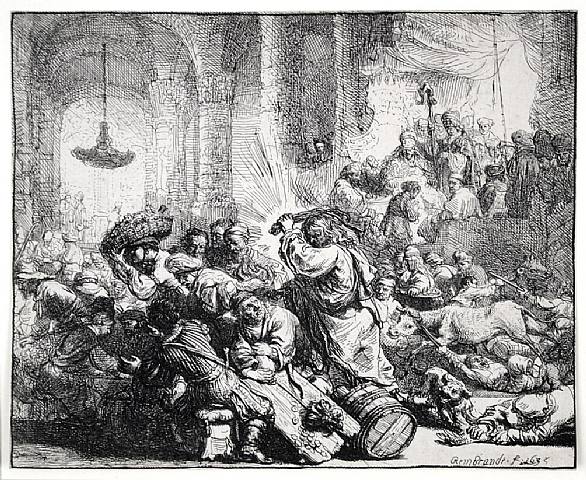
Mark 11:15-17
On Monday of Holy Week, Jesus walked into the temple and began to clear out all the people who were selling their products and exchanging money for the pilgrims at Passover. Jesus quotes from Isaiah: “My house shall be called a house of prayer for all the nations’? But you have made it a den of robbers.” Jesus is claiming several things as he takes this action and links it to the prophet Isaiah’s words. First, the temple belongs to God. Second, its purpose is to be a place of prayer and devotion to God. Other things had become dominant in the way that temple was being used. Primarily, it was a money making machine. Third, it is for all nations. The area in which the buying and selling was occurring was in an area called the Court of the Gentiles. It was a place where seekers of God could come and seek Him, but the money making operations were precluding this purpose.
What Jesus did in the temple has significant implications for the lives of Jesus’ followers, especially when we understand that our lives are a temple of the Holy Spirit. (read 1 Corinthians 6:19-20). First, we belong to Him. Our lives are His: “You are not your own, for you were bought with a price.” Second, our lives are designed to function as a temple – a place where God dwells in relationship. Third, our lives should have space for sharing this relational God with others!
Questions for reflection:
- How do you view your life? For the religious leaders of first century Israel, they saw the temple (and by extension, their lives) in a very consumeristic way. It was a commodity that could be monetized. Do you see your life that way? Is the value of your life determined by its usefulness in a consumer society? Or, is the value of your life set by the fact that you are a dwelling place of God? Robbers (to reference Isaiah) are people who take something not belonging to them and then they use it for whatever they want. Do you allow yourself to be robbed of your intrinsic value by running after all kinds of things (what you do, what you have, what others think of you) to give you worth and value?
- Have you created space in your life for God (“a house of prayer) and for sharing with others (“for all nations”)? Perhaps there are things in the outer courts of your life that you’ve allowed to become predominant to such an extent that the holiest part of who you are is not the focus.
In Philippians 2:5-8, we are encouraged to follow Jesus’ example: “Have this mind among yourselves, which is yours in Christ Jesus, who, though he was in the form of God, did not count equality with God a thing to be grasped, but made himself nothing, taking the form of a servant, being born in the likeness of men. And being found in human form, he humbled himself by becoming obedient to the point of death, even death on a cross.”
Jesus did not consider His equality with God (i.e., the very essence of who He is) as something to be grasped (i.e., used to his own advantage). However, He poured Himself out by giving Himself to others.
How does this inform the way you view your life and live your life? Spend a few minutes talking to God about where you are and where you want to be. Ask him if there are things in the outer courts of your life that He would like to clear away. Trust Him by placing those things in His hands.
Ears to Hear: Reflections on Holy Week, Sunday

Matthew 21:1-11
As Jesus entered Jerusalem, His entrance was incredibly significant in both form and substance. The form of His entrance was prophesied by Zechariah: “Behold, your king is coming to you, humble, and mounted on a donkey, andon a colt, the foal of a beast of burden.” (Matthew 21:5) The form, coming on a simple, lowly donkey, spoke to the substance. He was coming, not as conquering king who would have ridden in on a horse, but as a peaceful king. However, rather than being a triumphal entry, it was an ironic entry.
The irony was reflected in the growing tension between the true nature of Jesus’ kingship and what many of His followers wanted His kingship to look like. They wanted a king who would deliver them from their circumstances (an ugly Roman occupation) but He was interested in and committed to so much more. Jesus graciously and patiently refused to argue with their assumptions but quietly and persistently dropped clues about the cross as He resolutely walked toward it.
Bridging the gap between who He is and who we think we want Him to be requires a humble, listening faith. In 2 Corinthians 5:7, we are encouraged to “walk by faith, not by sight.” In the midst of life, we frequently want sight and that’s what can get us in trouble. For the crowds in Jerusalem on that first palm Sunday, they could “see” the Messiah liberating them and bringing in a new age for the nation. However, faith is what would give them an appreciation for what He was really up to. What we “see” is informed by us but walking by faith is informed by Him.
Today, take a few minutes and examine what you are seeing with your senses and abilities versus what you are trusting because of His input. Tilden Edwards comments: “We always have the choice of seeing reality as it is and being with it, or seeing reality as our fears and desires warp it. When we know this choice exists, then our real freedom is born.”
How will He enter your life today? Will you welcome Him as the One who can help you accomplish your goals (shaped by your fears and desires) or as the One who will reorient and reframe your goals? Living life as we were created to live means that we walk by faith in the One who rode into town on a donkey … humble, kind, patient, and determined to not let us settle for anything but reality … which is Him in all His glory.
Ears to Hear: Reflections on Holy Week, intro

Matthew 11:15
Frequently, as Jesus challenged people through His teaching, He would say, “He who has ears to hear, let him hear.” The implication was that people often don’t hear. In the Biblical text, “hearing” does not refer to receiving sounds through the ears and recognizing the meaning of the words spoken, but “hearing” refers to responding to what is said. The idea that someone might not truly hear is similar to modern quip: “I hear you but I’m not listening.”
What was frequent in the day of Jesus is no less frequent today. Often, we hear truth but we don’t respond. Jesus intentionally spoke in parables and used figurative language because He wanted people to choose to follow and choose to trust Him. If things were made too obvious, the truth might be so inescapable that someone could argue that there were being forced to follow.
God loves us so much that He will never force us to love Him but He gives clues about His goodness and grace. We see those clues in sunsets and trees and mountains and oceans and certainly in the cross, but even there, He simply let His actions speak so that we could choose to hear.
As you enter this Holy Week, choose to take a posture of hearing. Whatever God says, do it. Trust it. Embrace it. Because … He alone is life. Is there anything in your life that is holding you back from hearing Him? If so, take a few minutes and surrender that area of your life to Him.
*Note: each evening during Holy Week – a new “Ears to Hear” Reflection will be posted.
Daily Bread
 At the heart of the prayer that Jesus taught His followers to pray is a request for “daily bread.” Often, this idea of daily bread is interpreted as a simple reference to thankfulness or petition for daily physical provisions. For those in cultures or stations of life where daily food is a given, this can seem to be an irrelevant request. However, Jesus’ reference to “daily bread” is a much broader concept than simply physical sustenance. To be sure, it includes that but it is so much more.
Understanding the concept of “daily bread” is vital to living each day in a place of surrender to the Father. Daily bread is a promise that He will provide what we need to live … not just physically but with our entire being.
When Jesus talked about daily bread, those in His first century context would have immediately thought of the daily bread that was provided for the people of Israel as the journeyed from slavery in Egypt to the promised land. Miraculously, God gave the people manna which appeared every morning. It was only good for that day … it was literally a “daily bread”. God was setting up a physical tool for teaching His people to trust Him day to day. Alcoholics Anonymous famously teaches to “live one day at a time.” That wisdom is rooted deeply in Biblical history.
When Jesus fasted in the wilderness for 40 days, He was tempted by Satan to turn stones into bread. The temptation was to self-preservation … to take care of Himself on His own terms. Jesus responds by saying, “Man shall not live by bread alone, but by every word that comes from the mouth of God.” (Matthew 4:4) He was quoting Deuteronomy 8:2-3 which says “And you shall remember the whole way that the Lord your God has led you these forty years in the wilderness, that he might humble you, testing you to know what was in your heart, whether you would keep his commandments or not. And he humbled you and let you hunger and fed you with manna, which you did not know, nor did your fathers know, that he might make you know that man does not live by bread alone, but man lives by every word that comes from the mouth of the Lord.”
God promises to give us what need to live each day … enough strength to face today’s challenges, enough wisdom to face today’s problems, enough love to face today’s hurts, and enough faith to face today’s uncertainties. The promise is that He gives Himself. He is the “bread of life” (John 6:35). Every word that comes from Him sustains us … both what we hear from the Scriptures and what we hear in prayer.
He promises to be “daily” bread and our challenge is to live day by day. In Matthew 6:33, Jesus says: “do not be anxious about tomorrow, for tomorrow will be anxious for itself. Sufficient for the day is its own trouble.” It is only in the present moment that we have a promise to experience Him and enjoy the gift of His presence. We might be tempted to dwell on the past or obsess about the future, but He challenges us to live with Him today. It doesn’t mean that we don’t unpack the past and learn or that we don’t plan for the future, but our lives are to be lived in the present … trusting Him as our bread.
As I pray and ask Him to give me daily bread, I am asking Him to be what I need for today. I am asking Him and then trusting that what He gives is enough to do what He has for me. And the joy is that I end up doing each day, each task with Him. And that’s the part that He loves – that I do what I do with Him.
A Song to Sing
 Henry Wadsworth Longfellow said that “Music is the universal language of mankind.” Others have suggested that poetry is the universal language. If you mix the two together, perhaps you have pop music. Paul Epworth, a producer who has worked with Adele, Foster the People, and U2, among others, quipped: “Pop music has greater power to change people and to affect people because it’s a universal language. You don’t have to understand music to understand the power of a pop song.” While musical tastes vary from person to person, everyone loves a good song. A song moves us. It can be a surrogate for deep emotions we are feeling. It can elicit a new thought or perspective. The reality is that music shapes us.
It should be no surprise that when God speaks of how we interact with each other, He uses the metaphor of song. In Psalm 40:3, David says, “He put a new song in my mouth.” The result is that “many will see and fear, and put their trust in the Lord.” The response to the song that God puts in our mouth is that others are shaped. They perceive the song and it draws them to a place of awe (fear) which leads to trusting God.
All of us are given a song to sing. The only question that remains is: are we singing it? Often, we don’t sing because we haven’t allowed God to put that song in our mouths … we haven’t allowed God to love us. The song is a song of praise because we are experiencing His love in our lives. In the verses that precede having a song, David writes that he cried out the Lord to rescue Him. He shares that God drew Him up from the “miry clay” (the quicksand) and set his feet on a rock. Are you allowing God to love you? Are you depending on Him to rescue you? Are you waiting for Him? Other times, we aren’t singing because we don’t realize that we can. We forget that we have a story to tell. In a world where arguments and debates reign in everything from politics to religion, we can adopt debate as the form of interacting with others. We argue that someone should see it our way. However, this is not the model we see in the Biblical text. We are encouraged to sing our song and that’s what makes a difference in this world.
There is certainly a place for giving a reason for what someone believes (1 Peter 3:15) but it is encouraged as a response to someone asking why you have hope. What stands out in Psalm 40 is that a song, not arguments or debates, leads people to see and fear. It makes sense that it is beauty and love that will compel people. No one ever argues about the beauty of a sunset. It simply brings a sense of awe. Equally, sharing the beauty of God’s love doesn’t elicit debate, it can stir desire.
What is your song? I have a friend who always asks people, “Did you know that God is crazy about you?” That was His song. His interaction with God was such that He knew God was crazy about Him so that became his song, his way of sharing the story. Over and over, I’ve seen people sit down and have a conversation about his “song.”
God is present with us and restores us so that we can be His hands and feet in this world with a song … a song where our lives point people to Him … not to a church or a set of beliefs but to Him. Three questions to ponder … what is your song? Are you allowing Him to love you so that you have a song to sing? What might it look like to sing your song?
 desert direction