Category Archives: Uncategorized
Stop Trying to Change the World
I read those words recently in book called The Kingdom Life in the chapter “Spiritual Formation from the Inside Out” by Bill Hull. In it, Hull relates a conversation in which he explained a new perspective on God’s calling on His life and the nature of leadership in the church. His words resonated deeply with me …
“I have spent a lot of my life trying to make things happen and trying to get the people around me to do what they didn’t want to do or have the character to do. I’ve decided to stop trying to change the world. I’ve even stopped trying to change the church. People seem to get so angry. I have decided to focus on changing me. I’ve hit a lot of walls in my life and have hurt a lot of people. I’m finished with that. I just want people to be attracted to Christ because of who I am and what I have to say and the way I say it.”
Anatomy of the Soul: Part 4, a path
 We often worry about people who talk to themselves. However, the reality is that we are always talking to ourselves. The function of our soul is to serve as the “operating system” which connects and integrates the heart and the mind and the body. (see part 2 of “Anatomy of the Soul”) With this kind of role, the soul is continually talking to the parts, trying to get them to work together. Most of this “talk” is running in the background of our lives and often with a very low level of awareness.
This metaphor of self talk is highlighted in a passage like Luke 12:19: And I will say to my soul, “Soul, you have ample goods laid up for many years; relax, eat, drink, be merry.” In this instance, it is a destructive self talk because it is not based upon truth and Jesus presents that reality in the very next verse. However, in Lamentations 3:24, it is a life giving kind of self talk that Jeremiah experiences while Jerusalem is in ruins around him: “The Lord is my portion,” says my soul, “therefore I will hope in him.” Spiritual health and growth is a function of the kind of “talking” that occurs in the operating system of our soul.
A few years ago, Curt Thompson, a psychiatrist, wrote a book called “Anatomy of the Soul,” and in a recent talk about the book, he spoke about the powerful patterns that are present in our brains. He suggests that certain patterns and thoughts become “hardwired” into our brains. If we understand the brain as the physical counterpart or manifestation of the soul (i.e., the operating system), this is very helpful. In summarizing his research into how the brain can be “rewired,” he shares that there are three things he’s seen that help in the process: physical exercise (which makes sense because of the physical component to who we are), community (this connects with the reality that we relational beings at our core), and meditative prayer (this touches on a reworking of the self-talk in which we are always engaging).
Several years ago, I heard someone suggest that we don’t live according to reality but according to the stories that help us make sense of reality. The danger is that we live according to “narratives” (self-talk) that make us feel better and/or gives us a sense of safety and protection, but in reality separate us from the life that God desires for us. The narrative might be that I need to people please in order to keep from being hurt or that I need to be successful and make piles of money in order to be safe. For many, the story that gets adopted is the isolation story (keep your distance from unsafe people and most people are unsafe!) or the usefulness story (stay busy, be useful/needed). We might even engage (and this is a favorite among religious people) the perfection story which suggests that if we get our act together, all will go well for us. These are the kind of stories that fuel the operating systems of our souls.
The true story line/narrative/self talk is something very different and it begins with the heart and opening our heart to the love of God. When Jesus was asked about the greatest commandment, He gave us two things (love God and love others, Matthew 22). Repeatedly, the writings of Holy Scripture link these two things together. In John 15, Jesus challenged His disciples: “as the Father has loved me, so I have loved you … love one another as I have loved you.” (vv. 9, 12) Clearly, love is the story line that Jesus challenges us to adopt. Love is the definition of what it means to experience Him. Be loved by Him and therefore love others! We are challenged to love others the way we are loved and we are loved the way that the Trinity loves each other. We are invited to learn the love that occurs (and has occurred eternally) among the Trinity.
The question is: how do we inbed Jesus’ story into our souls?
To go back to Thompson’s observations of the soul, meditative prayer seems to be the key. It has a rich Biblical tradition in the Old Testament and is assumed in the New Testament. Psalm 1 suggests that the wise man “meditates day and night” on the law. This speaks of concentrating our thoughts and hearts on Him. As opposed to praying a list or engaging in conversational prayer, this is a prayer of extended, quiet reflection on the person of God. Specifically, if we are going to see a new “story” imbedded in our hearts, it means gazing upon the beauty of the Trinity. It means taking Biblical truth and quietly repeating it to ourselves for an extended period of time.
For those of a more protestant tradition, one of the “babies” thrown out with the bathwater has been meditative prayer and the repetition of a word of phrase as a part of that meditation. In Matthew 6, Jesus warns against using “empty phrases” and thinking that we’ll be heard for “many words” but this is not an injunction against repetition but heartlessness.
The beauty of meditative prayer is that it can imbed a new story into the operating systems of our souls. The goal is to spend enough time each day (start with 10 minutes twice a day and grow from there) and day after day that new stories fade into the background of our lives, and then we find ourselves connecting with God throughout our day and thinking His thoughts and reflecting His ways from the unconscious parts of who we are.
Anatomy of a Soul, Part 3: a vision

What if the whole of our lives (our soul, i.e., life; see part 2) was organized around Him? Our hearts, minds, and bodies functioning together in perfect unity! If we approach that idea with humility, it might seem like a nearly impossible task. However, it can’t be impossible. Otherwise, why would Jesus talk to us about experiencing an abundant life (John 10), rest for our souls (Matthew 11), and finding our lives (Luke 9). Experiencing this kind of life isn’t about abilities or worthiness, but willingness to let go of any sense of my abilities or worthiness.
Certainly, we experience tastes of this life now in anticipation of the final, forever feast in eternity, but the reality remains that we can experience tastes. How much of a taste and how often we taste is perhaps more related to our desire and willingness than ability or knowledge.
The issue of will and desire speaks of the heart. Being in touch with what we truly desire, as ones created in God’s image, is an issue of the heart. Yet, we often don’t live there. Because of hurts and worries and fears, we have a tendency to live elsewhere. Perhaps, we prefer to live in our minds where we can tell ourselves what we want to be true even if our hearts tell us something different. Or, perhaps, we like to live in our bodies where we just immerse ourselves in activity (of whatever kind) in order to numb the realities of our hearts.
Our tendency to not live from our hearts is the reason that Proverbs 4:23 counsels us to “Keep your heart with all vigilance, for from it flow the springs of life.” Keeping our heart, or attending to it, is vital for experiencing the life that He designed us to live.
How do we do that? First, we attend to our hearts when we determine to live from our hearts. If all of our lives are to be organized around Him, it starts with the heart. The heart is the control center of who we are, and it is the place where He dwells. He doesn’t dwell in our minds or our bodies except to the extent that our heart is informing the other parts of who we are. A balanced life, organized around Him, begins in our hearts. Second, we attend to our hearts when we pray and connect with Him … when we are bringing all that we are before Him. This is why the Scriptures encourage us to pray without ceasing (1 Thess. 5:17). Third, we often let worries and hurts and fears pile up on top of our hearts, creating a hardened shell. So, rather than dwelling with Christ in our hearts and experiencing joy and peace and love, our interactions with our hearts are more about navigating hurt and fear and worry. We attend to our heart when we give all our anxieties to Him (1 Peter 5:7).
As we live from our hearts in these ways, our hearts begin to open and we find that there is a wide expanse from which we can live and move and have our being. In Psalm 119:32, the Psalmist affirms this idea as he writes, “I will run in the way of your commandments when you enlarge my heart.”
Throughout the Scriptures, we are encouraged, “don’t lose heart” (Luke 18:1; 2 Cor. 4:1, 16; Eph. 3:13). The idea is that our hearts can shrink and our hearts can become small with worry and hurt. For most of my life I’ve suffered with asthma and when an attack occurs, it feels like my lungs become the size of a grape. I can barely get a breath. But when I take a puff on the inhaler, it feels that my lungs are enlarged again. We can allow our hearts to shrink down to the point that we feel we can’t breathe and so we think, “I’ll live from my mind or my body and ignore my heart.” God promises that He will enlarge our hearts and the joy that we experience is the freedom to run in His commandments. When our hearts are enlarged, we find that we have enough room to love Him and others. We find that there is enough love to go around so we don’t have to hoard it for ourselves.
The ancient mystic, Theresa of Avila, wrote about the heart being like a series of mansions with perhaps millions of rooms. Bernard of Clairvaux wrote that the heart has “a capacity … found worthy not only to receive the divine presence, but to able to make sufficient room! What can I say of her who can provide avenues spacious enough for the God of majesty to walk in!”
It is in our hearts that we experience Him. Theresa suggests that Christ lives in the depths of our hearts and we experience increasing oneness and closeness as we journey through the various mansions. As we learn to lay aside all worry and fear and sin and preoccupation, our hearts are opened wider and we dwell with Him in all His glory.
What fears? What worries? What obsessions will you relinquish today so you would live from your heart with Him? Giving Him the cares of our hearts is like taking a puff on an inhaler … it gives space, the space to experience and enjoy … the space to love and be loved. The beauty of the journey is that He leads us step by step. He doesn’t show us the whole journey (it would likely overwhelm) but He shows us the next step. What is the next step for you?
Anatomy of the Soul, Part 2: a definition

Clearly, humans have a complexity to them. We aren’t simple animals who live by instinct but we are beings capable of joy and peace and love as well as hurt and despair and hatred. Quite often, we get confused as to why we do what do it. We seemingly desire one thing but do another. On the whole, our interior lives are not integrated with our outer lives and even parts of our interior world do not seem to be integrated.
In part one of Anatomy of the Soul, we looked at a translation of Jeremiah 17:9 which says that “the heart is deeper than all things and human, who can know it?” Grasping this should lead us to a humility and dependence upon the One who does know all things, including the anatomy of our soul. Knowing the anatomy of our soul is foundational but not the solution to (dis)integrated lives. Just as knowing how nutrition and human anatomy function won’t make me a healthy eater, simply knowing how our souls work won’t bring spiritual health. However, understanding how things work can lead to spiritual health, i.e., an integrated kind of life.
Dallas Willard, in his book Renovation of the Heart: Putting on the Character of Christ, says that spiritual formation occurs when “all of the essential parts of the human self are effectively organized around God, as they are restored and sustained by him. Spiritual transformation in Christ is the process leading to that ideal end, and its result is love of God with all of the heart, soul, mind, and strength, and of the neighbor as oneself.”
So, what are those parts? And, how do we begin to make sure that they are organized around the God who loves us and restores us and sustains us?
The Scriptures use various terms to describe us: mind, body, heart, soul, spirit, will, self, life. On one level, there is clearly an immaterial part of us and a material part of us; an inner life and an outer life. But, the terms suggest a bit more complexity as well.
The words heart, will, and spirit all talk about the same thing, the control center of one’s life. It’s the place where decisions and desires originate. When the Scriptures speak of having a new heart (Ezekiel 11:19), the words spirit and heart are used interchangeably. The heart is the capacity to run or operate one’s life.
The mind is the place where we have thoughts and experience emotions and recall memories. There are elements of our mind of which we are conscious and others of which we are not conscious. Lots of things we do each day happen without our awareness. If you’ve ever driven to the corner store and forgotten how you got there, the mind took over without full awareness on your part.
The body? This one is perhaps the most clear. It’s the physical dimension of who we are. It’s the place where the desires of the heart and the thoughts and emotions of the mind are expressed.
Finally, the idea of the soul is one of the most prevalent in the Scripture but perhaps the least understood. The words life and self are often used interchangeably with soul. First, it’s important to understand that we don’t have a soul, we are a soul. The Hebrew word for soul in the Old Testament Scriptures is the word nephesh which was used to speak of one’s life. The word was also used to speak of all living things, like animals. Soul is life. It is the interconnectedness of body, mind, and heart. It is the operating system on which everything runs. If the soul is healthy, there is an “integration” between desires and thoughts and actions. This is the idea of peace or shalom. We are at peace when all the parts of us are integrated and working together. If they are not, then we are not at peace and this is where we “crash” much in the way a computer might crash. If there is not integrity or connectedness between the parts, things don’t function well.
To go back to Willard’s definition, only when things are organized around Him is there spiritual transformation and spiritual health. Our ability to love and be loved flows from a healthy soul, a healthiness of all the parts working together.
So, how do things get organized around Him? How do we ensure that our souls are in His care? The answer is relational. As we grow in intimacy with Him (“The Lord is my shepherd”), he “restores the soul.” (Psalm 23) In other words, He heals that connection between heart and mind and body by bringing an integrity to the parts. Where we have thoughts that are in conflict with our hearts, He restores. When damaging emotions cause our bodies harm, He restores. As our love for Him invades each part of who we are, there is a progressive, deepening transformation. But, only He can do this. We are never told that we can restore ourselves. He restores and heals and brings peace.
Where do we start? One of the huge issues in our current culture is the busyness of life. How often have you thought, “I’m not all here.” Or, has a friend or family member ever observed, “you don’t seem to be ‘present’ tonight.” The busyness of our lives can cause a “disintegration” between our bodies and our minds and hearts.
There is an old African parable about a traveler who landed on the west coast of Africa with the intention of traveling deep into the bush. He hired several local guides who knew the lay of the land. The assured him it would take 4 days to reach their destination. After a day of going very quickly, the traveler realized they had made it half way. He excitedly calculated that the trip would only take 2 days with all their progress on day one. On the second morning, he woke up and hurriedly tried to get his African companions moving. They wouldn’t budge. He kept trying and trying, and then finally asked the interpreter what was going on. One of the guides replied, “We went too fast the first day and now we are waiting for our souls to catch up with our bodies.”
In Romans 12:1-2, we are challenged to “present our bodies as a living sacrifice … as an act of worship.” Why? Because our bodies are what give expression to what is going on in our hearts and minds. Our life with God, with Him as our shepherd, is experienced in our bodies. If we are so busy that our “souls” need to catch up, we might have a desire for God and for “walking with Him” that never gets realized because our bodies are just going with the flow of life, on a sort of auto-pilot.
Living with an awareness of and enjoyment of Him in the moments of our daily lives requires a slowing down of our bodies. As I spend time alone with Him each day in prayer, I am able to practice His presence … I am able to embody an awareness of Him. Just as an athlete “practices” so that specific plays can be executed in the fire of competition, we can practice His presence so that we stay aware of Him in the fire of our daily lives.
Here are a few challenges:
1. We can unbusy our lives. To what do you need to say no so that you can spend regular, daily time practicing His presence?
2. We can spend time in silence and solitude (a bodily presentation of our selves) so that we can learn to be attentive to Him.
3. We can ask the Father to search our hearts and minds, and allow Him to shepherd those places where there is inconsistency with the truth of who He is.
All of these require a “presenting our bodies” to Him. Thankfully, He is a good shepherd who restores our souls.
Anatomy of the Soul, Part 1: a challenge

In one of the truly great cinematic tales of the last 30 years, The Princess Bride, one of the characters, Vizzini, uses the word, “Inconceivable!” over and over. Finally, Inigo Montoya replies, “You keep using that word. I do not think it means what you think it means.”
There is a word that followers of Christ use regularly and I can hear the echoes of Inigo Montoya saying “you keep using that word. I do not think it means what you think it means.” That word is the word “heart.” It is used to describe conversion (“a new heart”), the place where the Spirit of God dwells (“dwells in our heart by faith”), a struggling faith (“a hardened heart”), and the list could go on.
What do we mean when use the word “heart” or, better yet, what does God mean when He uses it in the Scriptures? The reality is that we often have some vague sense of what is meant and if 10 people are asked, 15 definitions might result.
If we were to collect and condense all the definitions, we would likely come up with some vague notion that the heart is the essence of who we are, the inner person, the unseen/immaterial substance of us, etc. However, it is vital that we have better than a vague sense of what is meant by “heart.”
When Jesus was asked about the most important commandment of them all (the Hebrew Scriptures contained 613 commands), He sublimely posited, “You shall love the Lord your God with all your heart and with all your soul and with all your mind. This is the great and first commandment. And a second is like it: You shall love your neighbor as yourself. On these two commandments depend all the Law and the Prophets.” (Matthew 22:37-40)
A familiar passage to be sure, but the words heart, soul, and mind speak to a reality that is often quite vague for us in the western world. We have physicians and biology classes that have made us fully aware of the parts of the body but words like heart, soul, and mind are often not clear, which is problematic if this is the greatest commandment. How exactly do I love God with my mind and/or my heart? Additionally, if loving myself (which would certainly include heart, soul, and mind) is necessary for loving another; our vague notions are doubly problematic.
If I am to “love” with these elements of who I am, I need to know clearly what they are and what they aren’t. Equally problematic is the “wariness” and “suspicion” that many have with things of the heart. Many a sermon has been preached about the deceitfulness and sickness of the heart from Jeremiah 17:9.
In Jeremiah 17:9, we find the following: “The heart is deceitful above all things, and desperately sick; who can understand it?” From these words, many have suggested that the heart can’t be trusted. To the degree that the “heart” is associated with emotions or perceptions, there arises suspicion. However, Jesus says that we are to love with all our heart. If the heart is deceitful and sick, this would seem to be a strange thing for Jesus to say.
On the other hand, there is no strangeness to Jesus’ words at all when take a closer look at the text in Jeremiah 17. One of the features of the Hebrew language (the language of the original text) is that words generally have a broad range of meaning. Ancient Hebrew, as a language, did not have a lot of vocabulary. So, each word had to be able to function with a lot of potential meanings. Meaning, as in any language, is determined by usage and context. The words in 17:9 for “deceitful” and “desperately sick” have other much more likely meanings. The word “deceitful” (Heb., achov) seems to carry a negative connotation, but the usage of this word in the Old Testament generally meant “deceptive” in the sense of being tricky or shadowy (i.e., hard to understand). In addition, the word “desperately sick” (Heb., anush) was generally used to speak of physical illness or vulnerability. In a metaphorical sense, it wouldn’t translate into being a moral weakness but a spiritual vulnerability.
The ancient Greek translation of the Old Testament (the Septuagint) renders Jeremiah 17:9 as “The heart is deeper than all things, and it is human, and who can know it?” This translation fits better with the context of Jeremiah 17 as well. In the first 8 verses, two groups of people are described: those who trust in man and those who trust in God. In verse 10, God is described as One who searches the heart. Why does He have to search? Because the heart is deep and fragile and not easily discerned. However, the heart can produce the fruit of trusting God or trusting man.
How does all of this help us understand the nature of our souls? First, it reminds us that introspection, under the guidance of the Spirit, is not only profitable but essential. What is going on in our hearts is important to God. 1 Samuel 16:7 makes clear that “man looks on the outward appearance, but the Lord looks on the heart.”
Second, in part two of Anatomy of the Soul, we’ll look at the nature of the heart, soul, and mind, but the starting point is a humility that leads to dependence. If the heart is indeed deeper than all things (quite a statement actually) and fragile, we need to approach our own hearts with a sense of humility, a fear and trembling. Our inability to discern and see the depths leads us to depend on Him to lead and guide. Most often, well meaning followers of Christ exhibit an arrogance about their heart (“everything is fine”), or a wariness (“I can’t trust my heart”), or a nonchalance (“I don’t worry about it”). However, it is a humility that is most appropriate.
A humility regarding who we are means that we ask Him to search our hearts (cf. Psalm 139:23-24) and prayerfully listen to what He has to say.
*Building on this place of humility, in coming posts, we’ll look at a definition of, a vision for, and a distinctively Trinitarian path for the soul.
You Cannot Become Like Christ on Your Own

guest blogger: Scott Savage
My church‘s mission is to challenge people to discover and live a Christ-centered life. Our aim is Christ-centered people. Sometimes, I feel like that statement should have had a footnote, which reads “don’t forget that you cannot become Christ-centered on your own.”
Why the footnote? Because being an American can work against being Christ-centered. We live in an incredibly narcissistic and individualistic culture. Those two factors work against being selfless and doing life with other people. The values of our nation are not in alignment with the values of the Kingdom.
Recently, my pastor, Jason Whalen, preached a series of messages about his core passions – as a follower of Jesus and a pastor. One of those messages was A Passion for Community. As a member of the creative team, I started thinking about stories from our church that illustrated this passion. One story came to mind immediately, but I was uncertain if the people involved would be willing to share their story that publicly. I was so grateful when they said yes.
The “yes” led to a short film that we titled The Secret Moms Club.
The video exceeded our expectations and the response from people in our church was incredible. As I stepped back from that Sunday and the experience of filming and producing that film, I’ve reflected on how community helps make us more like Jesus.
1. When we share vulnerably with each other, it becomes easier to share more vulnerably with God.
These ladies shared in the video about the vulnerability and transparency that they exchanged through some of the most emotionally traumatic experiences one can experience. (Sadly, during the filming and after the film was shown, we continued to discover scores of women who’ve had miscarriages and had no one to be honest with about it. We prayed that showing the film would make that sharing easier or more “socially acceptable”.)
Their experience reminded me that we can only be loved to the extent that we are known. If the people around us don’t know us – the good, bad and ugly, they are unable to love us in those places. The more we make ourselves known to the people around us, the more places they have to love us. When the people of God express acceptance and love towards us in those places of brokenness and vulnerability, we begin to believe that this is God’s posture towards us as well. We know this from the opposite experience – when spiritual community is a place where hiding and shame are normal, then we begin to expect the same thing from God.
2. We experience God’s work in our life through the actions of people who are yielded to Him.
I’m not sure what Jesus looked like. Was he taller or shorter than me? Did he have a beard or a goatee or a hipster mustache with handle bars?
One thing I do know – Jesus looks like the people who have loved and cared for me.
In August 2012, I was working with a team, trying to discover how we could transition the Sunday evening service we had been leading. At the end of one of our meetings, which frankly had not gone well, I broke down and shared that I was heading away for a personal retreat. I opened up and shared about how I felt like I had nothing left as their leader. I went to dig deeper and found nothing. I was terrified of being vulnerable, but the love and grace I received overwhelmed me. As they laid hands on me to pray for me, I broke down and cried. (I’m about to cry just reliving it). That experience gave me the confidence that God was going to meet me the next day in my moment of greatest need. The following months became a process of moving from burnout to renewal. (Recently, I chronicled that journey in a blog, that you can read here).
When I isolate myself and avoid community, I decrease the avenues through which God can express His love and are in my life. When I come out of hiding and embrace community, I meet Jesus all the time as He moves through the people who follow Him.
3. If C.S. Lewis was right when he said “we need to be reminded more than instructed”, then a community of people becomes a powerful memory-triggering device to us.
In an age of information overload, we read and forget more information than we retain. We listen to and forget sermons, Bible Study lessons and insights from our own personal study. When information overload meets the frenetic pace at which we live, it becomes paramount that we remind each other of:
- Who we are in Christ…
- God’s posture towards us…
- Where we are compared to where we’ve been…
- Our gifts and calling in the world.
When we experience victory, the celebration is much greater when we have company. When we encounter crises, navigating them becomes easier when we have help. The highs are higher and the lows are not as low, when we reject isolation and embrace community.
In his book, Becoming a Spiritual Community, Larry Crabb writes, “together in Christ encourages movement toward Christ.” There are so many important pieces to include in your journey towards Christ-centeredness. I am not really sure one is more important than the other. But I know you will not get there on your own. There are no self-made men or women in the Kingdom.
You cannot become like Christ on your own.
Scott Savage is a husband, father, writer and pastor. He serves as the Minister to Young Adults at North Phoenix Baptist Church. He blogs at scottsavagelive.com. When Scott laughs, his cackle can be heard around the world.
Great blogs I’ve read this week
I’ve read two blogs this week that are very worthy of sharing … paradigm challenging kind of things that I love. Enjoy …
http://www.homesteadhouseretreat.com/2013/06/07/you-cant-handle-the-truth/
http://soulformation.wordpress.com/2013/06/18/theory-and-practice-in-the-spiritual-life/
In addition, I am going to post a blog from a guest blogger later tonight. Scott is a friend who is passionate about seeing people spiritually formed into Christlikeness and it’s a joy to get to share this space with him.
The Power of Shame
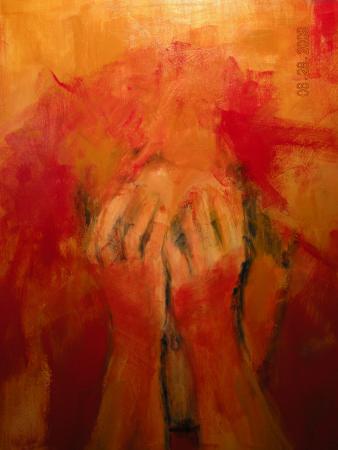
In the Garden of Eden, Adam and Eve are described by a fascinating phrase in the last verse of Genesis 2. The text comments: “the man and his wife were both naked and were not ashamed.” The word “naked” spoke of their physical condition, but the words “not ashamed” are the real surprise and insight of this verse. A surprise, because it is difficult to imagine being unclothed and not feeling some sense that something is missing, that something is wrong. An insight, because “shame” is something that has been a part of the human condition since the tragic events of the very next verses in Genesis 3 and the account of the Adam and Eve’s fall.
Shame is the feeling that there is something wrong with me. The feeling can come from a whole host of directions but the result is always the same. When I feel unworthy or unacceptable because of things I’ve done or things done to me, it can lead to behaviors and choices that distance us from our hearts (the real us) and from relationships (God and others).
The behaviors that flow from shame are that we paralyze, we protect, or we perform. Based on temperament and/or situation, we might do any of the three or a combination. We might paralyze our emotions and shut ourselves down because we just don’t want to feel what we feel. We might protect and be defensive in our approach … shutting others down. Or, we might set out to perform in ways that prove we’re lovable and okay.
Whichever path(s) we choose, shame becomes a cycle or a trap. We can never fully deaden the pain or fully protect ourselves or perform to a level that silences all the critics.
Part of what is fascinating in the Genesis account is that Satan uses some truth about Adam and Eve and twists in some false conclusions. It was true that Adam and Eve were not “like God, knowing good and evil.” Where Satan won the battle was that he intimated that this wasn’t a good thing. Satan “shamed” Even (and consequently Adam) because he was saying that who they were wasn’t good – they were lacking something. The reality is that they were complete as they lived in union with God.
A discussion about shame is important because if we don’t know what it is or how to navigate it, it looms as a powerful, unseen force in our lives. The beautiful truth that begins to rescue us from shame is found in Romans 8:1, “There is therefore now no condemnation for those who are in Christ Jesus.” The idea is that before God, because of Christ, we stand complete. In a very real way, “Whatever is, is okay.” We can look at our sin and the sins done to us and rest.
Certainly, it is a journey (a process) to fully live in that reality but resting in that reality is the nature of the journey. David Vryhof puts it this way, “God has chosen to accept and pardon and welcome us. No matter how miserable our choices have been in the past, no matter how vacillating and unpredictable they are in the present, no matter how misguided they may be in the future, God says we are forgiven.” And, there is no shame in that …
Resisting God

We might not like to admit it, but we often experience resistance in relationship with God. God desires that we trust Him with all of who we are … every atom of our being, every inch of our existence. He desires but He doesn’t demand. He calls but He doesn’t coerce. Our response is often one of desire that falls short (or, very short) of surrender. It can be frustrating that we experience this “push/pull” in our faith. We experience the pull and attraction to live a completely Christ centered life but then find ourselves pushing away.
In Romans 8:1-8, Paul describes this as the dynamic of the flesh and the Spirit. The Spirit draws us to the Father but our “flesh” pushes us away. The “flesh” is that desire in us to do life on our own, in our own power. “Those who are in the flesh cannot please God.” (Rom 8:8) In other words, when we are controlled by the flesh, we are unable to respond to God’s desire and call for our lives. A sure sign that we are battling the flesh is this push/pull that we often experience.
The flesh has patterns for maintaining control. Let me suggest a few that often plague the most “well meaning” of us. First, we when we respond to the desire of God, we can put on an act. We can suggest to others and even to ourselves that we are living a way that we are not. Second, we can examine the call of God to trust and attack others who are not living this way. Instead of looking in the mirror, the flesh will bring to our mind others who aren’t living this way. Those in the church are often quite guilty of bashing the culture or other churches or whoever, just so long as we don’t have to look at ourselves. Third, we can be tempted to make things abstract. Rather than responding specifically, we can philosophize and intellectualize things and leave things there. The illusion that our flesh creates is that we are taking things seriously when, truthfully, we are deflecting.
In Christ, there is a new dynamic (or, power that is introduced into our lives). It is the dynamic of the Spirit. “For the law of the Spirit of life has set you free in Christ Jesus from the law of sin and death. For God has done what the law, weakened by the flesh, could not do. By sending his own Son in the likeness of sinful flesh and for sin, he condemned sin in the flesh, in order that the righteous requirement of the law might be fulfilled in us, who walk not according to the flesh but according to the Spirit.” (Romans 8:2-4) The “righteous requirement of the law” is living a life (the life we desire) of surrender and trust and closeness to God. The Spirit allows us to become who we truly are because of Christ.
But, how do we live “according to the Spirit?” Just as the flesh has patterns, the Spirit has patterns as well. As opposed to putting on an act, we can first come clean as we are honest about where we are in our life spiritually. Romans 8:1 gives us the courage to do just that: “There is therefore now no condemnation for those who are in Christ Jesus.” We don’t have to pretend but can come clean because of grace. Our failings and sin do not exclude us from the life of God and when we are honest, the flesh loses power. Second, we can extend compassion. We are compassionate with ourselves which leads us to extending compassion to others. Often, our flesh attacks others because it is trying to defend itself against shame and guilt but when we rest in grace, we know that we have nothing to prove and we are free to love. Finally, we make the truth of God concrete in our lives. Instead of theological abstractions, we make things specific in our lives. Henri Nouwen suggests: “Becoming the beloved is pulling the truth revealed to me from above down into the ordinariness of what I am, in fact, thinking of, talking about and doing from hour to hour.”
When we see flesh dynamics at work, the encouragement is to go to the grace of God and come clean, show compassion, and make things concrete. These are the patterns of the Spirit that weaken the flesh and allow us to grow in being formed and shaped by the Spirit.
Today, what concrete step can you take to bring the truth of God into the “ordinariness” of you life?
God’s Love is Conditional
 Yes. You read that right … I’m saying that God’s love is conditional. Please let me explain before you write me off as a heretic. God’s love is clearly unconditional in that His love is not dependent upon any condition in us. He loves us based upon who He is and nothing can separate us from His love (Romans 8:31ff make that so beautifully clear).
However, when we use the word unconditional, there can be a tendency to view God’s love as a general principle that has little to do with the specifics of our lives. In the same way we might say, “Well, my parents have to love me, it’s their job.” We might, without realizing it, be saying the same thing about God. “He has to love me. It’s His character, but there is so much that is unlovable about me.”
When we understand God’s love as a general principle, we don’t experience Him loving and redeeming the specific dark parts of who we are. We might even label parts of who we are as unlovable which can lead to hiding those parts of ourselves or even repressing those things.
The reality is that God’s love is conditional in the sense that He loves us in our present condition. He loves the real us … even the dark, sinful parts. Those unsanctified, unredeemed places are not unlovable at all. Romans 5:8 says that “God demonstrates His loves for us in that while we were still sinners, Christ died for us.” The demonstrated love of God is conditional because He loves us right where we are.
Many are fond of saying, “God loves me in spite of my sin.” No! The reality is that He loves us in light of our sin. He loves the unredeemed, broken places and only when we begin to talk to Him about those places and bring them to His light and love will we experience the spiritual healing that only love and acceptance can bring. We are loved not in spite of but in light of our sin.
1 John 1:9 encourages us to “confess our sin.” Confession is a word in the original Greek text that means to “say the same thing as.” The idea is that we are encouraged to say that same thing about our sin that God does. In the past, I have often understood that to mean that when I become aware of sin in my life, I promptly confess it as sin to God and move on. However, simply calling something sin in God’s presence doesn’t mean that I have confessed it. I realize that my previous understanding that God loves “in spite” of my sin meant that I thought I needed to move on quickly and get past that sin. Like an eraser that quickly cleans a pencil mark. Confession was a magic eraser and simply saying “I confess ________ as sin” erased things. To be clear, this is appropriate but really only the beginning of a conversation.
To “say the same thing as” means that I need to have a conversation about this area of sin in my life. What does God have to say about it, not generally but specifically? Am I allowing Him to love me and show me what’s really going on in my life? Am I allowing Him to search me and know me in a way that allows to me let go of those independent patterns that lead me to act in my own power, according to my own strength, by my own wisdom? Confession seems to imply a conversation … a conversation that it is rooted in love.
Clearly, God’s love is unconditional but only in understanding that it is also conditional (specific to the realities of my life) will I experience cleansing from unrighteousness. (1 John 1:9)
Consider that the emphasis of 1 John 1 to “walk in the light” means not that we walk in perfection but that we allow light (in other words, “the truth”) to shed light on the dark parts of us. When light exposes us, we can then have a conversation with God where we allow Him to love us.
 desert direction