Blog Archives
Embracing Vulnerability at Christmas

Vulnerability, emptiness, and weakness are not usually words that come to mind at Christmas. We are more drawn to those Advent words of hope, peace, joy, and love. And for good reason! They are the promise of the Messiah who was born.
However, in our rush, we pass right over what makes hope, peace, joy, and love possible. First, it is the vulnerability of Christ coming as a helpless baby as well as Jesus emptying Himself (Philippians 2) that creates the room for the promises of the Advent season. Second, it is our own emptiness that creates the space for our personal and even communal reception of Christ.
“There was no room for them in the inn.” (Luke 2:7) Iconic lines from the Christmas account told by Luke and lines which also express a dynamic in our modern world.
Life is just so noisy that we are left without room to notice Christ’s presence. Whether physical noise, relational noise of hurt and betrayal, or digital noise from having the internet at our fingertips, quiet spaces for reflection and wonder are few and far between. As much as we might desire it, there just does not seem to be any room, but it is in those quiet spaces where we find the room to see and respond to the presence of Jesus in our world.
When a pastor comes to tears sharing about a personal loss and the congregation hushes to an external and internal quiet, space is opened to encounter and notice one’s own experience of loss. When a friend shares about their loneliness after offering a biting remark that seemed out of character, space for forgiveness is opened. When we confess that we feel overwhelmed at this or any other time of the year, space is opened in our hearts as we admit that we do not and cannot control things.
Space for contemplative reflection (noticing and welcoming Christ) is opened by vulnerability.
Vulnerability, itself, is a space, an emptiness. Rather than seeking control, comfort, and certainty, vulnerability is choosing to remain empty so that Christ can fill. The Christian mystic Simone Weil wrote: “Grace fills empty spaces, but it can only enter where there is a void to receive it, and it is grace itself which makes this void.”
This reflects the words of the Apostle Paul in 2 Corinthians 12:9: “But he said to me, ‘My grace is sufficient for you, for my power is made perfect in weakness.’ Therefore I will boast all the more gladly of my weaknesses, so that the power of Christ may rest upon me.”
The challenge we frequently face is that while there is a desire for this kind of vulnerability, there is also a desire to distance ourselves from it. We most often run from vulnerability. We try to create a life where we either have a perception of not being vulnerable or we let all the noise serve as distractions from the truth that are vulnerable.
Like the Apostle Paul, we pray that God would take our vulnerability away only to discover that He doesn’t and that our vulnerability is where we experience His presence most profoundly.
Vulnerability is the open hands which refuse to hold on to anything, but stay open, ready to receive what is needed. Without vulnerability, love and joy have a difficult time finding a space to land.
This Christmas, are you hungering and longing for joy … for love? Embrace your vulnerability. Let go of what you think will keep you safe and open yourself to the vulnerability of needing God to fill your hands.
Prayer Practice:
As you experience vulnerability or emptiness in the coming days, simply notice it and turn your heart to God. Rather than feeling any particular way about the emptiness or deciding to do something about it, offer yourself to God with the following prayer:
Lord, You hold my life. My life with You is good and I have all I need to be who You’ve made me to be. I need You and I rest in Your love and provision. Give me eyes to see You in all things today. Amen.
Rejoicing in a Time Like This

Can we really rejoice in a time like this? What kind of time is “this”? We all find ourselves in places, situations, and relationships that seem to invite anything but rejoicing. For so many of us, these holy days (holidays) feel like anything but holy. And yet, the signs and messages all around us tell us that we should rejoice. It’s Christmas. It’s the holiday season. While there may be circumstances that we want to rejoice in, there are equally, if not more difficult things, in our awareness. We know that we can’t just turn them off and act like they aren’t there. But … what do we do? Is there a way to be present to the hard things as well as to the more joyful things in a way that transcends both? This is actually the nature of the human condition: difficulties and pleasures all mixed up in a soup that sometimes we’d rather not partake.
In Scripture, we’re invited to rejoice always. (Philippians 4:4) That may seem too tall of a task unless we understand a bit more about the nature of the rejoicing that is invited.
In the invitation to rejoice, there are two caveats that can shape our understanding of rejoicing that grounds it in reality rather than thinking it is an invitation to stick our heads in the sand and say all is well when all isn’t well. First, alongside rejoice are the words: “Let your patience be known to all.” Rejoicing comes from a place of patience, believing that God is at work and that the present circumstances are never the final story. In patience, we actively trust that no matter the situation, there is more coming in the future. This leads us to a hopeful rejoicing. Second, the ground of our rejoicing is found later in the verse 5: “the Lord is near.” He is with us. He is near. He is companioning us and walking with us in all things. So, whether they are hard, things or more joyful, we can rejoice because He is with us.
Out of this rejoicing in the nearness of God, we are invited to pray and give thanks. Joy is found in His presence … the “withness” of God. Prayer is a natural response to finding our joy in Him. We cry out to Him for strength and wisdom and love and assurance. And this comes with thanksgiving … gratitude because He is with us in all things. This invitation to rejoice, pray, and give thanks is also found in 1 Thessalonians 5:16-18: “Rejoice always, pray without ceasing, give thanks in all circumstances; for this is the will of God in Christ Jesus for you.” God’s will is another way of saying … God’s heart or His desire. He desires so deeply for us to see Him as near and to find joy that He is not far away but right here, in this present moment, inviting us to reach out to Him.
Perhaps, this is why Paul could write later in Philippians 4:11-13 that he could do all things, “I have learned in whatever situation I am to be content. I know how to be brought low, and I know how to abound. In any and every circumstance, I have learned the secret of facing plenty andhunger, abundance and need.I can do all things through him who strengthens me.”
Our joy is in the nearness of God, out of which we dependently seek God, and give thanks in all things because we know He is at work. This is the real joy of Christmas … God with us in all things. And it is the joy of everyday living – whether mundane or spectacular.
A Prayerful Meditation: sit quietly and close your eyes, sensing that God is right there with you. Find joy in this reality. Sit with this for a few moments/minutes and then ask for help in some way. Finally, give thanks because, even in this, God is with you and at work. Be specific about your gratefulness. Repeat throughout the day and especially as you find yourself in a “non-rejoicing” kind of place.
The Greatest Gift: a reflection on the meaning of Pentecost

Every year, followers of Jesus celebrate Pentecost. Pentecost was the day described in Acts 2 when the Holy Spirit descended on the first followers of Jesus 50 days after the resurrection. The word Pentecost comes from the Greek word, pentekoste, which means “fiftieth.”
Ten days before this event, Jesus ascended to heaven after spending 40 “post-resurrection” days with His disciples. (Acts 1:1-3) As His bodily presence on earth came to an end, Pentecost is fulfillment of the words of Jesus when He promised: “these things I have spoken to you while I am still with you. But the Helper, the Holy Spirit, whom the Father will send in my name, he will teach you all things and bring to your remembrance all that I have said to you.” (John 14:25-26) This also connects with the discussion of the New Covenant in Jeremiah 31:33-34:
“’For this is the covenant that I will make with the house of Israel after those days, declares the Lord; ‘I will put my law within them, and I write it on their hearts. And I will be their God and they shall be my people. And no longer shall each one teach his neighbor and each his brother, saying, “Know the Lord,” for they shall all know me, from the least of them to the greatest,’ declares the Lord, ‘For I will forgive their iniquity, and I will remember their sin no more.’”
This is an incredible reality, that through the New Covenant (the shedding of Jesus’ blood) we will no longer need to teach each other. Why? Because each person has access to the Spirit of God who leads, guides, and shapes. Of course, the question arises: then why do we have teachers? Primarily, it is for discernment: discerning the Spirit’s voice and leading as well as the discernment provided in the Scriptures.
When it comes to our daily lives and living in the presence and love of God, there is nothing more important than Pentecost. Of course, it could be argued that the cross and resurrection are more important. However, our ability and capacity to live out and embody the cross and resurrection is empowered and shaped by the Holy Spirit.
In Matthew 7:7-11, Jesus says: “Ask, and it will be given to you; seek, and you will find; knock, and it will be opened to you. For everyone who asks receives, and the one who seeks finds, and to the one who knocks it will be opened. Or which one of you, if his son asks him for bread, will give him a stone? Or if he asks for a fish, will give him a serpent? If you then, who are evil, know how to give good gifts to your children, how much more will your Father who is in heaven give good things to those who ask him!”
What does this have to do with Pentecost? First, what are the “good things” that God gives. In one sense, it is an invitation to trust God’s provision in any situation to give us what is needed. Second, in Luke’s description of the same sermon, the good things are defined as the “Holy Spirit”: “If you then, who are evil, know how to give good gifts to your children, how much more will the heavenly Father give the Holy Spirit to those who ask him!” (Luke 11:13)
What is good? What is the best provision in any situation? What is the truest, deepest desire of our heart? The presence and love of God experienced through the Holy Spirit. In Romans 5:5, we read: “God’s love has been poured into our hearts through the Holy Spirit who has been given to us.”
The presence of the Holy Spirit in our lives is not something we have to earn or maintain. Romans 8:9 simply states that “the Spirit of God dwells in you.” The New Testament writings are filled with reference after reference to being in the Spirit, having the Spirit, etc. In attachment to Christ, we experience the presence of the God the Spirit. There is also encouragement to “walk by the Spirit” (Galatians 5:16) and to “be filled with the Spirit.” (Ephesians 5:18) These encouragements describe our need to pay attention to the shaping and leading of the Spirit in our lives … to cooperate and participate in the life of God through the Spirit. To “walk” is to live our lives according to the Spirit’s leading. To “be filled” is to be controlled by Spirit. And of course, this is not something demanded by God the Father but His provision of what could be called the greatest gift (God with us) … which is the deepest, truest desire of our hearts.
Reflection: how are you living with the Holy Spirit? How are you paying attention to the love, leading, and guidance of God through the Spirit? Stop for a few moments of prayerful reflection and become present to what the Spirit is inviting.
Prayer: Holy Spirit, thank you for your constant, gracious presence within me. Help me to pay attention to how you are speaking to me and providing for me moment to moment. Amen.
Practice: simply set aside 5-20 minutes to be quiet (quiet in body, mind, and soul); as you practice quietness/stillness, you will know (experience) God’s presence with you through the Holy Spirit (cf., Psalm 46:10)
Advent … Stop and Notice
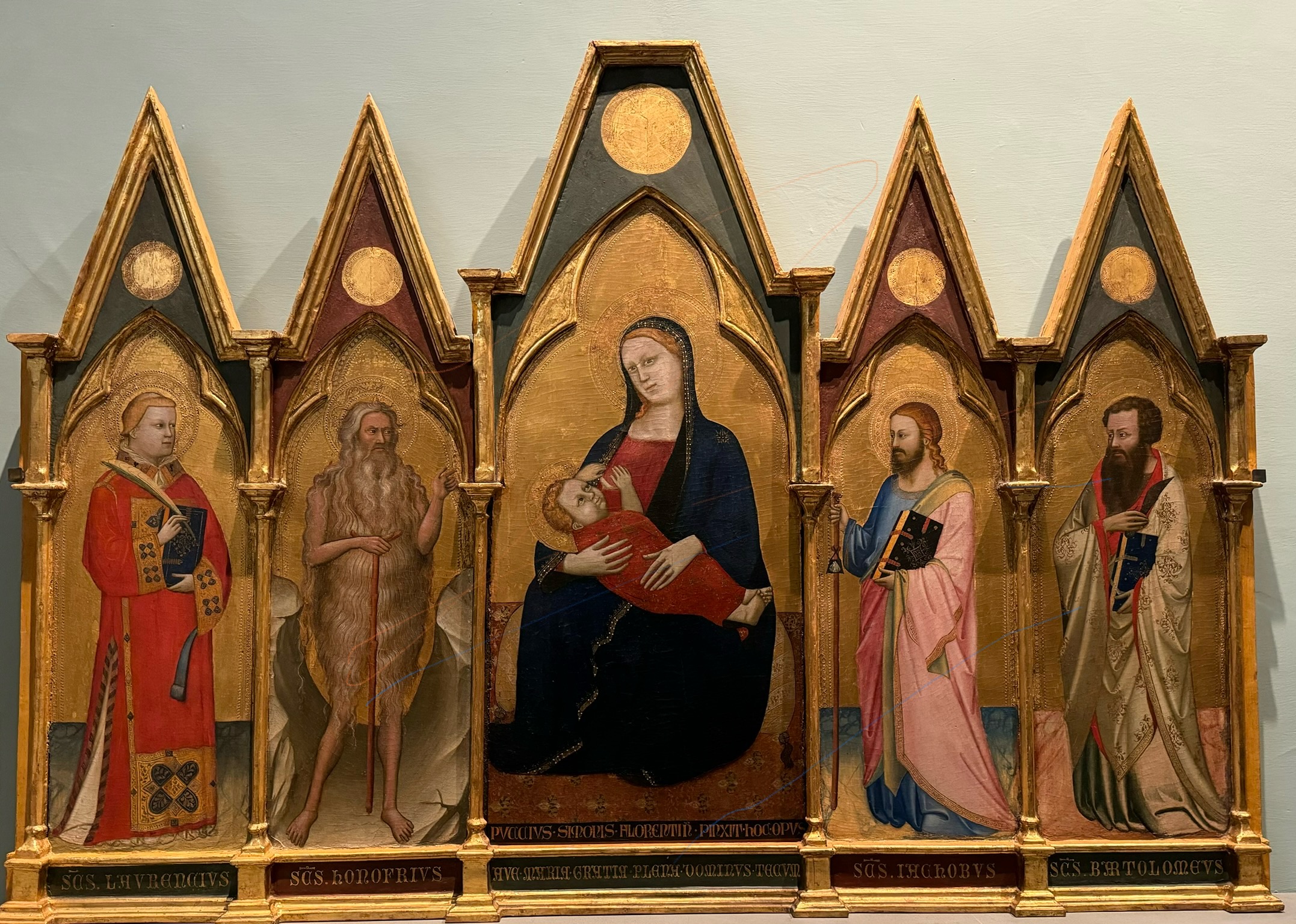
Advent … an invitation to stop and notice. The world around us buzzes and whirls, distracting us from what is. Advent stops us, if we let it, and centers us around what is. Advent is a season of desire and longing. What is most true (truer than all else – deeper than the deepest depth) is that we desire God. In the speed and noise of life, we settle upon lesser desires (some perhaps sinful and some just less than, but all incapable of holding the depth, length, height, and width … the vastness that is the love of God unfolded in the human heart).
So, stop. Please stop. For the sake of God and His love for you, stop. Stop and notice, and sit with desire and longing. Then, as you go about the business of life, you will find calm and peace in the knowing that God alone is your desire and that just as Jesus was secure in the midst of the vulnerability of a first century Palestinian manger, you are securely held in His love.
Desire fulfilled is no longer desire. Advent reminds us of the “already, not yet” nature of desire. Christ became human flesh 2000 years ago (desire fulfilled) and we also wait for His coming each and every day (desire waiting to be filled). “When Christ who is your life appears, then you also will appear with him in glory.” (Colossians 3:4) As we sit with the “not yet,” our lives are oriented once again around the truth that we are dependent creatures … depending upon His appearing not just in the future, but today and tomorrow. How will He appear today? How will you notice His presence today? How will you see Him as the one you’ve ben hoping for? Stop and notice.
This is the invitation of Advent.
 desert direction