Last Words: Day Four
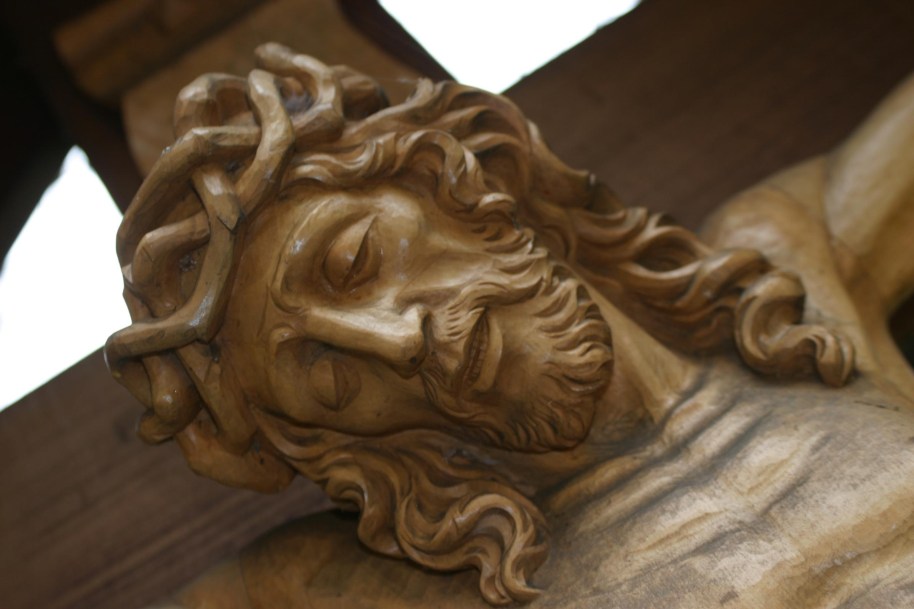
“I thirst.” John 19:28
As Jesus hung on the cross on Golgotha (an Aramaic word meaning “skull”), He suffered in every way imaginable: spiritually, emotionally, relationally, and physically. It was through His sufferings that we are healed (1 Peter 2:24) by being united in relationship with God. And, it is also through His sufferings that we learn how to engage and endure our own sufferings.
Everyone goes through suffering at some point in their lives and for many there exists an ongoing element of suffering throughout life. For some it is chronic pain or illness and for others a prolonged period of estrangement from loved ones. Some suffer the pain of exile from their homeland and others deal with poverty or joblessness.
In the simple words, “I thirst,” which Jesus uttered upon the cross, He left an example of how to suffer with grace and trust.
“For what credit is it if, when you sin and are beaten for it, you endure? But if when you do good and suffer for it you endure, this is a gracious thing in the sight of God. For to this you have been called, because Christ also suffered for you, leaving you an example, so that you might follow in his steps.” 1 Peter 2:20-21
The thirst He experienced evidenced that He was physically undone by the crucifixion. He lost so much water through the sweat and the tears and hours without food and drink that He became dehydrated. He lost so much blood that His body went into shock. Extreme thirst is a symptom of shock and dehydration. And, in all of this, He remained faithful.
Just after Jesus shared that He was thirsty, He was offered a sponge of sour wine. He then lowered His head and gave up His spirit. Earlier in the crucifixion scene (Matt 27:34), Jesus was offered the same wine and He refused it. It was common for the soldiers to give the person being crucified a wine mixture that would help deaden the pain. Jesus refused to run from any part of the suffering and taking the drugged wine would have been an escape, a way to numb the pain.
Every day, we are given opportunities to deaden our pain, to run from suffering. However, suffering and sacrificing is a part of what it means to love and share and give. As we experience sufferings in this life, we find that God’s presence and love in our lives is sufficient:
But he said to me, “My grace is sufficient for you, for my power is made perfect in weakness.” Therefore I will boast all the more gladly of my weaknesses, so that the power of Christ may rest upon me. For the sake of Christ, then, I am content with weaknesses, insults, hardships, persecutions, and calamities. For when I am weak, then I am strong.” 2 Corinthians 12:9-10
To experience the weakness that leads to strength in the Lord, we have to be fully present in our sufferings and hardships. God leads us through sufferings so that some things can die and other things can be birthed in our lives. Is it possible that we don’t know God’s love and presence more fully in this life because we are more focused on managing our pain than seeking God in the midst of our pain? Macrina Wiederkehr put it this way: “Every time I say no to the birthing and dying that is set before me at the table of daily life, I seem to hear the echo of Jesus’ words to the woman at the well, ‘If you but knew the gift of God … ’”
In what ways are you tempted to run from suffering? How might you meet God where you are today rather than seeking to escape? Writer Dorothee Soelle shares the beauty of finding God “in the void”:
We don’t have the choice of avoiding suffering and going around all these deaths. The only choice we have is between the absurd cross of meaninglessness and the cross of Christ, the death we accept apathetically as a natural end and the death we suffer as a passion…. If in the night of despair the soul does not cease loving “in the void,” then the object of its love can rightly be called “God.”
Meet Him in the emptiness, in the thirst … it is there that He becomes real and His love becomes all that you need. When we numb the pain, we also numb our ability to feel and experience His love.
Prayer for loving “in the void”:
Father, I desire to experience your grace as sufficient rather than numbing my pain. Give me the strength to see how I run from suffering so that I might stop and therefore trust you in the void. I rejoice in how You are shaping Me into Your image for your glory. Amen.
Last Words: Day Three
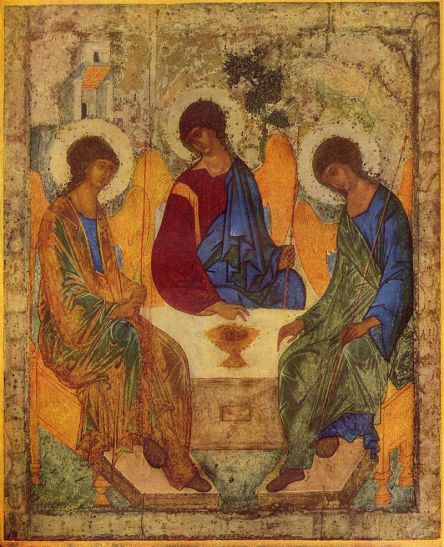
“My God, my God, why have you forsaken me?” Matthew 27:46
From all eternity, God has existed in community – that glorious reality called Trinity. God exists in a relationship between Father, Son, and Spirit in such a way that there are three and yet God is one. The concept defies math and transcends human, finite comprehension but teaches us so much about the nature of reality.
First, God is relational at His core. Second, “God is love” (1 John 4:8). Love is the essence of His character in such a way that He is not just “loving” or one who engages in the act of love but He is love. Love is His identity that permeates His being. Finally, this love is the motivation for the actions that flow from the Trinity. The Trinity created the universe as an act of love. Because of the eternal, infinite love between Father, Son, and Spirit, they decided to create humanity in order to share the glory of that love. Love is like that: it demands to be shared.
And so, as God created, He made the first humans in such a way that they enjoyed unbroken, unhindered access to Himself. Those first humans, described in the early chapters of the Bible, only knew loving trust of their creator. They walked with Him and talked with Him. Then, sin entered the picture, and sin is simply doing life apart from God. From then on, humanity struggled with isolation and loneliness and confusion which led to fear and hate and self-protective strategies for doing life.
Jesus entered human history in order to bring redemption to the broken relationship between Creator and His creation. As He went to the cross, the mission was glorious:
He himself bore our sins in his body on the tree, that we might die to sin and live to righteousness. By his wounds you have been healed. (1 Peter 2:24)
Something that God the Son (Jesus) had never known was the anguish and suffering of separation from God the Father and God the Spirit. In taking our “sin” (the results of doing life on our own) on Himself, He experienced a breach in the eternal relationship of love. And so, He cried out on the cross: “My God, My God, why have you forsaken Me?” It was a statement of deep despair. The physical sufferings of the cross were brutal but nothing compared to the torment of feeling isolated and alone.
He voluntarily, in love, took upon Himself the horror of being alone and its ultimate consequences so that we would never have to live isolated and alone ever again. This is the healing that His wounds produced. We are invited to receive the forgiveness of sins as a gracious, loving gift and then move back into enjoying unhindered access to Him (Hebrews 10:19-22). This is why God can say “I will never leave you or forsake you.”
How will you enjoy the gift of unhindered access to Him today? Are you feeling alone or isolated? Remember that the Trinity invites us to do life with them. We may feel forsaken but there is a deeper reality we can trust. Even more, an experience of His love is ours to enjoy through prayer. Franciscan writer Ilia Delio put it this way: “Through prayer, I am drawn into the dance of the Trinity.” It is participating in this dance that the remnants of our wounds are healed and transformed as we learn to be loved and to love in return.
Pray a simple prayer today (throughout the day):
Father, I am so grateful that I am no longer separated from You because Jesus endured forsakenness for me. Give me the courage to trust our relationship when I feel otherwise. Speak to my heart and tell me what’s on Your heart. What are you doing? What do you want me to notice? Amen.
This is a prayer that allows us to dance with the Trinity and experience the love we were created to enjoy. “For your sake he became poor, so that you by his poverty might become rich.” (2 Cor 8:9)
Last Words: Day Two

“Truly, I say to you, today you will be with Me in Paradise.” Luke 23:43
Not surprisingly, grace once again flowed from the heart of Jesus to those around Him while on the cross. Situated between two criminals, Jesus is mocked as the first criminal shouts “Are you not the Messiah? Save yourself and us!” The irony of the question and statement was that Jesus was indeed providing salvation by the very act of being on the cross. But, the blindness of the one man didn’t lead Jesus to call down fire from heaven or to hurl insults in return.
The second criminal rebukes the first as He says, “Do you not fear God?” He shares that they have done something to deserve their cross but Jesus had done nothing wrong. Next, that second criminal utters a request that is at the core of what we all desire. He asks:
“Jesus, remember me when you come into your kingdom.”
In this simple statement, he is acknowledging the Jesus is indeed the Messiah, the promised One – “the desire of the nations” (Haggai 2:7). Whether we have fully come to the place of identifying it or not, we all desire to be with Jesus. We all desire to do life with God. It is the desire that makes us human and a desire that we often deny.
John Ortberg writes: “What always drives us, at the soul level, is that if I believe I cannot trust God for the satisfaction of my soul, then I will take my soul’s satisfaction into my own hands. I may not acknowledge that even to myself.” For the second thief, He was at the end of his rope. He no longer had any ability to take care of His own needs and in that moment of vulnerability he reached out to Jesus.
And, Jesus did not say, “It’s too late” or “You should have thought about that before you committed the crime.” Instead, He showed infinite mercy and grace as He gently says:
“Truly, I say to you, today you will be with me in paradise.”
Do you believe that being with Jesus, doing life with Him, is the satisfaction of your soul? When you reach out in simple faith, not able to bring anything to the table, He responds with “Yes, you can be with Me.” And, the hope of heaven is the hope of getting to be with Him.
Often, we settle for less than our heart’s true desire. Are you willing to be boldly vulnerable and ask God for what you really desire? To do life with Him … to be with Him.
Take a few minutes today and pray:
Father, I acknowledge that I am not only at the end of my rope but apart from You, I have no rope. I often take my soul’s satisfaction into my own hands but my prayer today is that I could be with You and do life with You. May I experience the “paradise” of living life in Your presence today as I look forward to eternity with You in heaven because of the salvation that Jesus provided on the cross. Amen.
Last Words: Day One

“Father, forgive them for they do not know what they do.” Luke 23:34
As Jesus of Nazareth hung from the cross, He looked down and offered forgiveness to those who had tortured Him, mocked Him, and finally nailed Him to the pieces of wood. In an act of extreme grace, Jesus looked past their ignorance and even past their desire to be forgiven.
Romans 5:5 shares that “God’s love has been poured into our hearts through the Holy Spirit who has been given to us.” Just a few verses later, we’re told how: “but God shows His love for us in that while we were still sinners, Christ died for us.” His love for us was extended while we were sinners – ignorant of our need and committed to our own agendas. When we reached out and received the gift of forgiveness that Jesus offers, we were still ignorant of the totality of our need because it is infinite but He still graciously gave.
Frequently, as followers of Christ, we find ourselves not experiencing the love of God that has been poured into our hearts. David Seamands, in his book on forgiveness, writes: “Many years ago I was driven to the conclusion that the two major causes of most emotional problems among … Christians are these: the failure to understand, receive, and live out God’s unconditional grace and forgiveness; and the failure to give out that unconditional love, forgiveness, and grace to other people … we read, we hear, we believe in a good theology of grace. But that’s not the way we live. The good news of the gospel of grace has not penetrated the level of our emotions.”
How do we ensure that grace has penetrated to the level of our emotions? How do we actively live in His grace and love and forgiveness? Simone Weil writes: “Grace fills empty spaces, but it can only enter where there is a void to receive it, and it is grace itself which makes this void.”
There was an initial “void” or experience of emptiness that lead to that initial reception of His love. How is that void growing in you today? Is there more and more need in your life for His love? Often, as we go on in our life with Jesus, the perception is that maturity means we have it more together and more figured out. The opposite would seem to be true as the experience of His love in our depths requires a greater experience of our need for Him. Seeing the “void” or empty spaces grow requires letting go of things that we use to fill the void on our own. Our lack of experiencing His love and grace is predicated on self-love and self-protection.
Spend a few minutes asking the Father what you are using to fill the void on your own and then ask Him for the strength to let go of those things so that you might experience His love that has been poured out in your heart.
Hearing the Voice of God

Through the ages, appealing to the “voice of God” has been used to justify everything from the silly to the profane. In addition, simply saying “God told me” tends to be a conversation stopper … if God tells someone something, how can you argue with that?
The idea that God speaks to people is as old as humanity itself but claims have been routinely met with skepticism from both believers and non-believers alike. From one who doesn’t believe in the existence of God, rejection of the concept makes sense. However, for those who believe, why would there be skepticism? The reasons range from over-reaction to abusive and sensationalistic claims of hearing from God to sincere theological belief that while God may have spoken in the past He does not do so today.
At the heart of the Gospel (good news) of Jesus is the reality that the experiential divide between God and man has been bridged. There is a real, loving experience of God promised to those who have come into a relationship with Jesus. Colossians 1:27 describes this truth as “Christ in you, the hope of glory.” The incredible hope is that the God of the universe spiritually dwells within us. This suggests the relational reality of presence, real presence! With presence comes the joy of communication. In John 10:27, Jesus said, “My sheep listen to my voice; I know them, and they follow me.” So, how exactly does this work? How do we listen to His voice?
When we listen to Jesus, it is the Holy Spirit who communicates the words of Jesus to us. In Romans 8:14-16, the Apostle Paul shares that: “all who are led by the Spirit of God are sons of God. For you did not receive the spirit of slavery to fall back into fear, but you have received the Spirit of adoption as sons, by whom we cry, “Abba! Father!” The Spirit himself bears witness with our spirit that we are children of God.” We are led by the Spirit as He “bears witness” with our spirit about our identity as beloved children of God. Bearing witness is real communication. It doesn’t promise an audible voice but some sort of communication that is understandable. Perhaps, the best way to understand the communication is that of a gentle, discernible nudging in our spirit. 1 Kings 19 describes God speaking to Elijah as the sound of a gentle whisper.
Two questions certainly emerge from the idea that he speaks in a gentle nudges in our spirits. First, why doesn’t He speak loudly, in undeniable ways? What makes the most sense is that God never wants to force anything on us but desires a real relationship where we are free to choose. Yelling or screaming generally leads to forced submission or rebellion. God desires our hearts. He wants us – not forced submission – so He speaks quietly. The second questions revolves around how we know if it is actually the “voice” of God and not simply what we want to hear? Certainly, discernment is needed and required. 1 John 4:1 encourages us: “Beloved, do not believe every spirit, but test the spirits to see whether they are from God, because many false prophets have gone out into the world.”
How do we develop the needed discernment? At the heart of our discernment is the text of Scripture. We can test and affirm what we are “hearing” by the Word of God. And we can trust that God does speak to our hearts because He abides with us. (1 John 3:24) Our abiding with Him is experienced as we obey His commands. In this mutual abiding (or, indwelling), we communicate with Him.
So, at the heart of our “listening” must be the Biblical text. The Spirit leads us in our application of God’s written word and also leads us in the experience of our relationship with God. Like any real relationship, current and relevant communication is needed. Over time, that communication may come through silent presence like an “old married couple” sitting on the porch enjoying one another without a word needing to be spoken.
Robert Mulholland suggests a beautiful way that we can interact with Scripture that engenders this kind of relationship:
“The how of the role of scripture in spiritual formation is not so much a body of information, a technique, a method, a model, as it is a mode of being in relationship with God that we bring to the scripture … I suggest that your top priority be to listen for God. Seek to allow your attention and focus to be on listening for what God is saying to you as you read … Listen for God to speak to you in and through, around and within, over and behind and out front of everything that you read. Keep asking yourself, ‘What is God seeking to say to me in all of this?’ By adopting this posture toward the text you will begin the process of reversing the learning mode that establishes you as the controlling power who seeks to master a body of information. Instead, you will begin to allow the text to become an instrument of God’s grace in your life. You will begin to open yourself to the possibility of God’s setting the agenda for your life through the text. Not only will this exercise begin to transform your approach to reading (and prepare you for the role of scripture in spiritual formation), it will also begin to transform your whole mode of being in relationship with God in a way that will enhance genuine spiritual formation.” (Shaped by the Word)
As we live in a posture of listening throughout our days, what kinds of things does the Spirit tend to say to us? At the core of what we hear is that we are His beloved. (Romans 8:14-16) This is the gentle consistent whisper that we receive from the Spirit. In addition, Gordon Smith suggests the following categories in his book, The Voice of Jesus:
- assurance of God’s love
- conviction of sin
- illumination of our mind regarding Scripture
- guidance in times of choice
He desires for us to live in a real relationship of love and the heart of what He says regards the nature of our relationship, barriers to that relationship, and how we can live with attentiveness to that relationship moment by moment. He loves us deeply and only specific communication can catapult us into the transformation that love provides. The beautiful truths of Scriptures can be deeply trusted but it is His gentle whispers that allow us to know.
How do we best listen? Anthony deMello offers:
“There are few things that help so much for conversing with Christ as silence. The silence I speak of is, obviously, the inner silence of the heart without which the voice of Christ will simply not be heard. This inner silence is very hard to achieve for most of us: close your eyes for a moment and observe what is going on within you. The chances are you will submerged in a sea of thoughts that you are powerless to stop – talk, talk, talk (for that is what thinking generally is, me talking to myself) – noise, noise, noise: my own inner voice competing with the remembered voices and images of others, all clamoring for my attention. What chances does the subtle voice of God stand in all of this din and bustle? … Your tolerance of silence is a fairly good indicator of your spiritual (and even intellectual and emotional) depth.” (Contact with God)
Don’t neglect the gift of real communication with the God of the universe! Live with a listening posture and the fruit is love, joy, peace, patience, kindness, goodness, gentleness, and self-control. And more than that, the fruit is relationship with God Himself – who is the true desire of our hearts.
Coming Home at Christmas
 The theme of “coming home” is incredibly prominent in the arts … whether song or film or literature. The concept of “home” resonates deeply within the soul of all of us. As a young man living in the Middle East in the ‘80s, I’ll never forget being told that I was not in my homeland and therefore needed to act appropriately as a foreigner. It struck me deeply that home is a place where you feel at rest, where you feel loved, where you feel you can be the “true you.” We’ve all been hardwired to desire home.
At this time of year, the idea of home can elicit feelings of joy and/or feelings of disappointment that rival no other joys/pains in our lives. Why? Because there is something very primal about home.
In the beginning, the first humans lived at “home” with God in a garden of delight and trust and love. There was love, joy, peace, patience, and a general tranquility to their lives. The enemy of God entered the picture and led Adam and Eve to doubt the goodness of their home. As a result, they left that “home” of trust and love with God as their Father. Indeed, the concept of “home” and family comes from the God of the Universe.
“For this reason I bow my knees before the Father, from whom every family in heaven and on earth is named.” (Ephesians 3:14-15)
As people made in God’s image, our concept of home is rooted in the very person of God. No matter who we are or where we come from, three things are true about us. First, we all desire to be at home. We want to be fully alive and at rest in our own skin. Second, we’ve experienced, and may even be experiencing in profound ways, that we are not at home. Third, our sense of “home” is most truly and fully found in the God. So, the theme of returning home resonates deeply.
At its core, Christmas is indeed about coming home but not in the ways we often consider. It is about “coming home” to the reality that He is our home – our deepest, truest desire in this life. Jesus is the One for whom we’ve been waiting! Jesus is the fulfillment of all our desires. No earthly family can truly fulfill our desires. No inheritance or financial windfall can satisfy our deep longings for security. No activity can finally provide peace to every square inch of our being. All other desires are shadows of our one true desire … consider the following poem:
Now I can see
that it was You.
It was always You,
behind every song
and every story
that ever captured
my heart.
It was You.
Every relationship,
a tutor.
Every desire,
a shadow
of my true desire, You.
It was always You.
The One whom my soul loves.
Christmas is an invitation to stop … to stop running … to stop looking … to stop striving after an earthly home and believe that you are already home. We can trust this and believe because Jesus, the One we celebrate at Christmas, made His home among us. He said, “I am the way, the truth, and the life, no one comes to the Father but through me.” (John 14:6) So, our return “home” is found in Christ.
Thomas Merton commented that “in prayer, we discover what we already have. You start where you are and you deepen what you already have, and you realize that you are already there. We already have everything, but we don’t know it and we don’t experience it. Everything has been given to us in Christ. All we need is to experience what we already possess.”
A recipe for a great Christmas (really, a great life) might simply be this kind of prayer:
- Stop looking around you for “home.”
- Remind yourself in quiet prayer that you have everything in Christ.
- Rest in the reality that you have Him, the true desire of your heart.
- Enjoy living from a place of fullness rather than lack.
May this truly be a merry Christmas as you stop and consider that everything you’ve ever wanted is in Christ. Take a few moments right now and stop, remind, rest, and enjoy. Repeat moment by moment.
“In him was life, and the life was the light of men. The light shines in the darkness, and the darkness has not overcome it.” John 1:4-5
Go Ahead, Put God in a Box
 Several months ago, in a deep conversation with friends over dinner, it was said that “you can’t put God in a box, but he will always come get in our boxes with us.” As I listened and reflected on what was being suggested, I began to make all kinds of connections with the nature of God and how He works in our lives. The statement not only rang true, but I sensed that it was also a really important idea.
It has been said, “You can’t put God in a box.” Of course! We can’t control God or determine how He is going to act. He will not be bound. At the same time, the reality is that our tendency is to do just that … to put God in a box of our own making. The walls of the box are made up of our limited understanding, our preconceived (often unaware to us) ideas, our expectations, and our misunderstandings. No matter how “mature” we believe we are or how schooled we are in theology, we will always have these tendencies. In one sense, we will always put God in a box.
And the beautiful reality is that God will always come and be with us in our boxes. To pretend that we could ever not have a box is a function of pride rather than reality. The only hope we have for the walls of our boxes to come down is experiencing the presence of God right where we are … in the middle of the messiness of expectations and preconceived ideas and limited understandings.
We often come to the erroneous conclusion that until we have the right and correct beliefs about God, we are unable to interact with Him. The reality is God relentlessly pursues us. He is always the initiator and we are the responders in the relationship. He comes to us! God can never be defined or contained by our limited, incomplete thoughts and yet, He will come to us in our lack of knowledge.
We can also think that we have to have our “act together” to be able to interact with God. Margaret Silf, in her Inner Compass, shares:
“God comes to us not where we should have been if we had made all the right choices in life; not where we could have been if we had taken every opportunity that God has offered us; not where we wish we were if we didn’t have to be in the place where we find ourselves; not where we think we are because our minds are out of sync with our hearts; not where other people think we are or think we ought to be when they are attending to their own agendas. God meets us where we really are.”
If we understood everything about God, it quite possible that it would shock us and terrify us and cause us to run for the hills. His thoughts are not our thoughts and His ways are not our ways (Isaiah 55:8-9). If we were to see Him, we would die from being exposed to the depths of His holiness (Exodus 33:20). So, he shows up like a Trojan horse. We think we’re relating to Him on one level but He comes disguised. It’s the disguise we make for Him and He comes to slowly remove the disguise. He doesn’t come this way to deceive us but because He wants to be with us, even if we misunderstand Him for long periods of time. He comes and gently creates the tension required for our growth in knowing and relating to Him.
In Mark 10:35-45, we observe an amazing example of this kind of relating. Two of Jesus’ disciples come to Him with expectations and are shockingly honest about it. They say, “Teacher, we want you to do for us whatever we ask of you.” That’s quite a statement but certainly reflective of what is often going on in our hearts. At face value, it’s a prideful request, assuming that the God of the universe will do their will, their bidding. What does Jesus do? He meets them in that place as He responds with “What do you want me to do for you?” He is meeting them in their box. I can imagine that the disciples were thinking, “Yes! Here we go … all of our desires are going to come true!” However, Jesus turns their request upside down by asking them to think deeper about what they were asking. He doesn’t refuse to interact with them or ignore them but meets them in their box and begins to dismantle their preconceived ideas.
He initiates and comes to us even when we think we’re in charge and calling the shots. It’s deeply humbling to think about the humility of God to condescend toward us. When you see it and appreciate the depths of His love, it can lead us into a new way of relating … a way that can progressively knock down our walls and usher us into deeper and deeper intimacy with God.
So, why does He do this? Why doesn’t He wait for us and demand that we have things figured out before He comes to us? Quite simply, He is more concerned about being with us than being right. He desires to know us and love us in the particulars of our lives. He would rather us have something of Him than nothing of Him. And, He longs for more. That’s why He will come and patiently work in our lives. We are in our boxes and God meets us there. He expands the walls or even knocks them down as we experience God on His terms. It’s important to realize that He doesn’t come with expectations and demands, but with desire. When we begin to meet Him at this place, we see that our deepest desire is to do life with Him as well.
So, how do we respond? It begins with acknowledging that we have that tendency to put God in a box, and it moves forward in the following ways:
- Engaging a posture of humility.
If God meets us where we are, then ask the question: “where am I?” Acknowledge that your perspective is limited and that much of life is mystery. Part of putting God in a box is arrogantly thinking that we know and the naïve, yet common, desire to control. We frequently think that if we “know,” we can control. Consider: what am I trying to control? What are things that I want to believe I know but don’t or can’t? Notice places where you feel anxious or angry or tense. And then, “humble yourselves, therefore, under the mighty hand of God so that at the proper time he may exalt you, casting all your anxieties on him, because he cares for you.” (1 Peter 5:6-7) Anthony deMello suggests:
“The fact is that you are surrounded by God and yet you don’t see God, because you ‘know’ about Him. The final barrier to the vision of God is our God concept. You miss God because you think you know. That’s the terrible thing about religion. That’s what the Gospels were saying – that religious people ‘knew,’ so they got rid of Jesus. The highest knowledge of God is to know God as unknowable.”
- Enacting the practice of letting go of expectations and preconceived ideas.
Here, we ask the question: “What are the expectations I have that I need to release?” Let me suggest three potential areas. First, we frequently come to God with a consumer mentality. We have a need and God can/should/will meet that need. We get trained to believe that every need should be fulfilled, yet Jesus says “blessed are the poor” (Matthew 5:3). It is our need that awakens us to true desire. When we can sit quietly and let go of “need,” we are in a place to relate to God as our King not simply as a genie who grants wishes. Second, we often come to God with an individualistic mentality. We define and look at life as though we are the center of universe. We can’t seem to help ourselves because it is so ingrained. Yet, we are encouraged over and over again to see “neighbor” as a fundamental part of our identity (“love your neighbor as yourself,” Matt 22). Ask God for His perspective of your neighbor so that you can let go of yours. Third, we come to God with a materialistic mindset. The material things of this world end up defining us and giving us a sense of meaning although we are encouraged that “life is more that food, and the body more than clothing” (Matt 6:25). A way that we can enact the practice of letting go is to sit with God in the nakedness of silence. Sit silently with God for 15-20 minutes (or more) and let go of each thought that enters your mind. Surrender each desire or compulsion to His care. It’s hard to do (at first) but it can become a way of life with God. The walls of our boxes are most often built by our own thoughts and preconceived ideas.
- Enlivening your passion to do life with Him.
Finally, we think through: “who am I, at my core? Why am I alive?” He meets us with desire, a desire to know us and be with us and do life with us. The root underneath every command of Scripture is this desire of His. And, every desire of our hearts is, at its depths, this very same desire: to do life with Him. Remind yourself daily, perhaps moment by moment, that this is who you truly are. You are a longing for God.
Finally, be patient. As A.W. Tozer reminds us: “God never hurries. There are no deadlines against which he must work. Only to know this is to quiet our spirits and relax our nerves.” With that quietness of spirit, move toward humility, letting go, and just being with Him. As we are with Him in the mystery of His glory and grace, the walls of our boxes fall down and God becomes much bigger and more glorious than we could ever imagine.
Please Don’t Numb Your Pain!
 We all experience pain in this life. No one emerges unscathed. We might wish and hope and pray not to experience pain, loss, and suffering, but this is our common lot. Also, common to humanity is the temptation to numb our pain.
Numbing our pain can come in a variety of ways, but it seems to be the normal way of “dealing” in our modern world. We numb with constant busyness. We numb with accumulating and consuming more and more. We numb with relationships and sexuality. We numb with substances. Anything that might seem to “take the pain away” is fair game. Perhaps, the most popular form of numbing is denial or ignoring pain. This might occur by itself or in conjunction with other numbing “strategies.”
Numbing our pain might sound like a great option, a preferable option. However, it comes with significant risk. First and foremost, we can’t shut down just a part of our heart. When we numb the pain, we also numb our ability to feel other things like joy and peace and delight. Second, Larry Crabb, in his book Shattered Dreams, suggests:
“People who learn to deaden their pain never discover their desire for God in all its fullness. They rather live for relief and become addicts to whatever provides it. Think with me about how this works. Inconsolable pain, the kind that drives away every vestige of happiness and renders us incapable of fully enjoying any pleasure, can be handled only by discovering a capacity for a different kind of joy. That is the function of pain, to carry us into the inner recesses of our being that wants God. We need to let soul-pain do its work by experiencing it fully.”
In addition, when we are numb, we can end up engaging in behaviors that are risky and/or sinful because we just want to feel alive. We want to feel something.
So, how do we “deal” with pain without going to numbing strategies? To put it simply, we have to be able to appreciate the importance of grieving and sadness as a normal, needed part of life. The problem is that we often believe that sadness and grief are realities to be avoided at all costs.
Henri Nouwen shares:
“Typically we see such hardship as an obstacle to what we think we should be – healthy, good-looking, free of discomfort. We consider suffering as annoying at best, meaningless at worst. We strive to get rid of our pains in whatever way we can. A part of us prefers the illusion that our losses are not real, that they come only as temporary interruptions. We thereby expend much energy in denial. ‘They should not prevent us from holding on to the real thing,’ we say to ourselves.”
Nouwen hints at something which is at the core of the problem: “what we should be.” When we hold expectations for how life should be, we will always run into disappointment and perhaps even shame. Shame is the feeling that there is something wrong with us. If we are grieving and/or sad, we may indeed come to believe that there is something inherently wrong with us.
Brene Brown makes just this point as she suggests that “we’ve lost our capacity to hold pain and discomfort” in our culture. She goes on to say: “There are two affects or emotions that people fear the most. Its shame and grief.” And, it would seem that these two compound one another.
The great reality is that the pathway to pure joy is through the darkness of pain and loss. Because of the deep mystery and complexity of life, we never know exactly why some things happen but we can know that God uses pain to draw us closer to Himself. If we let Him, He can take our pain and redeem it and reshape it. Larry Crabb comments: “Our generation has lost the concept of finding joy in unfulfilled desire. We no longer know what it means to hope. We want what we want now.” The very concept of unfulfilled desired may be anathema in our culture, but it is a wonderful teacher. Half a century ago, C. S. Lewis wrote: “If we find ourselves with a desire that nothing in this world can satisfy, the most probable explanation is that we were made for another world.”
The redemption and transformation of pain that comes when we know how to grieve can be summed up in the word “joy.” Joy is the deep sense that God is present and involved in our lives. When we numb ourselves to pain, we can lose that sense that God is present in our lives. In some ways, this might sound counter-intuitive. However, as we learn to grieve, we are thrust into a world that is larger than self. We learn to let go of our own perspectives and preferences. We learn to hope in God. We learn to be present for others in their pain and loss.
So, how do we stay with pain and engage in grieving in a way that we are not separating ourselves from what God might be doing? How do we learn to experience sadness in a way that is healthy and helpful to ourselves and others? Let me suggest four things:
- Refuse to “numb out.”
Notice the temptation in yourself. What are the strategies you employ when experiencing pain or loss? Spend a few minutes in introspective prayer. (Psalm 139:23-24)
- Rest in God’s presence.
We might want God to say, “I’ll take away all your pain.” But, He says, “I’ll be with you. I’ll sit with you in it.” We might want a magic bulletin for our pain, but there are no magic bullets. There is Presence. There is a God who says, “I’m am WITH you.” Make yourself aware and attentive to God’s presence. Where is God when you are suffering? He is with you. Make the recognition of His presence your focus. (Hebrews 13:5b)
- Realize you are on a journey.
In Psalm 30:5, we are told that “weeping may tarry for the night, but joy comes with the morning.” There is hope in the midst of all our pain. We frequently hold our pain like we hold a snapshot, focusing on the seemingly static, unmoving nature of things. Rather, hold your pain by seeing it as a part of movie. Transformation happens when we sit with the pain in hope.
- Relate to others who will sit with you in it.
Frequently, we isolate during pain. Perhaps, it is shame that motivates us. Perhaps, the unwitting comments of others that hurt more than help (e.g., “get over it” or “be brave” or “toughen up”). Surround yourself with trusted friends who are more interested in listening than fixing and/or giving advice.
Be assured: our pain will either be transformed or transmitted. Choosing to grieve and feel sadness can lead to transformation while ignoring our pain and numbing it will invariably lead to transmitting it to others. Henri Nouwen counsels:
“The voice of evil also tries to tempt us to put on an invincible front. Words such as vulnerability, letting go, surrendering, crying, mourning, and grief are not to be found in the devil’s dictionary. Someone once said to me, ‘Never show you weakness, for you will be used; never be vulnerable, for you will get hurt; never depend on others, for you will lose your freedom.’ This might sound very wise, but it does not echo the voice of wisdom. It mimics a world that wants us to respect without question the social boundaries and compulsions that society has defined for us.”
Dashed Against the Rocks: Hope for Our Anger

Anger is a very real, extremely common emotional response to the stuff of life. And, as a human race, we are not skilled at working through our anger to a place of peace or reconciliation. Most often, we end up doing things or saying things from a place of anger that we wish we could do over. Or, perhaps, we feel justified because we were wronged, but probably inwardly wish we hadn’t exploded or imploded or whatever the case may be. We all get hurt in this life and if we’re paying attention, we get angry. We might have learned how to stuff our anger or put on a smiling face in the midst of it, but it’s there none the less. In fact, if someone claims to never get angry, I wonder if they have a pulse. Is there any hope for dealing with our anger – our hurt – our violent thoughts?
In the Old Testament Scriptures, there are prayers that offer hope but they have typically been either misunderstood or ignored. In fact, recently, a friend emailed and asked me about a verse in one of these Old Testament prayers that troubled her:
“Blessed shall he be who takes your little ones and dashes them against the rock!” Psalm 137:9
This is one of those verses in the Bible that legitimately bothers people. The question is most often: how can a loving God condone the idea of killing children? Let me quickly say that there is more going on in this verse than meets the eye. So, what’s going on?
Psalm 137 is an example of what is called an Imprecatory Psalm. An imprecation is a harsh word or words that are said when someone is angry and hurting. The idea of the Imprecatory Psalms is that the Lord asks us to come to Him with the anger and hurts and deep frustrations of our hearts. Verse 9 of Psalm 137 is not a good, right, or holy thought but it is the real thought of the psalmist. The people of Israel were captives, slaves, in Babylon and they were hurting and angry. It could be argued that they were justified in their anger. Right? They were slaves! They were so angry that they wanted the children of their captors to die and die violently. We can all relate to times when we were so angry that we just wanted another to die, or at least go away, never to be seen again. God never affirms those thoughts as right or correct but invites His people to come and share everything on their hearts. Rather than simply “parrot” the right answers – God wants us to trust Him with our hearts which begins with honesty and pouring out our hearts. The hope in all of this and what I’ve seen over and over is that people’s hearts are shaped and transformed as they give all of themselves to God and not “stuff” the anger and/or violent thoughts.
If we look at the rest of Psalm 137, we notice that there is an expression of several things:
- Tears, or hurt (verses 1-2)
- Statement of the circumstances surrounding the hurt (verses 3-4)
- Lamentation of what seems like lost hope (verses 5-6)
- Violent, murderous thoughts (verses 7-9)
Here are several things that we can glean from the existence of this kind of prayer:
- In times of anger, don’t worry about thinking the “right” things but give your actual thoughts and feelings and responses to God. Pour out your heart to him. He desires to hold your anger and hurt. The Imprecatory Psalms are not expressions of “good theology” but they are expressions of the kind of honesty that can lead to a transformed heart.
- What is modeled in Psalm 137 is the beauty of honesty. Don’t ignore the feelings and emotions of your present experience. And notice that the psalm doesn’t end with a resolution but leaves things hanging. It is God who resolves and holds the hurts, not us. We may have to come back again and again over a period of time.
- When we dismiss our emotions and anger, we are really just stuffing them under the surface of our hearts. The result is that we stop going below the surface of our lives and don’t live from the depths of who we are. And, those emotions will always come out and hurt others. We don’t live our lives based on what we want to believe but based on what is in our hearts.
- We find Him in the midst of whatever is going on in our lives, not in some other imaginary world that we’d like to live in.
How do you deal with anger? Do you find yourself exploding, imploding, stuffing, or denying your anger? In Ephesians 4, we are encouraged to “be angry and do not sin.” There is an invitation (be angry) and a potential result (do not sin). All of us have experienced being angry and consequently sinning. Perhaps, the “do not sin” part comes as we experience our anger in the context of our relationship with God, i.e., in prayer. Sins are always the result of acting, thinking, and desiring independent of our relationship with God. Love, joy, peace, and patience spring forth from our dependence on the Spirit. When we pray an “imprecatory psalm”, we are depending on God through prayer.
So, today, as you feel anger arise in your heart (it could be small or big), stop and pray. Pray all that you are feeling to God. Give it to Him. Give Him your heart. And then, quietly ask Him to give you His heart. Repeat as necessary … (and, it will be necessary!)
Embracing Desire

Desire is a fire that burns in our souls. Desire is that which motivates and fuels us. Vitally important, and yet, we most often live with only a vague sense of how desire works in our lives. Frequently, we long to desire deeply but find ourselves trudging through life, tired and worn down. Or, we find desires in our lives that seem to control us and take us places we don’t really want to go.
Pure, true, deep, holy desire is present in all of our lives. Alan Jones, in his book Soul Making, writes that “Human beings are a longing for God.” The challenge of that statement is two-fold: first, desire is all too often buried under myriad concerns and burdens; second, desire gets misdirected. We misunderstand the nature of our desire and direct it toward things that are not its true target.
When we feel desire, of any kind, we can be sure that buried underneath burdens, sinful patterns, and/or misunderstandings is a desire for God. It has even been suggested that the man who knocks on the door of a brothel is actually knocking for God. And, rather than desire being something to fear, C. S. Lewis famously wrote:
“It would seem that Our Lord finds our desires not too strong, but too weak. We are half-hearted creatures, fooling about with drink and sex and ambition when infinite joy is offered us, like an ignorant child who wants to go on making mud pies in a slum because he cannot imagine what is meant by the offer of a holiday at the sea. We are far too easily pleased.”
In the New Testament writings, we find the concept of lust which is described using the Greek word, epithumia. This word could be translated as “over-desire.” The connotation would seem to be that of a desire which, rather than hitting its target, overshoots and hits a target for which it is not intended. This would nicely explain why lusts (for power, money, sex, etc) never seem to quite satisfy or perhaps only for a season. And, the desire for those things is really a desire for relationship with God, only misdirected.
Whether we understand them as too-big or too-small, the net effect is the same. We have what the ancients called “disordered desires.” Our desires need to be “right sized” and directed well. We can feel pretty helpless. So, what do we do? How do we see our true desires directed by God?
I would suggest four things:
- Don’t suppress desire. Desire is a beautiful, power thing. When desire is suppressed, it becomes more powerful under the pressure. Pay attention to your desires because they are telling you something. To ignore desire is to let it run rampant in the corners of our unconscious self. Look at desire (holy, unholy, or unknown) and notice what is truer and deeper. Discern how an “unholy” desire is really a desire for God. Brother Curtis Almquist suggests: “Our desires are worth listening to. They do need to be brought into the light. Many of us – certainly I – need help sifting through our life’s desires to see where they need to be deepened or purified, where they are connected to God’s gift of life for us.”
- Pray your desires. Let God shape and redeem them. In the Psalms, we see our forefathers in the faith wrestling with God in prayer. Some of the things we observe them praying would certainly not be classified as pure desires but it is bringing desire to God that sanctifies desires. “One of the best pieces of spiritual advice I ever received from a spiritual director was to pray for anything that I desired, even if that desire seemed sinful. It was a kind of ‘prayer shock therapy,’ designed to break through dualistic thinking patterns and begin integrating prayer with life as we actually experience it, rather than as we might wish it to be.” (Br. Robert L’Esperance, SSJE)
- Practice gratefulness. Many of our misdirected desires are the result of jealously and lack of gratefulness. The last of the Ten Commandments from Exodus 20 encourages us to let go of covetousness. Covet is a desire word, and it means that we are desiring someone else’s life. It is perhaps no coincidence that after the challenges to be honest and honor others, the capstone of the ten deals with gratefulness and desire. Arthur Simon shares: “When things are valued too much, they lose their value because they nourish a never-satisfied craving for more. Conversely, when things are received as gifts from God and used obediently in service to God, they are enriched with gratitude. As sages have said, contentment lies not in obtaining things you want, but in giving thanks for what you have.”
- Practice humility. When Jesus said, “Come to Me” in Matthew 11:28. He shares that life in Him is one of rest. Rest is a place of satisfaction and peace and quiet, even in the midst of life’s storms. I think of Jesus asleep on the boat in the midst of a storm. Jesus said “come and rest” and we find that rest as we learn His way of being which He described as gentleness and humility. Gentleness and humility are perhaps two sides of the same coin. Gentleness is strength under control … we might even say it is desire under control. Humility is the acknowledgement that God alone can direct our desires and strengths. As you experience desire today, practice humility by not suppressing, by praying, and by expressing gratitude. The result? A gentleness that leads to peace and rest!
Think through this list of four ideas … how and when can you practice them today?
Father, so many emotions and desires flood through my heart and mind each day. Desires to honor You and do life with You, and quite often desires to do my own thing or to do the “minimum” rather than entrust myself to You as a way of life. I don’t want to hide anything from You. So, give me the courage to talk to You about the desires of my heart even when, on one level, I don’t want to. Give me the wisdom to see how any desire is truly a desire for You. Give me the eyes to look at life with gratitude. Humbly, I accept my life as it is, not as I might like it to be. You are enough. Amen.
 desert direction