Eminem, Walt Whitman, and Ecclesiastes
 From the time we are born, we hear the whispers. Sometimes the sound might feel more like faint echoes from days long gone. At other times, the sense that we are a part of a story that is bigger than ourselves seems to shout from the mountain tops.
The ancient writing of Ecclesiastes suggests that all of us hear those whispers. In fact, it is part of what it means to be human. God has “put eternity into man’s heart, yet so that he cannot find out what God has done from the beginning to the end.” (Ecclesiastes 3:11)
So, the idea is that we have a sense that there is something more than the transitory, fleeting life that we often see played out before us day by day. Indeed, there is a bigger story being told. But, we also have the frustration of knowing there is a larger story but not really knowing exactly what it is (“we cannot find out what God has done from beginning to end”).
This “knowing” but “not knowing” puts us in a seemingly precarious situation. It makes us dependent and contingent creatures. This creates a genuine angst which is designed to plunge us deeply into a dependence which is our created design.
Many simply numb themselves to the longings of their hearts, preferring not to think about or consider these whispers of a larger story.
For others, the angst of knowing but not knowing is fought with a fierce self-determination that says “I will be somebody. I will make a name for myself. I will know the story because I will create it.” Nowhere is this better portrayed than in the masterful lyrics of Marshall Mathers (aka Eminem). From his song “Lose Yourself”:
Stay in one spot, another day of monotony
Has gotten me to the point, I’m like a snail I’ve got
To formulate a plot, or end up in jail or shot
Success is my only %&*$#&% option – failure’s not
Mom, I love you but this trailer’s got to go
I cannot grow old in Salem’s Lot
So here I go it’s my shot
Feet fail me not
This may be the only opportunity that I got
The idea of needing to “formulate a plot” springs from the genuine angst of desiring a larger story but not knowing what it is. However, formulating our own plots are always lesser stories than the story of eternity, the story that God is telling. So, while they might bring some satisfaction, these lesser plots never deliver the goods. The idea that “this may be the only opportunity that I got” betrays the desperation and fear of trying to write our own story.
What lesser stories have you believed will give you a taste of the transcendent? A relationship, a career, a certain lifestyle? Striving to be a “good person” can even be a plot that we formulate to satisfy our angst.
The great American poet, Walt Whitman, surveyed the desperation of the world and drew a different conclusion:
O ME! O life!… of the questions of these recurring;
Of the endless trains of the faithless—of cities fill’d with the foolish;
Of myself forever reproaching myself, (for who more foolish than I, and who more faithless?)
Of eyes that vainly crave the light—of the objects mean—of the struggle ever renew’d;
Of the poor results of all—of the plodding and sordid crowds I see around me;
Of the empty and useless years of the rest—with the rest me intertwined;
The question, O me! so sad, recurring—What good amid these, O me, O life?
Answer.
That you are here—that life exists, and identity;
That the powerful play goes on, and you will contribute a verse.
There is a powerful play and we get to contribute a verse! Rather than formulating a plot, we have an opportunity to contribute to the story that God is telling. What this requires is humility. We don’t create the plot … we take direction from the writer. He doesn’t tell us the whole story but asks us to trust that He is telling a good story. So, there is a “knowing” – we know that there is a great, grand, good story. But, there is a “not knowing” – we don’t know exactly how all the plot twists and turns fit together.
Author Andreas Ebert offers the following: “If we are unwilling to live askew for a while, to be set off balance, to wait on the ever spacious threshold, we remain in the same old room all our lives. If we will not balance knowing with a kind of open ended not knowing – nothing seems to happen. Thus it is called ‘faith’ and demands living with a certain degree of anxiety and holding a very real amount of tension.”
Humility is a virtue that doesn’t come easily in this technological age where we don’t believe there is much we can’t know or much we can’t do. However, it is only when we embrace humility that are we able to hold the “not knowing” and listen to the director as we play our part in the powerful play. Humility assuages the angst and ushers in a genuine freedom and rest because dependence is our created design. The beauty of humility is the recognition that we are not in control of the story. Not being “in control” at first feels like a death but it is death that leads to life. Life is relationship. Relationship with the story teller.
What does/will it look like for you to let go of needing to know and simply take His direction for your part in the story He is telling?
Let go of all things
“let go of all things,” He said
without an intonation of demand
“let go of all things,” He said
“and you certainly get me and …”
“And!” I thought. “And … what?”
“Nothing,” He said. “And … nothing.”
“Nothing … nothing is needed.”
“For I am not nothing, but everything.”
Everything I’ve ever needed or wanted
So I let go … I relinquish
Every day … each moment
Until only Him can I distinguish.
What Do You Want?
 Jesus was a master at asking questions. That might seem obvious but what might not seem obvious is why He asked questions. As God, He knew what was in the heart of man. (Luke 5:22; 9:47)
So, why did He ask questions for which He knew the answer? Put simply: although He knew what was in someone’s heart, often that “someone” wasn’t aware or at least wasn’t being honest. He asked questions so that we would be introspective and let the truth come to the surface. Knowing what is going on at the heart level is critically important in the life of faith.
In Western culture, we have tended to focus much on the intellect and our minds but it is from the heart that life proceeds. Our choices and actions flow from what we truly want and desire, not necessarily what we say we want and desire. (Proverbs 4:34) We, as humans, are able to “believe” or hold certain things to be true, but not hold them as the desires of our hearts. This is why someone can profess certain things but act in ways that are contrary.
In Mark 10, Jesus asks the same question in two different settings. In the first, it seemed to go over the heads of those questioned and in the second, it led to healing and transformation. He simply asked: “What do you want?”
Clearly, He knew what was desired in both settings but He wanted them to be clear and understand what was going on at the heart level. We don’t experience God in our minds. Clearly, we can think about someone and consider who they are, but it is from the heart that we interact and converse and commune. Sometimes we have conversations with someone and remark that they seemed to be somewhere else. In those situations, someone may be present in body and in mind but the heart is elsewhere. We can speak words but our hearts are far away. (Isaiah 29:13)
In Mark 10:35-45, a couple of Jesus’ disciples said, “Teacher, we want you to do for us whatever we ask of you.” Jesus simply replies, “What do you want?” They respond with, “We want to sit in places of honor with you in glory.” Jesus says, “You don’t know what you are asking.” Implied in this is that He desired for them to consider what was really going on in their hearts. He goes on to challenge them that the desire for power and control was in their hearts.
In the following verses of Mark 10, a blind man asks Jesus for mercy. Again, Jesus asks, “What do you want?” (the same question he asked His disciples) The blind man responds, “Rabbi, let me recover my sight.” Jesus heals Him and recognizes that faith was the content of his heart.
The fact that these two scenarios are presented right next to each other should not be lost. The contrast between the blind man and the disciples is significant, and it challenges us to consider what is going on in our hearts. Is it the desperate dependence of blind man who knows Jesus is his only hope? Or, is it the desire to control found in two of the disciples?
Consider this exercise: let Jesus’ ask you that same question, “What do you want?” Be careful not to give Him the answer that you think He wants. He doesn’t want the right answer, He wants you. He wants your heart. Whatever the answer is … talk to Him about it. As you consider what you want, does it lead you to a place of desperate dependence or toward greater control? The great news is that Jesus never abandoned or shunned His disciples, even when the content of their heart was less than sparkling. We can be honest with no fear.
One of the beautiful things about Jesus is that He reveals the desires of our hearts and then graciously calls us to redirect our desires. As you consider what you want, how might that desire be redirected onto Him?
What we truly desire is Him. It’s how we were made and Jesus patiently invites us to return home.
A Four Letter Word
 In our culture, there is a four letter word that now rivals the nastiness and vileness of all other four letter words. When uttered, it’s a word that makes people incredibly uncomfortable and often confused. The word? “Wait.” Honestly, it’s not a word that we hear very often because, apparently, it is so vile! To suggest that we wait for something is sacrilegious and warrants angry responses. We live in an instant culture where everything is at our fingertips. If we want information during a dinner table discussion, we simply use Google from the phone in our pocket. And, if want a new phone, we simply use the credit card in our pocket. If we need a new credit card (because we just maxed out our card on the phone), some bank (somewhere) will be more than happy to oblige.
All this lack of waiting means that we lose something of ultimate value. We lose God. I don’t mean that we lose relationship with God or even that we lose belief in God, but we lose the experience of Him. And, that’s the point, right? I might be married and even have deep beliefs about the institution of marriage, but if I’m never home and never sit down to spend time with my wife, I’ve missed the point. The point of life is to do life with God. And, life with Him is that for which our souls long.
At this time of year, we are reminded that Jesus was also called Immanuel, which means “God with us.” The word “with” is significant. He promises to do life with us, and yet, we lose out on this with our inability to wait. The song book of the Scriptures (the Psalms) contains the word “wait” over and over again. (e.g., Psalm 27:14; 62:1; 130:6) Why the call to wait? Because relationships take time. Engaging at the heart level takes time. And, frankly, God is slow. He is gentle. He doesn’t foist Himself upon us.
Brother Curtis Almquist (SSJE) notes that “What grows tall and strong must also grow slowly and deep, or it will tumble. Depth takes time. God has all the time in the world. Though we live in a culture that so highly values instant access to everything, at least in the spiritual realm, we can only bear a little at time.”
We often don’t want to wait because we have come to believe that there are quick, simple solutions to the longings we feel. Daily, we long for Him but we often misdiagnose that longing and desire. In Romans 8:22-25, Paul accurately diagnoses our situation … “For we know that the whole creation has been groaning together in the pains of childbirth until now. And not only the creation, but we ourselves, who have the first fruits of the Spirit, groan inwardly as we wait eagerly for adoption as sons, the redemption of our bodies. For in this hope we were saved. Now hope that is seen is not hope. For who hopes for what he sees? But if we hope for what we do not see, we wait for it with patience.”
Author Paula Gooder encourages the spiritual discipline of waiting as she writes: “Waiting draws us into a different way of being that does not rush to easy answers – that often have complex consequences – but takes account of not just our own welfare but that of all those around us. Waiting involves seeing differently and recognizing that quick answers are not always the best ones.”
The following is a great prayer for this Advent Season (a season of learning to wait):
“Loving God, I don’t like to wait. So I don’t wait to see the unfolding of your kingdom or to rejoice in the Savior you have given me, because I would have to relinquish control. Too often I end up creating my kingdom rather than turning to thy kingdom. Impatient, I stray from your presence, grasping at things and people rather than you alone to satisfy my deepest desires. You see, Lord, if I am really honest, while I believe in you, I don’t always trust that you’ll be there to pick up the pieces. This Advent, make my will one with yours so that I may put greater trust in true wealth – your saving presence.” (Andrew Carl Wisdom)
Stop Wasting Time
 Community, the sharing of our lives with others, is one of those things for which deeply long and yet something from which we often try to protect ourselves. Relationships provide the greatest, deepest joys in life and also the most profound pain and hurt. We have a built in ambivalence toward others because we live in a fallen world.
In Psalm 133, David makes the assertion: “how good and pleasant it is when brothers dwell in unity.” Certainly, he is extolling the wonderful virtues of living in relationship with others but notice his choice of words: “living together in unity.” He doesn’t say, “how good and pleasant it is when brothers live together with no conflict or with perfect agreement or without annoying each other or without pain or with no problems.” He chooses the word unity.
In Ephesians 4:1-3, Paul writes: “walk in a manner worthy of the calling to which you have been called, with all humility and gentleness, with patience, bearing with one another in love, eager to maintain the unity of the Spirit in the bond of peace.” The goal is unity and it is achieved through love … a love that is fostered through humility, gentleness, and patience.
We might wish that God would give us “conflict free, problem free, or hurt free” relationships, but He won’t. Jesus’ desire is that we take His yoke upon us (Matthew 11:28-30) and His yoke is humility and gentleness. The only way we can take His yoke is through bearing with one another in love.
Unity is not about perfect agreement or being conflict free, but choosing to relate to each other based on the reality of our “oneness.” In Ephesians 4, Paul goes on to say, “There is one body and one Spirit—just as you were called to the one hope that belongs to your call— one Lord, one faith, one baptism, one God and Father of all, who is over all and through all and in all.” Notice the repetition of the word “one”? We are one in Christ. Unity springs from a love that focuses on our oneness.
Theologian Jean Vanier said: “Everything will resolve itself through love. Stop wasting time running after the perfect community. Live your life fully in your community today. Stop seeing the flaws—and thank God there are some! Look rather at your own defects and know that you are forgiven and can, in your turn, forgive others and today enter into the conversion of love, and remember, pray always.”
In Psalm 133, David goes on to compare unity to the sacred beauty of oil flowing down the priest’s robes. It is a picture of an extravagant gift. Unity is a gift because it reminds of the reality of God’s love and what He has done in us. The dew on Mt. Zion is a picture of God’s provision as well.
The beauty of community is not that everyone agrees or looks the same or thinks the same or … but that there is unity in diversity. When this happens, it is one of the greatest of joys because it is Jesus – not us – who becomes the center.
If we had “perfect” community, we might be tempted to live without God. If we had “perfect” community, where would we learn to be gentle and humble in heart? Maybe, just maybe, perfect community is found when we are living with the imperfect (including ourselves).
What do you need to do to embrace others in love today? What will taking the yoke of Jesus mean? What, in your life, needs to humbled? What will gentleness look like?
“What is Love?” | Anthony deMello
Love is verb, a noun, a desire, a concept, a goal, an ideal. It is frequently discussed but often misunderstood. While there is certainly a mystery to love, Anthony deMello, in an essay about love, masterfully describes love in terms that Jesus used in the Sermon on Mount. Below is deMello’s essay in its entirety. (source unknown, but complements of Br. David Vryhof)
The Christian mystic, Meister Eckhart, said: “God is not attained by a process of addition to anything in the soul, but by a process of subtraction.” The following echoes this sentiment in describing the attainment of love resulting in losing certain things rather than adding. Enjoy …
Anthony deMello, “What is Love?”
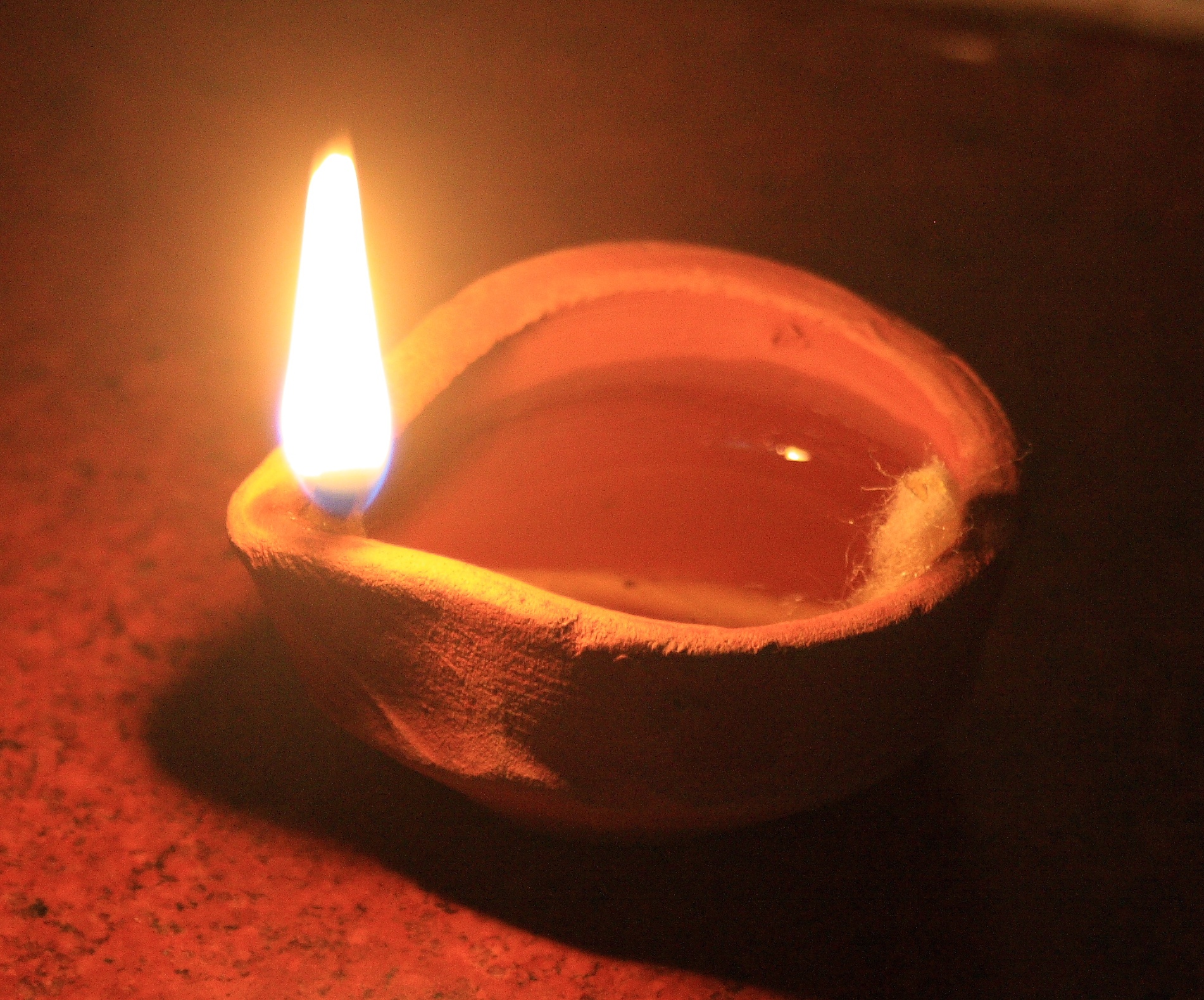
What is love? Take a look at a rose. Is it possible for the rose to say, “I shall offer my fragrance to good people and withhold it from bad people?” Or can you imagine a lamp that withholds its rays from a wicked person who seeks to walk in its light? It could only do that by ceasing to be a lamp. And observe how helplessly and indiscriminately a tree gives its shade to everyone, good and bad, young and old, high and low; to animals and humans and every living creature – even to one who seeks to cut it down. So this is the first quality of love; its indiscriminate character. This is why we are exhorted to be like God, “who makes his sun shine on good and bad alike and makes his rain fall on saints and sinners alike; so you must be all goodness as your heavenly Father is all goodness.” Contemplate in astonishment the sheer goodness of the rose, the lamp, and the tree, for there you have an image of what love is all about.
How does one attain this quality of love? Anything you do will only make it forced, cultivated and therefore phony, for love cannot be forced. There is nothing you can do. But there is something you can drop. Observe the marvelous change that comes over you the moment you stop seeing people as good and bad, as saints and sinners and begin to see them as unaware and ignorant. You must drop your false belief that people can sin in awareness. No one can sin in the light of awareness. Sin occurs, not, we mistakenly think, in malice, but in ignorance. “Father, forgive them for they do not know what they are doing.” To see this is to acquire the indiscriminate quality one so admires in the rose, the lamp, and the tree.
And here is the second quality of love – its gratuitousness. Like the tree, the rose, and the lamp, it gives and asks for nothing in return. How we despise the man whose choice of his wife is determined not by any quality she may have but by the amount of money she will bring as dowry. Such a man, we rightly say, loves not the woman but the financial benefit she brings him. But is your own love any different when you seek the company of those who bring you emotional gratification and avoid those who don’t; when you are positively disposed toward people who give you what you want and live up to your expectations and are negative or indifferent toward to those who don’t? Here too there is only one thing you need do to acquire the quality of gratuitousness that characterizes love. You can open your eyes and see. Just seeing, just exposing your so-called love for what it really is, a camouflage for selfishness and greed, is a major step toward arriving at this second quality of love.
The third quality of love is its unselfconsciousness. Love so enjoys the loving that it is blissfully unaware of itself. The way the lamp is busy shining with no thought of whether it is benefitting others of not. The way a rose gives out its fragrance simply because there is nothing else it can do, whether there is someone to enjoy the fragrance or not. The way the tree offers its shade. The light, the fragrance, and the shade are not produced at the approach of persons and turned off when there is no one there. These things, like love, exist independently of persons. Love simply is, it has no object. They simply are, regardless of whether someone will benefit from them or not. So they have no consciousness of any merit or of doing good. Their left hand had no consciousness of what their right hand does. “Lord, when did we see you hungry or thirsty and help you?”
The final quality of love is its freedom. The moment coercion or control or conflict enters, love dies. Think how the rose, the tree, and the lamp leave you completely free. The tree will make no effort to drag you into its shade if you are in danger of a sunstroke. The lamp will not force its light on you lest you stumble in the dark. Think for a while of all the coercion and control that you submit to on the part of others when you so anxiously live up to their expectations in order to buy their love and approval or because you fear you will lose them. Each time you submit to this control and this coercion you destroy the capacity to love which is your very nature, for you cannot but do to others what you allow others to do to you. Contemplate, then, all the control and coercion in your life and hopefully this contemplation alone will cause them to drop. The moment they drop, freedom will arise. And freedom is just another word for love.
Tom Hanks and Bernard of Clairvaux
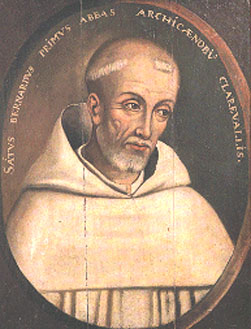 900 years ago, Bernard of Clairvaux wrote about four degrees or stages of love. He contended that “loving self for God’s sake” is the most mature, deepest kind of love. This has always intrigued me and even puzzled me. I’ve wondered: how does that idea mesh with what Jesus said about denying self? Isn’t it selfish to love yourself? to think about yourself? That seems to be what I’ve been taught over and over.
The first degree of love is “loving self for self’s sake.” That made sense to me. Our default position is to look out for ourselves and love (value) ourselves for our own sake. It is a selfish and natural approach. The second degree of love is “loving God for self’s sake.” When we first come into a relationship with God, we seek to love (value) Him but it’s because of what we get out of it. Certainly, the gift of salvation, new life in Him, the gift of the Spirit, etc. are gifts that bless us beyond imagination. As new believers, our approach is often that of loving God because of what He does in us and for us. This isn’t wrong, per se, but simply a love that is not fully mature. The third degree of love is “loving God for God’s sake.” Again, this approach fits with the idea of being a maturation of love in that we now love God, not for what He does for us, but for who He is. I think of the men about to be thrown into the fire in Daniel and they said: “If this be so, our God whom we serve is able to deliver us from the burning fiery furnace, and he will deliver us out of your hand, O king. But if not, be it known to you, O king, that we will not serve your gods.” (Daniel 3:17-18) In Job 13:15, Job says, “Though he slay me, I will hope in him.” This is loving God for God’s sake and it is clearly a mature kind of love.
But, the idea of loving self: how could that be more loving than “loving God for God’s sake”? It’s not until recently that it all started to make sense, and it was all thanks to Tom Hanks.
A few weeks ago, I saw Hank’s new film, Captain Phillips, in which he plays the captain of a cargo ship that is attacked by pirates off the eastern coast of Africa. Aside from it being an excellent film, what struck me is that, once again, I forgot that it was Tom Hanks playing the captain. Part of what makes Hanks a great actor is that you never think, “that’s Tom Hanks playing xyz character.” There are other actors who make huge blockbuster films who always seem to play themselves. They are interesting people and can pull off the action hero or the spy or whatever, but you are always keenly aware that they are in the movie. With Hanks, he never over powers a script but always seems to become the person who is a part of the story.
Here’s where Tom Hanks made sense of Bernard for me … he gets to know and loves the characters that he portrays. He becomes the character fully and embraces who they are. He forgets about Tom Hanks and becomes that other person. When we begin to believe that God has written us into the script of the story He is telling, we can begin to let go of the false self (this is what Jesus meant by “denying self”) and embrace the true us … the one God created and loves. As we allow Him to love us, we begin to love us … not the false us (defined by what we do, what we have, what others think) but the real us. To love ourselves is to embrace the real us in the context of God’s story. We don’t demand that He show up for us or do things for us, but we begin to ask how we fit into His story and His life. To love ourselves is to let Him love us and provide for us and define us. And, Bernard’s point is that we do this for His sake.
This is indeed the most mature kind of love because it requires embracing God’s love for ourselves. When this happens, we are connected to Him in a reciprocal relationship of love. We lay down the demands of the false self and simply let Him love us. Often, when we stop short at the third degree of love, we are focused on Him but don’t let Him focus on us which He desires to do.
Commonly, we stop short of loving ourselves for His sake because we deal with shame as it relates to the false self: “I don’t do enough” or “I’m not good enough.” Or, perhaps, we stop short because we are stuck in a cycle of trying please people. Or, maybe, we stop short because we’ve never felt the freedom to love the real us.
To love what God made (us) means to let Him love us which frees us to love Him in deeper, more specific ways than ever before. It enables us to simply be a part of His story as opposed to trying to get Him to be a part of ours.
Thanks Tom … I owe you one!
Stop Trying to Change the World
I read those words recently in book called The Kingdom Life in the chapter “Spiritual Formation from the Inside Out” by Bill Hull. In it, Hull relates a conversation in which he explained a new perspective on God’s calling on His life and the nature of leadership in the church. His words resonated deeply with me …
“I have spent a lot of my life trying to make things happen and trying to get the people around me to do what they didn’t want to do or have the character to do. I’ve decided to stop trying to change the world. I’ve even stopped trying to change the church. People seem to get so angry. I have decided to focus on changing me. I’ve hit a lot of walls in my life and have hurt a lot of people. I’m finished with that. I just want people to be attracted to Christ because of who I am and what I have to say and the way I say it.”
Anatomy of the Soul: Part 4, a path
 We often worry about people who talk to themselves. However, the reality is that we are always talking to ourselves. The function of our soul is to serve as the “operating system” which connects and integrates the heart and the mind and the body. (see part 2 of “Anatomy of the Soul”) With this kind of role, the soul is continually talking to the parts, trying to get them to work together. Most of this “talk” is running in the background of our lives and often with a very low level of awareness.
This metaphor of self talk is highlighted in a passage like Luke 12:19: And I will say to my soul, “Soul, you have ample goods laid up for many years; relax, eat, drink, be merry.” In this instance, it is a destructive self talk because it is not based upon truth and Jesus presents that reality in the very next verse. However, in Lamentations 3:24, it is a life giving kind of self talk that Jeremiah experiences while Jerusalem is in ruins around him: “The Lord is my portion,” says my soul, “therefore I will hope in him.” Spiritual health and growth is a function of the kind of “talking” that occurs in the operating system of our soul.
A few years ago, Curt Thompson, a psychiatrist, wrote a book called “Anatomy of the Soul,” and in a recent talk about the book, he spoke about the powerful patterns that are present in our brains. He suggests that certain patterns and thoughts become “hardwired” into our brains. If we understand the brain as the physical counterpart or manifestation of the soul (i.e., the operating system), this is very helpful. In summarizing his research into how the brain can be “rewired,” he shares that there are three things he’s seen that help in the process: physical exercise (which makes sense because of the physical component to who we are), community (this connects with the reality that we relational beings at our core), and meditative prayer (this touches on a reworking of the self-talk in which we are always engaging).
Several years ago, I heard someone suggest that we don’t live according to reality but according to the stories that help us make sense of reality. The danger is that we live according to “narratives” (self-talk) that make us feel better and/or gives us a sense of safety and protection, but in reality separate us from the life that God desires for us. The narrative might be that I need to people please in order to keep from being hurt or that I need to be successful and make piles of money in order to be safe. For many, the story that gets adopted is the isolation story (keep your distance from unsafe people and most people are unsafe!) or the usefulness story (stay busy, be useful/needed). We might even engage (and this is a favorite among religious people) the perfection story which suggests that if we get our act together, all will go well for us. These are the kind of stories that fuel the operating systems of our souls.
The true story line/narrative/self talk is something very different and it begins with the heart and opening our heart to the love of God. When Jesus was asked about the greatest commandment, He gave us two things (love God and love others, Matthew 22). Repeatedly, the writings of Holy Scripture link these two things together. In John 15, Jesus challenged His disciples: “as the Father has loved me, so I have loved you … love one another as I have loved you.” (vv. 9, 12) Clearly, love is the story line that Jesus challenges us to adopt. Love is the definition of what it means to experience Him. Be loved by Him and therefore love others! We are challenged to love others the way we are loved and we are loved the way that the Trinity loves each other. We are invited to learn the love that occurs (and has occurred eternally) among the Trinity.
The question is: how do we inbed Jesus’ story into our souls?
To go back to Thompson’s observations of the soul, meditative prayer seems to be the key. It has a rich Biblical tradition in the Old Testament and is assumed in the New Testament. Psalm 1 suggests that the wise man “meditates day and night” on the law. This speaks of concentrating our thoughts and hearts on Him. As opposed to praying a list or engaging in conversational prayer, this is a prayer of extended, quiet reflection on the person of God. Specifically, if we are going to see a new “story” imbedded in our hearts, it means gazing upon the beauty of the Trinity. It means taking Biblical truth and quietly repeating it to ourselves for an extended period of time.
For those of a more protestant tradition, one of the “babies” thrown out with the bathwater has been meditative prayer and the repetition of a word of phrase as a part of that meditation. In Matthew 6, Jesus warns against using “empty phrases” and thinking that we’ll be heard for “many words” but this is not an injunction against repetition but heartlessness.
The beauty of meditative prayer is that it can imbed a new story into the operating systems of our souls. The goal is to spend enough time each day (start with 10 minutes twice a day and grow from there) and day after day that new stories fade into the background of our lives, and then we find ourselves connecting with God throughout our day and thinking His thoughts and reflecting His ways from the unconscious parts of who we are.
Anatomy of a Soul, Part 3: a vision

What if the whole of our lives (our soul, i.e., life; see part 2) was organized around Him? Our hearts, minds, and bodies functioning together in perfect unity! If we approach that idea with humility, it might seem like a nearly impossible task. However, it can’t be impossible. Otherwise, why would Jesus talk to us about experiencing an abundant life (John 10), rest for our souls (Matthew 11), and finding our lives (Luke 9). Experiencing this kind of life isn’t about abilities or worthiness, but willingness to let go of any sense of my abilities or worthiness.
Certainly, we experience tastes of this life now in anticipation of the final, forever feast in eternity, but the reality remains that we can experience tastes. How much of a taste and how often we taste is perhaps more related to our desire and willingness than ability or knowledge.
The issue of will and desire speaks of the heart. Being in touch with what we truly desire, as ones created in God’s image, is an issue of the heart. Yet, we often don’t live there. Because of hurts and worries and fears, we have a tendency to live elsewhere. Perhaps, we prefer to live in our minds where we can tell ourselves what we want to be true even if our hearts tell us something different. Or, perhaps, we like to live in our bodies where we just immerse ourselves in activity (of whatever kind) in order to numb the realities of our hearts.
Our tendency to not live from our hearts is the reason that Proverbs 4:23 counsels us to “Keep your heart with all vigilance, for from it flow the springs of life.” Keeping our heart, or attending to it, is vital for experiencing the life that He designed us to live.
How do we do that? First, we attend to our hearts when we determine to live from our hearts. If all of our lives are to be organized around Him, it starts with the heart. The heart is the control center of who we are, and it is the place where He dwells. He doesn’t dwell in our minds or our bodies except to the extent that our heart is informing the other parts of who we are. A balanced life, organized around Him, begins in our hearts. Second, we attend to our hearts when we pray and connect with Him … when we are bringing all that we are before Him. This is why the Scriptures encourage us to pray without ceasing (1 Thess. 5:17). Third, we often let worries and hurts and fears pile up on top of our hearts, creating a hardened shell. So, rather than dwelling with Christ in our hearts and experiencing joy and peace and love, our interactions with our hearts are more about navigating hurt and fear and worry. We attend to our heart when we give all our anxieties to Him (1 Peter 5:7).
As we live from our hearts in these ways, our hearts begin to open and we find that there is a wide expanse from which we can live and move and have our being. In Psalm 119:32, the Psalmist affirms this idea as he writes, “I will run in the way of your commandments when you enlarge my heart.”
Throughout the Scriptures, we are encouraged, “don’t lose heart” (Luke 18:1; 2 Cor. 4:1, 16; Eph. 3:13). The idea is that our hearts can shrink and our hearts can become small with worry and hurt. For most of my life I’ve suffered with asthma and when an attack occurs, it feels like my lungs become the size of a grape. I can barely get a breath. But when I take a puff on the inhaler, it feels that my lungs are enlarged again. We can allow our hearts to shrink down to the point that we feel we can’t breathe and so we think, “I’ll live from my mind or my body and ignore my heart.” God promises that He will enlarge our hearts and the joy that we experience is the freedom to run in His commandments. When our hearts are enlarged, we find that we have enough room to love Him and others. We find that there is enough love to go around so we don’t have to hoard it for ourselves.
The ancient mystic, Theresa of Avila, wrote about the heart being like a series of mansions with perhaps millions of rooms. Bernard of Clairvaux wrote that the heart has “a capacity … found worthy not only to receive the divine presence, but to able to make sufficient room! What can I say of her who can provide avenues spacious enough for the God of majesty to walk in!”
It is in our hearts that we experience Him. Theresa suggests that Christ lives in the depths of our hearts and we experience increasing oneness and closeness as we journey through the various mansions. As we learn to lay aside all worry and fear and sin and preoccupation, our hearts are opened wider and we dwell with Him in all His glory.
What fears? What worries? What obsessions will you relinquish today so you would live from your heart with Him? Giving Him the cares of our hearts is like taking a puff on an inhaler … it gives space, the space to experience and enjoy … the space to love and be loved. The beauty of the journey is that He leads us step by step. He doesn’t show us the whole journey (it would likely overwhelm) but He shows us the next step. What is the next step for you?
 desert direction