Category Archives: Uncategorized
Despising the Shame
 Shame is a powerful part of our human existence, and yet it is frequently ignored. Shame is the sense that one is missing something … that one is incomplete or flawed. From the time we are young children, we begin to receive messages about who we are through other’s words and actions. We might hear that we are “not enough” through being picked last for a team on the playground, or it might be the careless word of a parent who says that “we’ll never amount to anything if …” We don’t listen after “if” and just hear that we’ll never amount to anything.
As a result, we frequently spend our days trying to prove that we are enough … that we aren’t missing anything. We over-achieve or we shrink back from achieving so we don’t fail. We dress a certain way to cover inadequacies or we don’t cover enough to attract attention. We attempt to use money or notoriety or positions of influence to demonstrate that we are okay.
What can complicate shame is that others often utilize “shaming” us in order to get us to do something. We may feel uncomfortable but when the button is pushed, we feel powerless against the hidden shame in our lives.
What complicates shame even further is that there is a real sense in which we are incomplete as human beings. We were made in the image of God (cf., Genesis 1:26-27) which means that we were created to do life with God. When we are not living in communion with God, we are indeed missing something. Tragically, we can mistake this deeper sense of true shame for that false shame and consequently try to cover through things other than our relationship with God.
There is an interesting verse in Luke’s Gospel that talks about being ashamed, and it is frequently misunderstood.
“For whoever is ashamed of me and of my words, of him will the Son of Man be ashamed when he comes in his glory and the glory of the Father and of the holy angels.” (Luke 9:26)
If we aren’t aware of our battles with shame, this verse can be another “piling on” of shame. It can sound like Jesus is manipulative: “if you’re embarrassed of me, then I’ll be embarrassed of you.” It can actually feel a bit vindictive. There are many passages that speak of God’s unconditional love and the fact that He doesn’t condemn (cf. Romans 8:1) which would render this kind of interpretation as inaccurate.
So, what is going on? In the immediate context, Jesus had just said that He “must suffer many things and be rejected by the elders and chief priests and scribes, and be killed, and on the third day be raised. If anyone would come after me, let him deny himself and take up his cross daily and follow me.” (9:22-23) Jesus is saying, “I am going to suffer and die so that I can be raised from the dead.” I will be losing something so that something better can emerge. He is inviting His followers to live that same kind of life: “if you let go of your life, you will find your ‘true’ sense of life in me.” We let go of those ways that we try to cover our shame … performance, possessions, power, positions, etc. If we let go of them, then our true sense of shame is alleviated in the context of relationship with Him!
However, when we let go of the “old ways” of covering shame, we can feel naked. We can feel like we are incomplete. Indeed, if I follow the way of Jesus and “die” to the old things, I may feel like there is something wrong with me. I won’t fit in the world of possessions and power and prestige. To be “ashamed” is to live out of a sense of shame. For each of us, shame is expressed differently. It might come out as embarrassment or anger or fear, but the result is that we aren’t following the way of Jesus and we aren’t trusting His words. If that is the case, Jesus says, “I will be ashamed of you when I come in glory.” The words “come in glory” are a reference to the judgment when our lives will be evaluated and rewards for faithfulness given. So, He will be “ashamed” (experience of sense of loss) in the sense that there will not be reward for the one who does not live in the way of Jesus.
Hebrews 12:2 encourages us to look to:
“Jesus, the founder and perfecter of our faith, who for the joy that was set before him endured the cross, despising the shame, and is seated at the right hand of the throne of God.”
It’s fascinating that we are encouraged to look to Jesus as the one who dealt with shame appropriately. He “despised” it. The message of a cross in the ancient days was one of shame and ridicule … the cross said, “you are an outcast, a criminal, a misfit, a lowlife.” He stared that message down and said “no, I am not any of those things” and he willingly laid down His life. Instead, He focused on the joy of being in relationship with God the Father.
What shame do you need to begin to despise? What messages of shame are present in your life? What voices tell you that you are not enough, that you are missing something? We begin to say “no” by bringing them out of the dark, and calling them what they are: lies. We progress forward as we believe that our joy is in the Father’s presence. In Him and with Him, we are perfect and complete, not lacking a thing.
Brother David Vryhof writes:
Jesus comes as One who can set us free from those things to which we desperately cling in our search for happiness. “Is not life more than these?” he asks, as he gently and lovingly touches the very places in our lives where we are most bound. “You lack this one thing. Let it go. Come and follow me.”
Do you recognize those voices in your life that “shame” you? that make you feel “less than”? Consider the places where you feel embarrassment or fear or anger. Those responses are a reliable indicator that we living out of a sense of shame.
Take a few moments and prayerfully write out some of those messages of shame. Next to each of them, write out the truth of who you are because of Jesus. Despise the shame and look toward the joy of life in Him.
Why Not Sin?
 Frequently, I hear people ask the question: “If God loves me no matter what, what difference does it make if I sin?” Another way the question gets asked is: “Why not sin and just ask God for forgiveness?”
It sounds like an innocent enough question that can be engaged through a nice theological discussion. However, I want to argue that the premise of that question needs to be examined. While there are important theological distinctions that can and perhaps should be made in thinking through that question, I believe that we need to look at the assumption behind the question first.
The assumption behind the question is that we would want to sin in the first place. The premise is that sin is a desirable thing. The more important and significant question is not “why not sin if God is forgiving?” but “if you know God and have a relationship with Him, why would you ever even want to sin?” The discussion needs to center around the nature of sin and the nature of having a relationship with God.
Certainly, we are drawn to sin and desire to sin on one level. However, on another level, we don’t want to sin. We may be drawn to sin and wonder whether its really a big deal, but what is deeper and truer is that we don’t want to sin. There are things that get in the way that distract us from what is deeper and truer … to the point that we might not be aware of the deeper desires. What might be more significant to ask is: “what is going on in our hearts that we would want to sin?” rather than “will God forgive us?”
So, what is sin? At its core, sin is living independently of God. It is doing life on our own terms, in our own power, and for our own pleasure. Sin is a state of being before it ever results in actions. Therefore, sins are the actions that result from doing life apart from God. As humans, we were created to live life (most freely and naturally) in a relationship with God. So, indeed, the question is not “why not sin?” but “why would we ever want to sin?” Sin, as a state of being and as actions, is against our very nature as beings made in the image of God.
The nature of relationship with God is that we live in dependence upon Him rather than independently relying upon self – our thoughts, our ways, our desires. There is a way that seems right to us but in the end it leads to death (the words of an old Hebrew prophet). Death is essentially a relational issue. Death means separation … and in this context, it means separation from our created design.
All the while, we frequently feel like we want to live on our own terms. We are drawn to self and self-centered ways of life. This can be confusing to us and lead us to a place of hopelessness. Hence, the question: “why not just give in and ask for forgiveness?” What we are longing for is freedom but we misunderstand the nature of freedom. We might think that freedom is being able to stand on our own two feet and live independently with nothing controlling us … needing nothing.
However, there is another way of thinking about freedom. In his book, “The Reason for God,” Tim Keller puts it this way: “Freedom is not the absence of limitations and constraints but it is finding the right ones, those that fit our nature and liberate us.” He gives the example of a fish swimming in water. The fish is free when it lives in the freedom of the water. When a fish is “out of water,” it is not free. Likewise, humans are only free in the context of a dependent relationship with God. Keller goes on to say:
“Disciplines and constraints, then, liberate us only when they fit with the reality of our nature and constraints. A fish, because it absorbs oxygen from water rather than air, is only free if it is restricted and limited to water. If we put it out on the grass, its freedom to move and even live is not enhanced, but destroyed. The fish dies if we do not honor the reality of its nature.”
Why do we rely upon self? Why do we choose to do life in our own power? Look at how it is described in the book “Sacred Romance” by John Eldredge and Brent Curtis:
“Satan continues to use the evil that he himself creates to tell us a very different story (than God tells). In his version, good is gained through our own understanding, not through a relationship with God. Life is gained by appropriating what we can see with our own eyes and by controlling any unknown hurts that may strike us rather than living in the bigger Story that God is telling. Jesus invites us to thirst. Satan invites us to control through performance of one kind or another.”
The challenge to consider is our desire to control. We were created with desire … desire that can only be satisfied in the confines of our loving relationship with God. We find those desires unfulfilled and so we strive to control our lives, our environment, and our relationships in order to fulfill those desires. When we seek to control, we are taking life into our own hands and therefore living independent of God. This leads to sin.
Often, our thinking considers only two options. The first option is that we give in to sin. The second is that God needs to take away the desire. However, the desire is not the problem. The problem is the object of our desire. The word for “lust” in the Bible is a word that literally means “over-desire.” The idea is that lusts are a distortion or misdirection of desire. Desires, at their core are God given, but we misunderstand the true object of desire. As C. S. Lewis famously said:
“It would seem that Our Lord finds our desires not too strong, but too weak. We are half-hearted creatures, fooling about with drink and sex and ambition when infinite joy is offered us, like an ignorant child who wants to go on making mud pies in a slum because he cannot imagine what is meant by the offer of a holiday at the sea. We are far too easily pleased.”
Rather than giving in or asking to get rid of the desires, we should bring those desires to God and pour them out to Him. When we feel desire, we should feel our desire like a thirsty traveler in the desert. As physical thirst drives us to a source of water, our spiritual thirst (whether in the misdirected form of anger or loneliness or sexual lust or fear) can drive us to the throne of God.
A spiritual director that I met with years ago shared that “His presence in this life is real, but He comes dressed in thirst.” Rather than letting our thirst become a discouragement, we can let it drive us to the throne of God. We have access to the throne of God because of the cross of Christ. We don’t have to clean ourselves up and have our desires in order to come. We can just come. At the cross, we receive forgiveness of sin which allows access to God. We also receive a new heart which unlocks those deeper desires. However, transformation of the old comes as we bring ourselves to God in prayer. Relationship is what ultimately changes us.
On the night before Jesus was crucified, He sat in a garden praying … pouring His heart out to God the Father. He was feeling the stress and anticipation of what lay before Him. He prayed: “remove this cup from me.” (Luke 22:42) At the depths of His heart, He knew that the “cup” of the cross was God’s will but the present circumstances were conspiring to shape His desire in a different direction. The text goes on to say: “And being in an agony he prayed more earnestly; and his sweat became like great drops of blood falling down to the ground.” He took His desires, pain, and frustration and laid them before God. He modeled a life lived in dependence upon His Father. As we follow Him, it doesn’t mean that we have our lives all figured out and squared away. It means that we bring ourselves (whatever is going on) to Him.
The Psalms of the Hebrew Scriptures are filled with examples of people coming as they were … with frustrations and pain and agony … often even murderous thoughts and deep despair. Where do we go when we are faced with the draw of living on our own terms? Do we turn inward to try to control things or merely indulge? Or, do we come before a living God who is gracious and gentle and loving and powerful?
Take a few moments today and engage in a simple, yet powerful, spiritual exercise: when you feel the lure of sin, stop and reflect on the fact that your desire is actually for Him (on some level even deeper than your present awareness). As you stop, simply pour out your heart to God and tell Him everything that you are thinking and feeling. Let Him love you in that moment of thirst. Let Him listen and simply be present with you. Repeat as necessary. (And, it’s necessary often!)
New Year’s Reflection (Not Resolutions)

A few days before the turn of the calendar to 2015, I was asked a question by a barista where I was grabbing a coffee: “do you have any New Year’s Resolutions?” He didn’t seem to know what to do with my answer: “I don’t do New Year’s Resolutions.” He quickly changed the subject to something else.
Please understand, I’m not against New Year’s Resolutions per se. In many ways, they speak volumes to a God given desire for abundant life. However, quite often, resolutions address that desire in ineffective ways and in ways that deny deep theological truth.
In 1 Corinthians 12, the Apostle Paul talks about how unhappy we can be with our lot in our life. We get frustrated that we don’t have this gift or that gift. We compare ourselves to others and wish that our lives were like theirs. The conversation transitions when Paul writes: “You earnestly desire the higher gifts, but I will show you a still more excellent way.” What is that more excellent way? In the following verses, we find this beautiful prose:
“If I speak in the tongues of men and of angels, but have not love, I am a noisy gong or a clanging cymbal. And if I have prophetic powers, and understand all mysteries and all knowledge, and if I have all faith, so as to remove mountains, but have not love, I am nothing. If I give away all I have, and if I deliver up my body to be burned, but have not love, I gain nothing.”
How often do we desire what is not ours when our true desire is to love others? Love is fundamentally not about us. It is about listening to the heart of God and seeking to express that heart in word and deed to others. Love is about self-sacrifice, not self-realization. Love is about making ourselves vulnerable, not self-protection or self-promotion. The risky thing about this kind of love is that it is counter intuitive. We have an innate sense that we need to take care of ourselves. Jesus ties into this desire when He says, “For whoever would save his life will lose it, but whoever loses his life for my sake will save it. For what does it profit a man if he gains the whole world and loses or forfeits himself?” (Luke 9:24-25) As we think about what is best for us in life, it is to let go of self. The irony is that we find our deepest, truest sense of self when we stop making life about us. We find ourselves when we let love be our deepest motivation. As we think about resolutions, are they about loving others or protecting our sense of self?
Another element that can be defeating about New Year’s Resolutions is that we can subtly believe that the changing of the calendar has some “magical powers” associated with it. We probably aren’t thinking that on the conscious level but we do read and hear things like: “we get a blank slate” or “we are offered a second chance.” The truth is that January 1 is just a day. Another deeper truth is that “His mercies are new every morning” (Lam. 3:22-23). In fact, His steadfast love (forgiving love) never ceases. It is unstoppable. When we make resolutions, we might just be forgetting that God is always at work … on March 22 as well as October 3 or January 1. Every moment of every day, He is at work in us … desiring to fulfill His loving purposes in us and through us. As we think about resolutions, do we recognize that He is lovingly active and present in our lives all the time?
Finally, resolutions can be dependent upon our will power and effort. Whether we are successful or not is generally dependent upon how disciplined we are which is frequently a function of temperament or family upbringing or other factors. The problem with will power and effort is not that we might not be successful. The problem is two-fold: first, we end up gaining our sense of self from our efforts or lack thereof (we are prideful or depressed based on our success); second, everything begins and ends with us.
So, we do well to remember that God encourages us over and over again that we are not what we do. We are beloved by God and have an identity in Him as a child of God, adopted into His family. Adoption is about the loving choice of a parent, not the performance of the child (cf. Gal. 4:6-7). Falling into the trap that our worth and significance is based on how good we look or how much money we have or how successful we are is often an unintended consequence of resolutions.
And then, we are challenged in Galatians 3 with the question: “Let me ask you only this: Did you receive the Spirit by works of the law or by hearing with faith? Are you so foolish? Having begun by the Spirit, are you now being perfected by the flesh?” Making goals for the New Year (or any time during the year) is a beautiful thing. But, how are we making those “goals?” One of the temptations as we make any sort of goals or resolutions is to make them without a time of prayerful reflection in which we are dependent upon the Spirit. Equally tempting can be to make “resolutions” that are more rooted in self than in God’s heart for us. Proverbs 19:21 says: “Many are the plans in the mind of a man, but it is the purpose of the Lord that will stand.” How rooted are we in God’s purposes for our lives?
Oswald Chambers talks about the role of prayer in our lives:
“We tend to use prayer as a last resort, but God wants it to be our first line of defense. We pray when there’s nothing else we can do, but God wants us to pray before we do anything at all. Most of us would prefer, however, to spend our time doing something that will get immediate results. We don’t want to wait for God to resolve matters in His good time because His idea of ‘good time’ is seldom in sync with ours.”
Instead of seeking “immediate results,” wait on the Lord by listening to His voice. As a simple way to reflectively move into the New Year, try this prayer exercise:
Begin by quieting your heart before God.“For God alone my soul waits in silence; from him comes my salvation.” Psalm 62:1
After a few moments of quiet, acknowledge that He alone is your shepherd. “The Lord is my shepherd, I shall not want.” Psalm 23:1
Ask God to bring to mind one aspect of the previous year that He’d like for you to notice. As something is brought to your attention, hold it before God – asking Him what is significant about that aspect of your year. Respond prayerfully with thanksgiving, confession, or praise.
Next, ask God to give you an image or word that encapsulates His heart for you in the coming year. Sit quietly and listen to what He brings to your heart/mind.
As you move into the New Year, carry those two items with you. Bring them back to your prayer and let God shape your heart on His terms. The good news is that His heart for us is always better than our dreams. Make this coming year about listening to God and letting Him direct your steps. Let goals and resolutions emerge, slowly, from this posture of the heart rather than comparison or guilt or a perceived need to achieve.
*Note: I wrote this for me more than anything because of how much I need to remember to let Him direct my steps, my goals, my aspirations. The abundant life (the life I so deeply desire) is found only in Him.
Let Every Heart Prepare Him Room: Celebrating, Dec 25
 We celebrate Him as He occupies our hearts. (Christmas Day)
“God longs for a temple, not of stone and light, but of flesh and blood and a heart of full of love. Like Mary, you are God’s temple, for when you say ‘yes’ to God you open yourself to God and God’s glory abides in you; when you say ‘yes’ to God, the Word is made flesh and dwells among us.” Br. James Koester, SSJE
We can say “yes” to God with confidence and trust because He has already said “yes” to us.
“For all the promises of God find their Yes in him. That is why it is through him that we utter our Amen to God for his glory.” 2 Corinthians 1:20
All of His promises center around one strong, glorious, satisfying truth: “I will never leave you or forsake you.” In Jesus, God is with us. Ultimately, this is what can open our hearts to experiencing Him and knowing Him in every ounce of life. Because He is with us, there is no joy or hurt or “boring” detail in which He is not present.
Today, simply celebrate Immanuel, “God with us,” by remembering that He is present. His presence means that all things can be viewed as a gift through which He can be known and enjoyed.
- When I enjoy family and friends, I am reminded that He is my Father and true friend.
- When I open a gift, I am reminded that He is the “Son that was given.”
- When I am in pain, I am reminded that He alone is my joy.
- When I suffering unjustly, I am reminded that He is my justice.
- When I lonely, I am reminded that I am never alone.
- When I am eating a meal, I am reminded Jesus is the bread of life.
- When I am (fill in the blank), I am reminded that all is a gift.
C. S. Lewis put this in beautiful perspective: “The great thing, if one can, is to stop regarding all the unpleasant things as interruptions of one’s ‘own’ or ‘real’ life. The truth is of course that what one calls the interruptions are precisely one’s real life — the life God is sending one day by day.”
Hold this prayer before God all day today: All is gift. Thank you, Father.
Bring your heart and mind back to this simple prayer all day long.
Let Every Heart Prepare Him Room: Opening, Dec 24
 He occupies our hearts as we open (Advent week 4 day 4).
As we come to the final day of the Advent Season, a line from the song “O Little Town of Bethlehem” puts things in perspective.
“Yet in thy dark streets shineth the everlasting Light. The hopes and fears of all the years are met in Thee tonight.”
The hope of eternity is that we will have a living, real, vital relationship with God. Indeed, the hope is that we will have room in our hearts for God in which life makes sense in some deep, intuitive way. We want to know Him. The fear of eternity is that we will miss out on Him and life will be a waste. We fear a meaningless existence. Whether we’ve ever fully been able to articulate it that way, this is our core hope and core fear. Life only makes sense in the context of relationship with God where our sense of well-being is secure, our worth is affirmed, and our vision is clear. In Jesus, the light of hope cuts through the darkness of fear. The words of John 1:4-5 develop this theme of light:
“In him was life, and the life was the light of men. The light shines in the darkness, and the darkness has not overcome it.”
Clearly, in this life, we continually seek a sense of light. We look for stories that can unify and explain what is going on in life. We live our lives with a sense of story. It might be something like a national story that tells why we do what we do in a certain country. It might be a family story that says, “We do (insert some activity) because we are the (insert family name) and we are (insert some character quality).” It might be a personal sense of story of which we are only vaguely aware. It could be that we will only be happy if such and such happens in our life. It could be that things never go well for us because we just don’t have what it takes to make it in this world. It could be that we will always be successful because we are better than others. Whatever the stories, we are guided be a sense of story. Stories give us a sense of light.
The challenge is that the stories we hold either affirm the one true story of the universe (our deepest hope of doing life with God) or they affirm our deepest fear (which is that we will miss out). The story of Christmas, that God injected Himself into human story so that we could do life with Him, is the story. It is the one story that makes sense of all things. It is the one story that gives us light. Often, it is only a sliver of light but it is the only story that rings true in our souls.
As we think back to Revelation 3 and the picture of Jesus standing at the door of our hearts, He says open your hearts as you:
“buy from me gold refined by fire, so that you may be rich, and white garments so that you may clothe yourself and the shame of your nakedness may not be seen, and salve to anoint your eyes, so that you may see.” (Revelation 3:16-18)
The first encouragement was to acquire gold refined by fire … to pursue the riches of doing life with Him by using our resources to be a blessing to others. This opens space in our hearts as we let go of “things” as something to be possessed. The second encouragement was to clothe ourselves with His love … to allow Him to love us as we let go of shame which can also crowd our hearts.
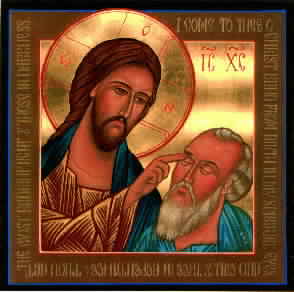
Finally, Jesus encourages us to acquire “salve to anoint the eyes.” The idea here is that we have a tendency to live by inferior stories and those stories end up darkening our vision. We may think that we are “seeing” but we keep bumping up against others. We keep stubbing our toes against our pursuits in life. Jesus offers us a story which is like salve on the eyes … it gives us the ability to see. In Matthew 6:22-24, Jesus speaks of light and story that money can make us happy:
“The eye is the lamp of the body. So, if your eye is healthy, your whole body will be full of light, but if your eye is bad, your whole body will be full of darkness. If then the light in you is darkness, how great is the darkness! No one can serve two masters, for either he will hate the one and love the other, or he will be devoted to the one and despise the other. You cannot serve God and money.”
What Jesus is exposing is that we often have an affinity to stories that really just keep us in the dark. This is a danger in general and the more specific danger is that we will try to have two stories. We will try to have our own story (that we can be happy through _________) and the Christmas story. Our thinking is often that Jesus will sprinkle his magic “blessing dust” on our stories and make them work. Author Anthony Bloom expresses the reality of the situation like this: “We would like just one touch of heaven blue in the general picture of our life, in which there are so many dark sides … but He is not prepared to be simply part of our life.” Indeed, Jesus said: “you cannot serve God and money.”
Jesus wasn’t try to be mean or petty. He was graciously stating fact: as long as we hold on to the old stories, there just simply isn’t room in our hearts for His story. Are there old perspectives and opinions and stories to which you are clinging? Are you ready to make room in your heart for the Christ story?
Helen Keller, a remarkable woman who also happened to be blind, said: “The only thing worse than being blind is having sight but no vision.” She was also asked “isn’t it terrible to be blind?” And she said, “It is better to be blind and see with your heart than to have two eyes and see nothing.”
We apply the salve to our eyes as we walk by faith rather than by sight (2 Cor 5:7). In this context, sight is looking with our natural eyes … allowing the lenses of earthly stories to interpret what we see. Faith is looking at life with His eyes … allowing His story to interpret and define what we see. In 2 Corinthians 4:16-18, the Apostle Paul writes:
“So we do not lose heart. Though our outer self is wasting away, our inner self is being renewed day by day. For this light momentary affliction is preparing for us an eternal weight of glory beyond all comparison, as we look not to the things that are seen but to the things that are unseen. For the things that are seen are transient, but the things that are unseen are eternal.”
The glory of beginning to see with His eyes is that we begin to see Him everywhere … we begin to connect the dots and see that He has been present all along. He is at work in us. He is weaving together a story that we won’t fully see until eternity but the beauty is that His life, His presence, in the midst of it all is the story. That is the light! Seeing Him and knowing that He is near is all we need. At times, we might claim that we want more but He alone is truly sufficient, i.e., satisfying, to our souls. It can be a bit terrifying to let go of old stories … those narratives which seem to give us a sense of comfort. A. W. Tozer said:
“Hardly anything else reveals so well the fear and uncertainty among men as the length to which they will go to hide their true selves from each other and even from their own eyes. Almost all men live from childhood to death with a semiopaque curtain, coming out briefly only when forced by some emotional shock and then retreating as quickly as possible into hiding again … Self-knowledge is so critically important to us in our pursuit of God and His righteousness that we lie under heavy obligation to do immediately whatever is necessary to remove the disguise and permit our real selves to be known.”
As a final step in preparing room in your heart, take a few minutes today and ask the Father for some self-knowledge. Is there a “story” that you’ve been using to light your way that is not part of God’s story? Is there a story that you need to release today? Pay attention to anxiety, anger, fear, and shame. If you notice them, ask God to show you a story you might release. Stand blind before Him, putting all your “lights” down. Let go of all else and ask Him for faith to see with His light. His light is simple: God with us. Nothing more, nothing less. His presence is all we need. Be attentive to His presence today by simply reminding your heart: God is with me.
Father, I open myself to you. Letting go of all else, I come to you with empty, open hands. I entrust myself to You, believing that true riches, true worth, and true vision come only from You. Yes, Lord, have Your way in me. Thank You for Jesus who redeems me from the pit of self and into the joy of You. Amen.
*tomorrow we close our Advent Reflections with one final Christmas Reflection.
Let Every Heart Prepare Him Room: Opening, Dec 23
 He occupies our hearts as we open (Advent week 4 day 3).
As Jesus taught and ministered to others, He was misunderstood and therefore criticized routinely. One of the most prevalent critiques was for spending time with tax collectors and sinners. Interestingly, it was the theologically informed who brought these evaluations. Those who should have known the priorities of God better than anyone else viewed Jesus’ priorities as being “off.”
In response, Jesus said:
“Those who are well have no need of a physician, but those who are sick. I came not to call the righteous, but sinners.” (Mark 2:17)
Two observations about what Jesus said:
- Jesus was not saying that some people don’t have need. He was speaking tongue in cheek about the self-perception of the religious leaders. Clearly, the Bible teaches “no one is righteous” (Romans 3:9) in their own right. So, those who have a perception of being “well” don’t have a sense of need. In other words, there is no room in our hearts for God when we believe we’ve got it together.
- While God is always present in our lives, we experience Him as near and enjoy His presence when we identify with our need. Indeed, we prepare Him room when we are aware of the void in our lives without Him. Part of this is being aware that we all have a tendency to self-righteousness. It can feel very threatening to embrace our need. It can feel shameful and embarrassing. So, we ignore evidence that we’re flawed. We convince ourselves that our motives are good. We compare ourselves to others in areas where we can be self-congratulating. Whatever the means, we are all have propensities toward this kind of internal dialogue.
Yesterday, we began looking at Jesus’ counsel in Revelation 3 to those who have a tendency to think that they have it all together:
“I counsel you to buy from me gold refined by fire, so that you may be rich, and white garments so that you may clothe yourself and the shame of your nakedness may not be seen, and salve to anoint your eyes, so that you may see.” (Revelation 3:16-18)
The first encouragement was to acquire gold refined by fire and this spoke to pursuing the riches of doing life with Him by using our resources to be a blessing to others. Space in our hearts is opened because “things” are no longer something to be possessed but something to be shared. So, they can’t occupy space in our hearts.
The second encouragement is to “buy white garments so you can cover your shame.” Shame is a sense that something is wrong with us and that we are unacceptable. Because we are born into sin, we inherently have a sense of shame. Whether or not we’ve ever identified it like that, we are embarrassed and we might even develop a harsh exterior to hide it but it is there. We feel worthless and so we attach ourselves to creating an image for ourselves.
The “white garments” are a reference to the righteousness of Christ. The idea is this: rather than creating an image or hiding, we accept that we don’t have it all together and allow Him to be the one who defines us. Because of Christ’s death on the cross, His righteousness becomes ours if we’ve trusted Him as our savior. When we come to know Jesus as savior, this identity is ours but we may not be living in it. The beauty of it is that we can let go of shame and rest in Him … not because we have it all together but because we are loved by Him. If we are not careful to cultivate that sense of need for Him in a balanced way, we can go back into self-righteousness. However, as we are receiving His love and acceptance, our identity moves from self to Him.
One of the most damaging images that we can attach ourselves to is “being good” or doing the “right things.” There is a “goodness” that has nothing to do with God because it has everything to do with others thinking we’re good. We can try to take away our own shame but it never works.
Esther de Waal, in her book Living the Contradictions, shared:
“This is the mystery of the Christian life, to receive a new self, which depends not on what we can achieve but on what we are willing to receive.”
We do not have to attain but simply live in the awareness of all that is ours in Christ. It is not performance but reception that is necessary. All kinds of shame can crop up in our lives during the holidays. We can feel as though there is something wrong with us. It may be a sense of loneliness or frustration over broken relationships or even the absence of relationships in our lives.
The place where shame most forcibly shows up in our lives is in whether we believe we are lovable and significant. If we live with a sense of shameful unlovableness, there is not room in our hearts for God to occupy. If we live with a sense of “look at me, I’ve got it together,” there is not room either. Our self-perception and performance issues will take up space where God would normally take up residence. It is God alone who can answer the question of our worth.
Henri Nouwen, in The Inner Voice of Love, counsels himself by saying:
“Be patient. When you feel lonely, stay with your loneliness. Avoid the temptation to let your fearful self run off. Let it teach you its wisdom; let it tell you that you can live instead of just surviving. Gradually you will become one, and you will find that Jesus is living in your heart and offering you all you need.”
Do you struggle to experience the love of God in your life? Are you feeling your need and letting Him meet you there? Take a few minutes right now and ask the Lord to help you see places in your life where you are not living with a balanced sense of self. Next, let go of that self-perception and sit in the emptiness or loneliness. Finally, listen to the Lord. What does He want to tell you about who you are?
Pray this prayer throughout the day …
Father, I open myself to you. Letting go of all else, I come to you with empty, open hands. I entrust myself to You, believing that true riches, true worth, and true vision come only from You. Yes, Lord, have Your way in me. Thank You for Jesus who redeems me from the pit of self and into the joy of You. Amen.
Let Every Heart Prepare Him Room: Opening, Dec 22
 He occupies our hearts as we open (Advent week 4 day 2).
God the Son entered human history in the most vulnerable of ways. He didn’t come with a great show of overt strength but as a baby. There is perhaps nothing more vulnerable, more fragile, more needy than a baby. He physically grew as a fetus in a young girl’s womb. Such a display of poverty was not for no purpose.
“For you know the grace of our Lord Jesus Christ, that though he was rich, yet for your sake he became poor, so that you by his poverty might become rich.” 2 Corinthians 8:9
Consider this: He left all His eternal glory in heaven as the second member of the Trinity to become poor. Why? So that we might be rich! So that we might move from living as vulnerable, poor, needy people into strong, unshakable people. If it is not clear at this point, Jesus is not speaking of monetary riches and poverty although material things are not disconnected from what He is saying. In fact, as a human race, we tend to fundamentally misunderstand the concepts of poverty and wealth. It is this misunderstanding, ironically, that leaves us in a place of poverty and weakness spiritually.
We also are born into the world as poor, needy, vulnerable beings. From birth, embedded within us is a sense of need. We need some sort of stability and protection to make it through life. We know this intuitively. Our parents, at best, nurture and tutor us to find our strength in God, but at worst we learn an inferior and damaging way of being in the world. We learn to amass material things in order to feel strong. Indeed, we long to be “rich” but we misunderstand our true longing for “spiritual richness” found in Christ as a longing for material riches.
In the process, the purpose of material things gets flipped. Material things were created to give a context, or a platform, for expressing spiritual realities. Part of the eternal nature of God is that He gives and receives within the Godhead. Father, Son, and Spirit are continually giving to one another. God gives to us so that we can live out that pattern of giving to others. This is the “essence of richness” … giving. However, we tend to look at material things as an opportunity to get rid of our longing to feel secure and strong. Instead of receiving and giving, we get stuck in a cycle of taking and keeping.
In Jesus’ words in Revelation 3 that we might “open the door” of our hearts, he counsels those who say they are “rich.” He says: you don’t realize you are “poor.” His counsel is simple:
“I counsel you to buy from me gold refined by fire, so that you may be rich, and white garments so that you may clothe yourself and the shame of your nakedness may not be seen, and salve to anoint your eyes, so that you may see.” (Revelation 3:16-18)
Over the next three reflections, we’ll look at these three items which Jesus’ counsels us to buy: gold refined by fire, white garments, and eye salve. Today, gold? What is the gold that we buy from Him? First, it is significant to know that the concept of “buying” is a play on words for those who believe they are rich. God is gracious and bestows all things without cost. The metaphor would seem to be one of acquiring or obtaining. Second, the gold refined by fire is a reference to eternal, spiritual riches. Notice the description in 1 Corinthians 3:12-15:
“If any man builds on this foundation using gold, silver, costly stones, wood, hay or straw, his work will be shown for what it is, because the Day will bring it to light. It will be revealed with fire, and the fire will test the quality of each man’s work. If what he has built survives, he will receive his reward. If it is burned up, he will suffer loss; he himself will be saved, but only as one escaping through the flames.”
The works of man that stand God’s judgment are those things which reflect His character. At the heart of God’s character is the receiving and giving of love. That which we do as a reflection of His love, giving to others, is gold refined by fire! So, how do we buy that kind of gold? Consider the words of 1 Timothy 6:17-19:
“Command those who are rich in this present world not to be arrogant nor to put their hope in wealth, which is so uncertain, but to put their hope in God, who richly provides us with everything for our enjoyment. Command them to do good, to be rich in good deeds, and to be generous and willing to share. In this way they will lay up treasure for themselves as a firm foundation for the coming age, so that they may take hold of the life that is truly life.”
Three beautiful, challenging ideas spring from the text:
- Do not be arrogant. The basic idea of arrogance is that we perceive ourselves to be center of things. So, the idea here is simply that we join God in what He is doing rather than asking Him to join us. How often are our prayers “join me” prayers rather than “how do I join You” prayers? It may seem like a subtle distinction but it has huge ramifications.
- Do not put your hope in wealth. This is the issue of our age. We believe that wealth can solve our problems. We believe that wealth can bring the stability for which we long. This is a complete inversion of the truth. The most significant issue is that material things were never created to do that. Material things can’t do that. Riches might give the fleeting perception that all is well but it is fleeting at best.
- Be generous. This is how we enjoy the gifts of Christmas. We take hold of the “life that is truly life” when we enact that story of “receive and give” rather than “take and keep.”
Jesus came so that we might be generous to others. He came to rescue of from the prison of self where we use material things as a protection against vulnerability … where the very walls of protection become more like prison walls. How do we experience His freedom? By joining Him in what He is doing … letting go of the false hope of wealth … and then giving to others.
The great spiritual writer and reformer, Teresa of Avila, wrote:
“Christ has no body now on earth but yours, no hands but yours, no feet but yours. Yours are the eyes through which Christ’s compassion is to look out to the world. Yours are the feet with which Christ is to go about doing good. Yours are the hands with which Christ is to bless all people now.”
This is life … to join Him, using whatever resources we have to be a part of His life. This is our invitation, our call. “Our heart must expand with all the love of heaven, to love all that God loves, to love God in all, to love with the love which God Himself gives, and whereby He makes us one with Himself.” (Richard Meux Benson, SSJE)
Stop and feel your neediness, your vulnerability. Consider that no amount of money can ever take away the vulnerable reality that you are hurtling through a huge universe of blackness on a tiny, little speck of dirt called earth. As you feel that, remember that our security and strength only comes from joining Him in His purposes. Our lives are in His hands. Ask God: Father, with my one life, how can I serve you today? To whom can I give today? Make a choice to give today … do something generous. When you do, you are opening space in your heart for Him because you are abandoning the lie that life is about you. Then, you are truly rich.
Father, I open myself to you. Letting go of all else, I come to you with empty, open hands. I entrust myself to You, believing that true riches, true worth, and true vision come only from You. Yes, Lord, have Your way in me. Thank You for Jesus who redeems me from the pit of self and into the joy of You. Amen.
Let Every Heart Prepare Him Room: Opening, Dec 21
 He occupies our hearts as we open (Advent week 4 day 1).
To receive the true gifts of Christmas, we release our hold on the gifts of this world. As we do that, we say “yes” to Christ. We welcome Him into our lives. Our hearts prepare Him room as we wait, listen, release, and now open ourselves to Him.
The Apostle John spoke of an initial receiving or opening to Christ in his Gospel: “The true light, which enlightens everyone, was coming into the world. He was in the world, and the world was made through him, yet the world did not know him. He came to his own, and his own people did not receive him. But to all who did receive him, who believed in his name, he gave the right to become children of God, who were born, not of blood nor of the will of the flesh nor of the will of man, but of God.” (John 1:9-13)
As we receive Him, we become children of God … a relationship in which we are secure. However, space in our hearts and lives is cultivated only as we continue to open ourselves to Him. The Apostle John writes the words of Jesus in Revelation 3:20: “Behold, I stand at the door and knock. If anyone hears my voice and opens the door, I will come in to him and eat with him, and he with me.”
This verse beautifully speaks of “preparing Him room.” As we listen and open, we have the opportunity to experience life with Him. The tragedy is that we often don’t hear that knock, but He is gracious and patient so He keeps knocking. Our lack of hearing comes because we “say, I am rich, I have prospered, and I need nothing.” (Rev. 3:16) Jesus goes on to say we don’t realize we “are wretched, pitiable, poor, blind, and naked.”
It is our need and living in that need that opens the door of our hearts to Him. For many of us, there are perhaps those desperate times in life when we come to God out of “need” as a sort of last resort. However, we usually don’t experience Him because room hasn’t been prepared in our hearts. At those times, we want His gifts but on our own terms. The sense of need isn’t really for Him but for our lack of those “other things.” Experiencing the gift of “God with us” means that we open ourselves to Him because we are empty … we are waiting and listening and releasing … ready for Him. Frederick Buechner describes the battle for our hearts:
“Power, success, and happiness, as the world knows them, are his who will fight for them hard enough; but peace, love, joy, are only from God. And God is the enemy whom Jacob fought there by the river, of course, and whom in one way or another we all of us fight – God, the beloved enemy. Our enemy, because, before giving us everything, he demands of us everything; before giving us life, he demands our lives – our selves, our wills, our treasure.”
The verses in Revelation 3 go on to describe that God offers true riches, true worth, and true vision in the context of relationship with Him. Our great longings in life tend to be centered around lesser versions of those three things and consequently our sense of need is for material riches and earthly significance and worldly wisdom. To open ourselves to the true gifts of Christmas requires that we live with a sense of emptiness and longing for Christ Himself.
We can fool ourselves into thinking that we are releasing and letting go but still not be opening ourselves to Him. Oswald Chambers suggests:
“If a person cannot go to God, it is because he has something secret which he does not intend to give up— he may admit his sin, but would no more give up that thing than he could fly under his own power.”
Are there places in your life where you readily admit your sin but are still believing that this sin can satisfy you? Release your belief in satisfaction in anything other than Christ and feel the emptiness. Only when we feel the emptiness of life apart from satisfaction in Him do our hearts have the space for Him to occupy. C. S. Lewis famously challenged:
“It would seem that Our Lord finds our desires not too strong, but too weak. We are half-hearted creatures, fooling about with drink and sex and ambition when infinite joy is offered us, like an ignorant child who wants to go on making mud pies in a slum because he cannot imagine what is meant by the offer of a holiday at the sea. We are far too easily pleased.”
Today, set aside some time to practice the spiritual discipline of emptiness. Sit quietly and rest in Him. As your thoughts wander, bring them back to that place of rest by praying Revelation 3:17: I am “wretched, pitiable, poor, blind, and naked” without Christ. As you feel the “desire” of your thought system go to other things, don’t try to control your thoughts but simply come back to that simple prayer. Take at least 5-10 minutes for this exercise.
Note: throughout the day, you can practice the discipline of emptiness when you feel various impulses or preoccupations by opening yourself to Him as you pray Revelation 3:17 and/or pray this prayer:
Father, I open myself to you. Letting go of all else, I come to you with empty, open hands. I entrust myself to You, believing that true riches, true worth, and true vision come only from You. Yes, Lord, have Your way in me. Thank You for Jesus who redeems me from the pit of self and into the joy of You. Amen.
Let Every Heart Prepare Him Room: Releasing, Dec 20
 He expands our hearts as we release (Advent week 3 day 7).
It’s tragic so that we can be so filled with knowledge and yet not know God. After Jesus was born, the wise men arrived in Jerusalem and asked about the coming king, the Messiah. The religious people in Jerusalem knew the answer. They knew the Bible verses. What they had missed is that Jesus had been born only six miles away in Bethlehem. Jesus had been born right under their noses and they missed it.
They were so busy that they missed God’s interjection of Himself into the world. We can get so busy that we miss all those moments every day when God is interjecting Himself into our world. Those who stop to notice see Him everywhere and experience Him in all things. Paul affirms this in Romans 8: “God works in all things for the good.”
It can be so difficult to see! Our hearts can be so full of “other things” and our perception clouded by our knowledge. In one sense, knowledge can actually blind us. The logic is this: if we know, then we can get busy doing what we see and choosing what we believe is right. However, God is right in front of us and all around us … desiring to be “with us” … and we miss Him. Anthony de Mello builds on this theme:
“The fact is that you are surrounded by God and yet you don’t see God, because you ‘know’ about Him. The final barrier to the vision of God is our God concept. You miss God because you think you know. That’s the terrible thing about religion. That’s what the Gospels were saying – that religious people ‘knew,’ so they got rid of Jesus. The highest knowledge of God is to know God as unknowable.”
Knowing God as unknowable puts us in a place of humility in which we slow down enough in our hearts, minds, and body to perceive Him. The paradox is striking. When we think we know, we miss Him. When we acknowledge that we do not know, we begin to see. Our knowledge has a place but it must be submitted our actual experience of and seeking of God in all things.
So, how do we live in this place of knowing that we don’t know? Let’s review our reflection over these first three weeks of Advent. We wait (because we don’t know), we listen (because we desire Him as opposed to simply knowing about Him), and we release (because we understand that we hold ideas and grudges and sin and selfishness in our hearts).
Waiting, listening, and releasing form a pattern for how we can approach our relationship with God. This pattern of prayer humbles us, softens us, and expands our ability to see and know Him. If we are going to “prepare Him room” as a lifestyle and not simply a lyrical response for a few weeks each year, this pattern must be woven into the fabric of our lives. Henri Nouwen suggests that:
“Becoming the beloved is pulling the truth revealed to me from above down into the ordinariness of what I am doing from hour to hour.”
In 1 Thessalonians 5, we find a verse that is both beautiful in its simplicity and perplexing in its challenge: “pray without ceasing.” The following verse says that this is God’s will for us. It is His desire, His heart for us. If we see prayer as a list of requests or a duty, then this command of God sounds burdensome. However, if we see it as God’s heart for us to know and experience Him throughout our day, then it is a powerful call to a different way of living. If we “know”, then prayer is a chore. If we “don’t know”, then prayer is an adventure into life of exploring and seeing Him in all things.
Today, experiment with “unceasing prayer.” Seek to stay in a place of connectedness with God. As you approach each element of your day (each conversation, each decision, each challenge), begin with simple waiting as you stop and acknowledge Him. Next, ask Him to speak into your situation and respond with listening. Finally, respond with releasing as you let go of self and see Him.
Sound like it might slow down your day? Then, you’re getting the idea. To live in rhythm with God and His ways means slowing down. In our modern world, that sounds like quite a sacrifice and it is, but it is worth it. It is worth it because we stop missing all those moments each day when He is beautifully at work in us and through us and around us.
Begin your adventure “prayer without ceasing” by starting with a few things each day and grow from there. Take the prayer below and put it in your own words:
Father, I admit that I am a bundle of paradoxes. I want to live in You alone. I confess this is my deepest desire and yet I have other desires. Today, give me the courage to let go. Give me the strength to repent. Give me eyes to see those places of strength to which I cling that I might release all to You. Thank you for Your patience and grace and leading in my life. Enlarge my heart. Amen.
Let Every Heart Prepare Him Room: Releasing, Dec 19
 He expands our hearts as we release (Advent week 3 day 6).
When Jesus, the Messiah, entered into human history, He did so in an incredibly quiet and vulnerable manner. Indeed, could it have been any quieter? He was born into a poor, common family in an out of the way place. He wasn’t born in the most important city of his country. He wasn’t born in the most important country in his region. He was born in a country that was under foreign occupation.
Why were things so quiet? Why didn’t He come with fanfare and publicity and Messiah written across the sky in flashing lights? All would have been possible but not consistent with God’s character. He never forces Himself on us. He will not demand …
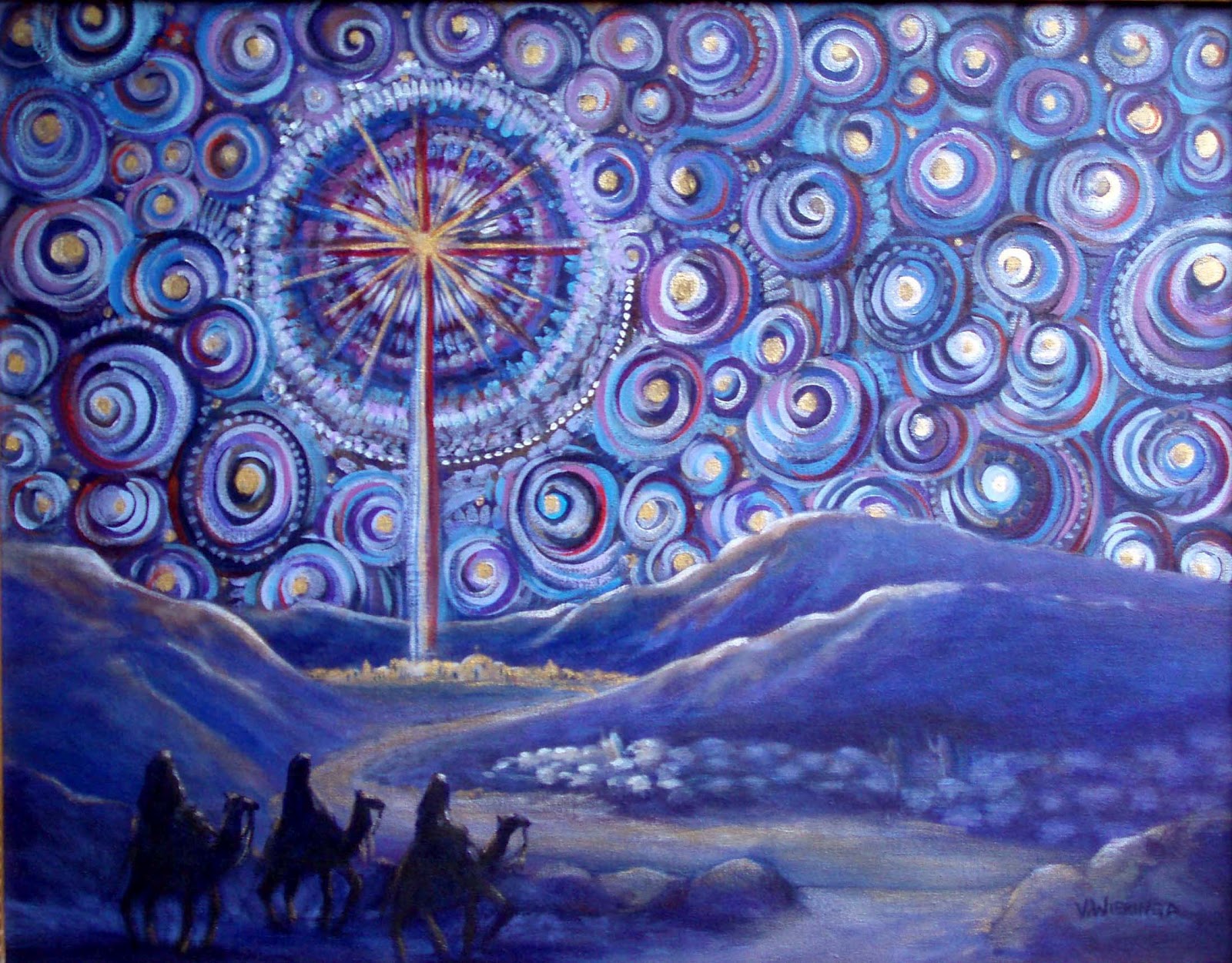
The Scriptures tell us that wise men (magi) came to the Christ child (Matthew 2:1-12). They were not, however, on the scene the night Jesus was born. They showed up at some point in the first two years. The wise men saw a star from their homes in the East (likely Persia) and discerned that it was a king. Notice that Jesus’ birth and its significance was lost on those who were much closer, those who knew the prophecies of Scripture. These wise men noticed … they saw what others did not. And then, they listened to what they saw and came to worship. We don’t know a lot more about the wise men, but The Magnificent Defeat, Frederick Buechner, imagines what might have happened to the wise men: (as told by one of them)
“But why did we go? I could not tell you now, and I could not have told you then, not even as we were in the very process of going. Not that we had no motive but that we had so many. Curiosity, I suppose: to be wise is to be eternally curious, and we were very wise. We want to see for ourselves this One before whom even the stars are said to bow down – to see perhaps if it was really true because even the wise have their doubts. And longing. Longing. Why will a man who is dying of thirst crawl miles across sands as hot as fire at simply the possibility of water? Why will a man labor and struggle all the days of his life so that in the end he has something to give the one he loves?”
“I will tell you two terrible things. What we saw on the face of the new-born child was his death. A fool could have seen it as well. It sat on his head like a crown or a bat, this death he would die. And we saw, as sure as the earth beneath our feet, that to stay with him would be to share that death, and that is why we left – giving only our gifts, withholding the rest.”
“And now, brothers, I will ask you a terrible question, and God knows I ask it also to myself. Is the truth beyond all truths, beyond the stars, just this: that to live without him is the real death, that to die with him is the only life?”
Indeed, it makes sense that the wise men saw the jealousy of King Herod and his murderous plans to kill any children within the age range of Jesus, and thought: “we’re out of here.” What they didn’t understand is that we find true life when we let go of our perceived sense of life. How often do we come with our gifts but leave with our life, as we know it, intact? Jesus said, “For whoever would save his life will lose it, but whoever loses his life for my sake will save it.” (Luke 9:24)
The word “save” speaks of protecting and holding on and “losing” speaks of letting go. The irony of “protecting” what we perceive to be “life” is that we will miss out on what is “truly life.” We have a tendency to hold on to all kinds of things (things that we think we control) to give us life. The paradox of Jesus’ statement in Luke is that we are actually imprisoned by that which we cling to for life … they slowly kill us. He alone gives life in the freedom of relationship with Him. It is a life that is free because He does all the “holding” and we are free to use our hands to love Him and others. We are free to enjoy what is, not live imprisoned by what is not. We are free from needing anything because in Christ, we have everything.
Ignatius of Loyola wisely offers:
“Detachment comes only if we have a stronger attachment; therefore our one dominating desire and fundamental choice must be to live in the loving presence and wisdom of Christ, our Savior.”
Jesus won’t pry our hands off of our life. He invites us to let go (to detach) which will happen as we have a vision for what is better. We struggle because we have mixed emotions about what we cling to for life. We have mixed emotions about what Jesus says is life (Him alone). Alan Jones shares that:
“The task of love is … to lay us bare, to set us free. But we love the prison-house. The plan of bondage is, at least, familiar. Love, then, comes as an unwelcome shock. The very thing we think we want, we dread.”
Jesus models this way of “detached” living in Philippians 2 …”though he was in the form of God, did not count equality with God a thing to be grasped, but made himself nothing, taking the form of a servant, being born in the likeness of men.” Two observations and two questions flow from this text:
- His “equality with God” was not something He “grasped” or literally, “used for his own advantage. Jesus’ most significant personal reality (His deity) was not something that He used for Himself. How do you view the “strengths” of your life (and we all have them)?
- He “made himself nothing” or literally, “he poured himself out.” Jesus let go of his life so that he could love. What do you need to let go of?
Sit with those questions and ask a good, gracious Father who only wants to give life.
Father, I admit that I am a bundle of paradoxes. I want to live in You alone. I confess this is my deepest desire and yet I have other desires. Today, give me the courage to let go. Give me the strength to repent. Give me eyes to see those places of strength to which I cling that I might release all to You. Thank you for Your patience and grace and leading in my life. Enlarge my heart. Amen.
 desert direction